
Right On Sod
French Drain Installation in Kitchener, Waterloo and Cambridge
Every spring it is the same low corner. The thaw comes, the lawn turns to a pond, and the water sits there for days. When a lot of melt water arrives at once, the ground can’t absorb it fast enough, especially while the soil underneath is still frozen. On the dense clay under much of Kitchener, Waterloo and Cambridge, which drains slowly, that corner can stay soggy long after the thaw.
A French drain gives that water somewhere to go. It is a gravel-filled trench with a buried, porous pipe that carries water in your yard away from your home. Right On Sod’s crews install them across Kitchener, Waterloo and Cambridge, and we finish every one the way a sod company should. The trench is backfilled, the ground is graded, and your lawn goes back as fresh sod, not a strip of mud and grass seed.
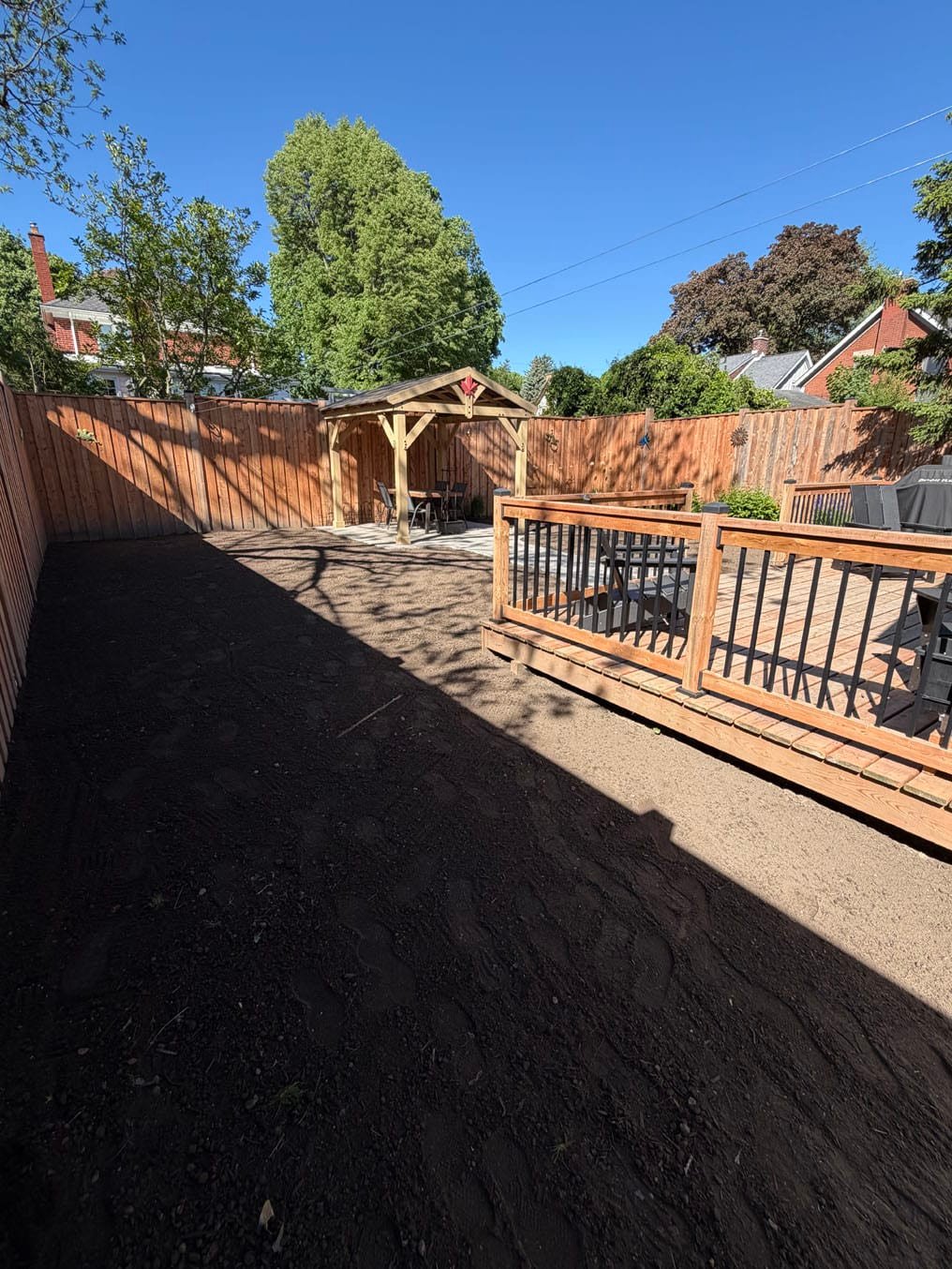
Do You Need a French Drain, Regrading, or Both?
Wet yards have two common causes, and they need different fixes.
Some yards have both problems, and the fix is both: a drain for the low spot and a regrade for the slope. That is why we look at the whole yard before we quote a drain.
Not sure which one you have? Our free Yard Grading & Drainage Check walks you through measuring your slope with a string line. One simple test: if water still stands about a day after a normal rain, the soil and grade are likely part of the problem.
How Does a French Drain Work?
A French drain gives water an easier path than the soil around it. Water soaks down into a trench filled with stone. At the bottom of the trench is a perforated pipe, called weeping tile, and holes along the pipe let the water in. The pipe is laid on a slope, so gravity carries the water from the high end of the trench to the low end, and from there to an outlet away from your home.
French drains are mainly used to manage surface water, but they can also help manage groundwater.
Do You Need Gravel for a French Drain?
Yes. The stone is what makes it a French drain: the Government of Canada defines one as a gravel-filled trench. We use ¾-inch clear crushed stone. Clear stone is screened so it carries no fine material, which leaves open space between the stones for water to move through to the pipe.
On clay, the filter fabric matters as much as the stone. We line the trench with non-woven geotextile fabric and fold it over the top of the stone. Water passes through the fabric, but the fine clay and silt around the trench stay out of the stone and the pipe. Without it, clay works its way into the gaps.
How Deep Does a French Drain Need to Be?
Canada.ca says yard French drains are typically installed 20 to 30 cm (8 to 12 in.) below ground. We set the exact depth on site, to suit where the water sits and how much fall we need to reach the outlet.
Does a French Drain Need a Slope?
Yes. A French drain runs on gravity, so the trench and the pipe are laid with a steady fall from the high end to the low end. A trench dug dead level holds water instead of moving it.
Where Does the Water Go?
A drain is only as good as its outlet. We route the water safely away from your foundation to one of three places:
We keep the outlet well away from your foundation and from your neighbours’ homes. For comparison, Canada.ca’s guidance for downspouts is at least 2 m (6 ft.) from the foundation of every surrounding home, where possible. We will not fix your wet yard by moving the water onto the yard next door.
How We Install a French Drain
1. We look at the whole yard. Where does the water sit, where does it come from, and where can it go? Then you get one quote for everything the yard needs: the drain, any grading, and the sod.
2. We request the locates. In Ontario, requesting a locate through Ontario One Call before digging is required by law, and the service is free. No digging starts until the buried lines are marked.
3. We dig the trench with a steady fall. The trench follows the wet area and runs downhill to the outlet.
4. We line it with non-woven geotextile fabric. It keeps the clay out of the stone and the pipe.
5. We lay the pipe in clear stone. The 4-inch perforated weeping tile goes in on a bed of ¾-inch clear crushed stone. More stone covers the pipe, and the fabric folds over the top.
6. We build the outlet: to daylight, a pop-up emitter, or another suitable run-off area, well away from any foundation.
7. We put your lawn back. The trench is topped with fresh screened topsoil, finish-graded level with the yard around it, and covered with fresh Kentucky bluegrass sod, cut the morning it is laid.
From Drain to Finished Lawn
A French drain cuts a line across your yard. How that line is finished is the part you look at every day.
Seeding a trench means weeks of keeping a strip of bare soil wet. Seed needs frequent surface moisture until it germinates, which can take one to several weeks. Sod gives you a finished lawn over the trench the day it is laid. It is backed by our 100% sod warranty: if a piece arrives unhealthy, we replace it free. Our new sod watering schedule tells you exactly how to water it.
A yard that has sat wet all spring may need more than a drain. If the ground also slopes toward the house, we regrade it while the crew and equipment are already there. If the lawn has thinned or died from standing in water, we replace the whole area, not just the strip over the trench. See lawn replacement. It is one crew and one visit, and you end with a dry, level, green yard, not a drain and a to-do list.
French Drain Alternatives: Regrading, Swales and Dry Wells
A French drain is not the only way to move water, and it is not always the best one.
Often the right answer is a combination. A downspout extension and a regrade can take care of the water near the house, and a French drain can take care of the low spot at the back. Our guide to the signs of poor lawn drainage can help you read your yard before we arrive.
How Much Does a French Drain Cost?
Every French drain is priced on site, because the price depends on the yard. The main factors are:
The assessment and the quote are free. If the yard also needs regrading and new sod, that part follows our posted rate card: $1,750 flat under 500 square feet, then $3.61 down to $2.15 per square foot from 1,100 square feet, with grading and up to three inches of screened topsoil included.
Can You Install a French Drain Yourself?
Yes, if you are comfortable digging a long, even trench by hand or with a rented trencher. These are the mistakes that make a DIY drain fail:
If you would rather have it done once, start to finish, with the lawn put back, that is the job we do.
Frequently Asked Questions
What is a French drain?
A French drain is a gravel-filled trench with a buried, perforated pipe that collects water in your yard and carries it away from your home. The pipe is laid on a slope, so gravity moves the water to an outlet such as daylight or a pop-up emitter.
Do you need gravel for a French drain?
Yes. The stone around the pipe is what lets water into the drain. Right On Sod uses ¾-inch clear crushed stone, which has no fine material to fill the gaps, inside non-woven geotextile fabric that keeps clay soil out.
Is a French drain better than regrading?
They fix different problems. A French drain removes water that collects in a low spot or in saturated soil. Regrading fixes ground that slopes toward the house. Some wet yards need both, which is why we assess the whole yard before quoting.
When can a French drain be installed?
A French drain can be installed any time the ground is not frozen. The best time to book the assessment is when you can see the problem: after the spring melt or a heavy rain, when it is clear where the water sits.
Do you replace the lawn after installing a French drain?
Yes. We top the trench with screened topsoil, grade it level with the yard and lay fresh Kentucky bluegrass sod over it, cut the morning it is laid. If the surrounding lawn is thin or dead from standing water, we can replace the whole area at the same time.
What Our Sod Installation Clients Are Saying






Get a Free French Drain Estimate in Kitchener, Waterloo or Cambridge
Tell us where the water sits and when it shows up. We will come out, look at the whole yard, and tell you plainly whether you need a French drain, regrading, or both, with one quote for the drain, the grading and the sod. We reply within 24 hours.
Call 226-213-5179 or fill in the form below.