

You step onto the lawn after a light rain and your foot sinks deeper than it should. A day later, the grass still feels soft, the soil smells a little off, and water is sitting where it never used to. Those are classic signs of poor lawn drainage, and they usually do not fix themselves.
Drainage problems can start small, then turn into thinning turf, muddy patches, grading issues, and expensive lawn replacement. In Southern Ontario, where heavy rain, clay-heavy soil, snowmelt, and new construction all play a role, a lawn can fail even when it is watered and maintained properly. If your yard stays wet longer than the surrounding properties, the issue is often below the surface.
1. Water sits on the lawn after rain
The most obvious warning sign is standing water. If puddles stay on the surface for hours after a normal rainfall, the ground is not moving water away fast enough. On a healthy lawn, water should soak in gradually or drain off in a controlled way based on the grade.
A few low spots are one thing. Large wet zones or repeat puddling in the same area usually point to a bigger problem, such as compacted soil, poor grading, heavy clay, or a lawn that was installed without proper base preparation. If the water pools near the home, patio, walkway, or fence line, that is worth addressing quickly before it affects more than just the grass.
2. The lawn feels spongy or muddy for days
Some lawns look fine from a distance but tell a different story when you walk across them. If the ground feels soft, squishy, or unstable well after rain has stopped, excess moisture is being trapped in the soil profile.
This matters because grassroots need both water and oxygen. When the soil stays saturated, roots struggle to breathe and grow deep. That leaves the lawn weaker, more disease-prone, and less able to handle summer heat. In high-traffic areas, muddy soil also gets compacted faster, which makes drainage even worse.
3. Grass turns yellow, thin, or patchy in wet areas
Homeowners often assume yellow grass means drought, but too much water can cause the same symptom. When roots sit in saturated soil, they stop functioning properly. The lawn may lose color, thin out, or start dying in irregular patches.
The pattern usually gives the problem away. If the grass struggles most in low areas, along downspouts, beside the driveway, or where runoff collects, drainage is a likely cause. Sod and seed both fail when the growing conditions stay waterlogged. You can replace the grass, but if the drainage issue remains, the same damage usually comes back.
4. Moss, algae, or a persistent sour smell shows up
A wet lawn creates the kind of environment moss and algae like. If you are seeing green film on the soil, moss creeping through thinning grass, or a stale, swampy smell near certain parts of the yard, the ground is probably staying wet too long.
Moss does not always mean drainage is the only issue. Shade, soil acidity, and weak turf can also contribute. But when moss shows up with soggy soil and poor turf performance, it is often part of the same drainage problem. The smell is another clue. Healthy soil has an earthy scent. Sour or musty odor often means water is sitting and airflow is limited.
5. Soil erosion and runoff strip the lawn
Poor drainage is not always about water sitting still. Sometimes the problem is that water moves too fast and takes soil with it. If you notice channels forming in the lawn, exposed roots, washed-out seed, or mulch and topsoil shifting after rain, runoff is likely overpowering the yard.
This is common on sloped properties, new builds, and lawns with bare soil or weak grass cover. Water follows the easiest path. Without proper grading and stable turf, it can cut through the yard and leave behind uneven ground. Over time, that leads to thin grass, low spots, and a lawn that looks rough no matter how often it is maintained.
6. Downspout areas stay soaked or grass fails nearby
One of the most overlooked signs of poor lawn drainage is localized failure around roof drainage points. If water from a downspout empties too close to the house or directly onto the lawn, the surrounding area can stay saturated and weak.
You may see constant mud, grass dieback, trenching from repeated flow, or a strip of lawn that never roots properly. This is especially common on newer properties where the final grading was rushed or where drainage paths were not thought through after construction. The lawn catches the symptoms, but the source may be roof water concentration rather than the soil alone.
7. The same spots struggle every season
If certain parts of the lawn fail every spring or after every stretch of rain, pay attention to the pattern. Repeat trouble in the same locations usually means the yard has a built-in drainage weakness. That could be a low grade, compacted subsoil, construction debris below the surface, or a poor transition between neighboring properties.
This is where guesswork costs money. Re-seeding the same patch year after year or laying sod over bad prep might improve the look briefly, but it rarely lasts. When a lawn problem keeps returning in the exact same area, it is usually structural, not cosmetic.
What causes poor lawn drainage?
The cause is not always obvious from the surface. In many yards, more than one factor is at play. Heavy clay soil is common in this region and naturally drains slower than loam. Compaction from foot traffic, machinery, or home construction can make that even worse.
Poor grading is another major cause. If the yard is flat where it should slope, or if low pockets were left behind during installation, water has nowhere to go. Sometimes the issue starts with topsoil depth. A lawn built over hard, compacted subgrade with minimal quality soil on top may green up at first, then struggle once weather puts it under stress.
Drainage also depends on the whole property, not just the lawn. Downspouts, neighboring elevations, patios, fences, and walkways can all redirect water. A yard can look level and still drain poorly if surface flow and soil conditions are working against each other.
When a drainage problem needs more than a quick fix
There is a difference between a temporary wet spot and a lawn that was set up to fail. If the issue only happens after a major storm and clears quickly, basic improvements may be enough. But if you are dealing with standing water, repeated turf loss, or widespread soggy conditions, the fix often needs to start with grading and soil preparation.
That might mean reworking low areas, improving slope, adding proper topsoil, or replacing damaged turf after the drainage issue is corrected. In some cases, drainage solutions like swales or extensions for concentrated water are part of the answer. It depends on the property. What works in one backyard may not work in another, especially when clay soil and new construction are involved.
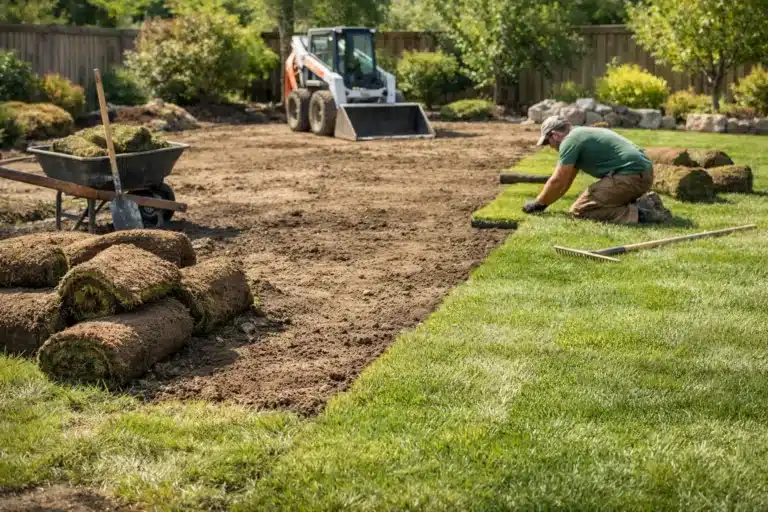
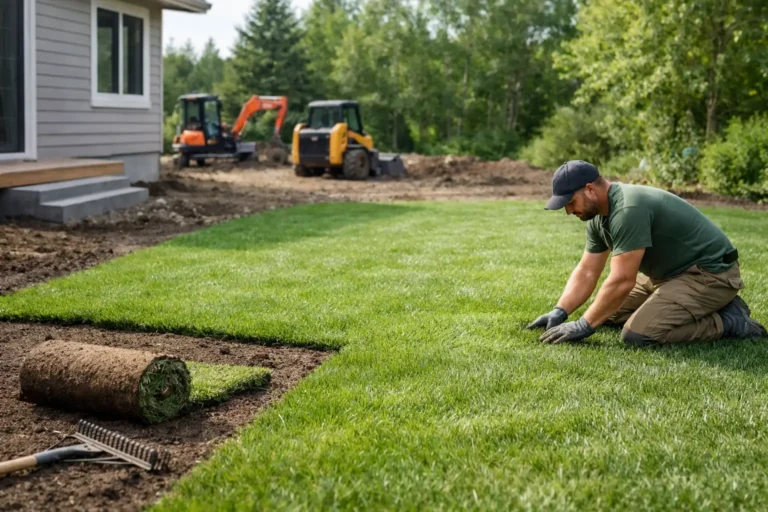
For homeowners planning new sod, this matters even more. Fresh sod can transform a property fast, but it performs best when the base is prepared correctly. Good drainage is not an extra. It is part of a lawn that roots well, stays healthy, and holds up over time.
Signs of poor lawn drainage are easiest to fix early
The biggest mistake is waiting until the lawn is beyond repair. Wet areas tend to spread. Turf thins out, soil gets softer, weeds move in, and the surface becomes harder to mow and maintain. By the time the damage looks severe, the underlying issue has usually been there for a while.
If your lawn is showing several of these warning signs, it is worth having the grade, soil condition, and water movement looked at before you spend more money on patchwork repairs. Right On Sod sees this often on lawns that were installed quickly or never properly prepared in the first place.
A good lawn should drain well, root deep, and recover after rain without turning into mud. If yours does not, the problem is telling you something – and the sooner you address it, the better the result will be.
6 Comments