
A commercial property does not get a free pass on first impressions. When tenants, customers, staff, or buyers pull in and see thin grass, mud, or rough grading, the whole site feels unfinished. Commercial sod Waterloo Region projects solve that fast, but only when the groundwork is handled properly.
For commercial sites, sod is not just about making a property look green by the end of the week. It is about getting a clean, stable surface in place, reducing dust and mud, improving curb appeal, and giving the property a lawn that can actually establish and hold up. That takes more than rolling out turf. It takes proper grading, soil preparation, timing, and a crew that understands how sod performs in Ontario conditions.
Why commercial sod in Waterloo Region needs a specialist
Commercial lawns usually come with more pressure than residential jobs. Deadlines are tighter. Access can be more complicated. The site may still have trades moving through it. There is often a handoff date for tenants, owners, or property managers, and the lawn needs to look finished right away.
That is where specialized sod installation matters. A general contractor may be able to include grass as one more line item, but sod performance starts below the surface. If the grade is off, water will sit where it should drain. If the soil is compacted, roots struggle to establish. If the site is rushed without cleanup and leveling, the result may look decent for a week and rough by the end of the month.
Commercial properties also vary more than people expect. A retail plaza has different traffic patterns than a townhouse development. An office property has different expectations than a school, industrial lot, or managed rental site. Some jobs need full lawn installation on new construction. Others need tear-out and replacement after neglect, grub damage, or failed previous work. The right approach depends on how the property is used, how fast the area needs to recover, and what kind of maintenance team will be caring for it afterward.
What a proper commercial sod install includes
A good commercial sod job starts long before the first roll arrives. The visible result depends on what happens underneath.
Site evaluation and grading
The first step is looking at the grade, drainage, access, and current soil conditions. On commercial sites, uneven grading is common, especially around new construction, parking lots, sidewalks, and utility work. If water is directed toward the building or trapped in low areas, new sod will not fix that. The grade has to be corrected first.
That may involve adding or removing soil, smoothing rough areas, and making sure runoff moves where it should. Done right, grading helps prevent puddling, erosion, and washout. It also gives the finished lawn a cleaner, more professional look.
Soil preparation
This is where many commercial installs either succeed or fail. Compacted subsoil, leftover debris, and poor-quality fill are common on job sites. Sod needs a root zone that can hold moisture, drain properly, and support healthy establishment.
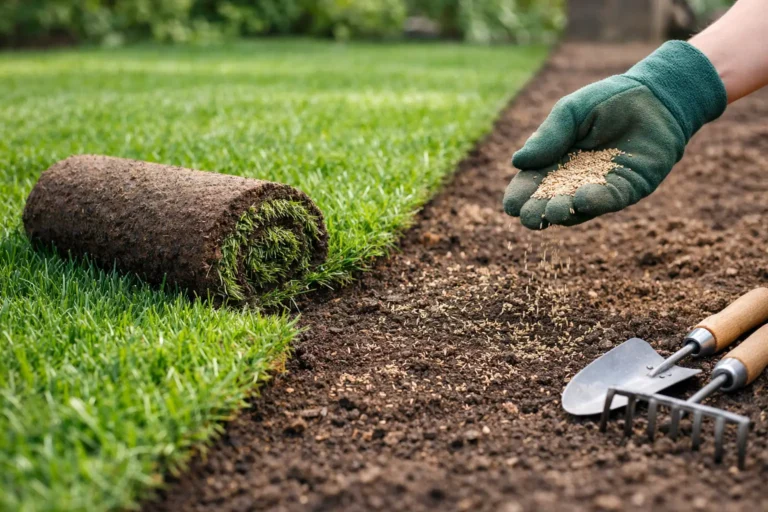
Soil prep may include removing debris, loosening compacted areas, bringing in quality topsoil, and creating a level final surface. If the lawn area is being replaced rather than installed from scratch, the old turf and problem material may need to be removed as well. Skipping this step saves time on install day but usually creates a weaker lawn with more callbacks later.
Premium sod installation
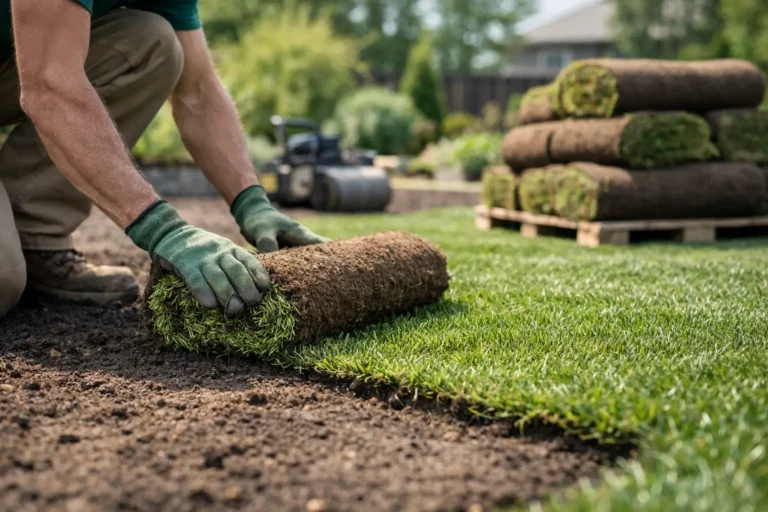
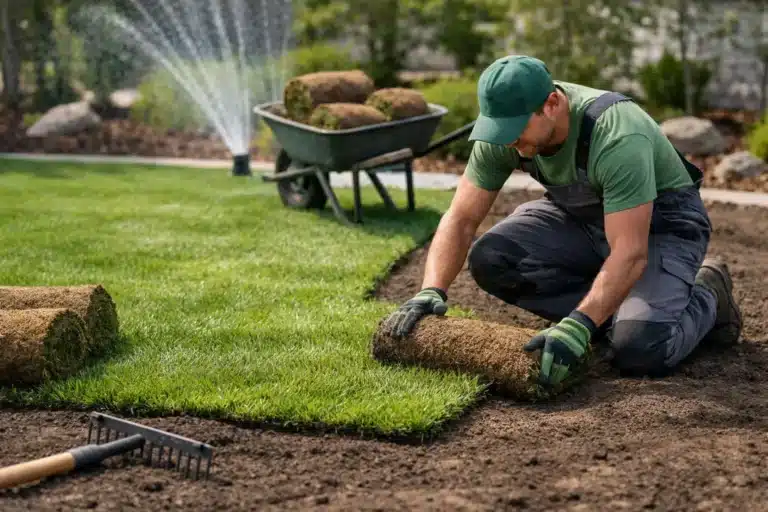
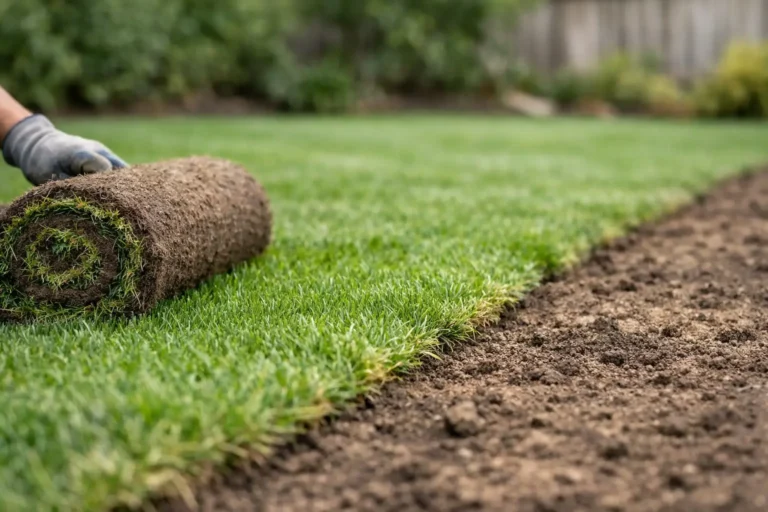
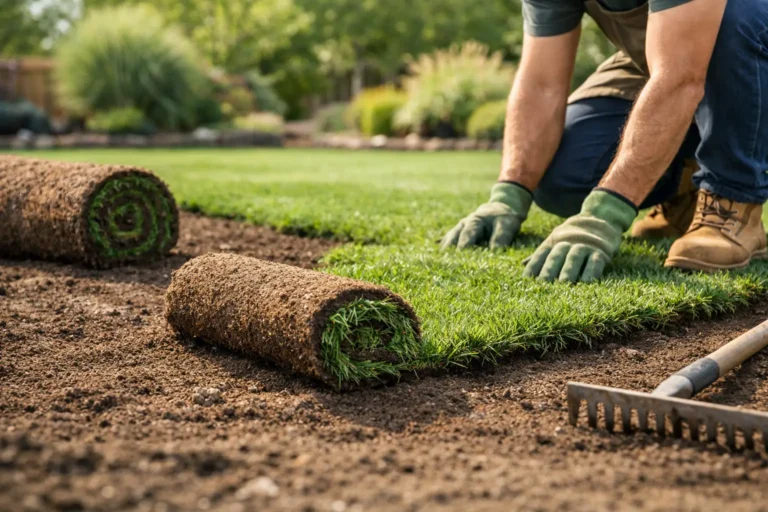
Once the base is ready, the sod needs to be laid tightly, evenly, and with attention to edges, seams, and transitions. On a commercial property, those details matter. Crooked lines, gaps, and poor cuts are easy to spot, especially along curbs, entrances, and signage areas.
Fresh sod also matters. Farm-fresh material installs cleaner, roots faster, and gives the property an immediate finished appearance. For builders and property managers, that speed matters. A site can go from dusty and incomplete to clean and marketable in a very short time.
Where commercial sod makes the biggest difference
New construction is the obvious fit, but it is not the only one. Commercial sod is often the right move when a property needs a visible turnaround without waiting through a full seeding cycle.
Multi-unit residential properties benefit because fresh sod improves the look of the grounds quickly and helps reduce complaints about bare patches and mud. Retail and office sites benefit because curb appeal affects how the entire business is perceived. Industrial properties often need sod after site work, drainage correction, or front-entry improvements. Builders use it to finish homes and developments on schedule. Property managers use it to correct lawn decline before it becomes a bigger appearance and maintenance issue.
There is also the practical side. A stable sod surface helps control erosion, limits tracking of mud onto pavement, and creates a more usable outdoor area sooner. That is especially useful on sites that need to be ready for occupancy, leasing, or active foot traffic.
Timing, traffic, and other real-world factors
Commercial clients usually want speed, and that makes sense. Still, fast installation works best when expectations are clear.
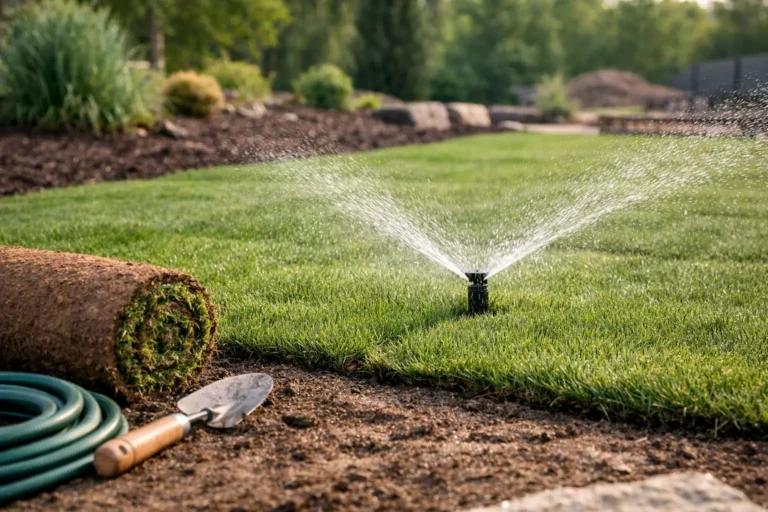
Fresh sod is not instantly mature. It looks finished right away, but it still needs the right watering and a short establishment window. If heavy traffic hits it too soon, seams can separate and rooting can be delayed. On busy properties, that may mean staging the work, protecting certain sections, or coordinating with occupancy and maintenance teams.
Season also matters. Spring and fall are often ideal for establishment, but commercial sod can be installed during much of the growing season if watering is managed correctly. Summer installs can still work well, though they require closer attention. The trade-off is simple: if the project timeline is fixed, the installation plan and aftercare need to be tighter.
Drainage is another factor that should never be treated as an afterthought. If a property has standing water, downspout discharge issues, or areas that stay soggy, those conditions should be addressed before or during the sod project. Otherwise, the same problems tend to show up again under a fresh green surface.
Why cheap commercial sod usually costs more later
Commercial buyers are right to ask about price. Large lawn areas add up quickly, and every project has a budget. But the lowest number on an estimate is not always the lowest cost over time.
Cheap sod work often cuts corners in prep, grading, or material quality. That can lead to uneven surfaces, weak rooting, drainage complaints, patch failure, or a lawn that declines before the property has even settled into normal use. Then the client pays twice – once for the rushed install and again for repairs or replacement.
A dependable estimate should reflect the real needs of the site. That includes the condition of the base, access for crews and materials, the amount of grading required, and whether old turf or damaged areas need to be removed. Transparent pricing is not about being the cheapest. It is about showing exactly what it takes to do the job properly and avoid problems that were easy to prevent.
Choosing the right contractor for commercial sod Waterloo Region work
If you are comparing contractors, look past the promise of a fast install. Ask how they handle grading. Ask what they do with compacted soil. Ask how they manage large sites, tight timelines, and post-install watering guidance. A contractor who specializes in sod should be able to answer those questions clearly and without guesswork.
It also helps to work with a team that understands local soil conditions and the kind of drainage issues that show up across Kitchener, Waterloo, and Cambridge job sites. Commercial properties in this region deal with a mix of new subdivision grading, clay-heavy areas, construction compaction, and runoff challenges. Experience with those conditions matters because the lawn has to perform after the crew leaves.
Right On Sod focuses on that full process, from site prep and grading to premium installation and lawn replacement. For commercial clients, that means fewer loose ends, faster turnaround, and a property that looks finished for the right reasons, not just for the photos.
If your site is bare, uneven, damaged, or simply not presentation-ready, commercial sod is often the fastest way to bring it up to standard. The best results come from treating it like a full site-finish service, not just a product delivery. When the prep is right, the grade is right, and the sod is installed properly, the difference is immediate and the value lasts longer than most people expect.