

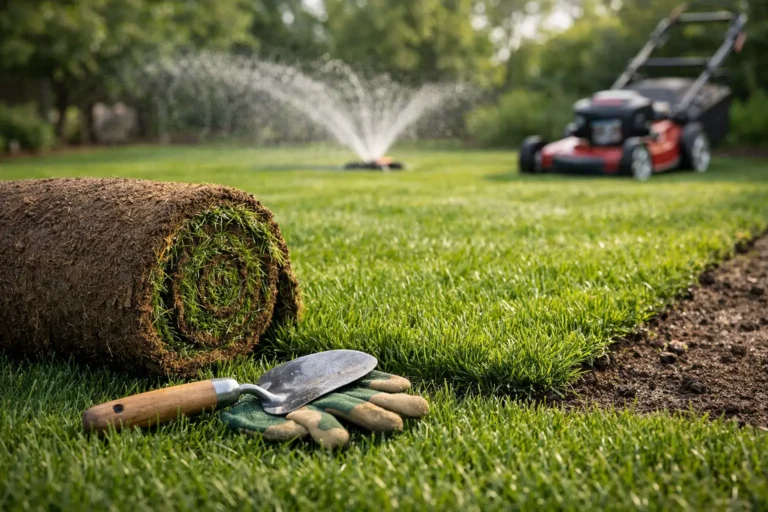
A lawn can look finished from the street and still be failing underneath. If your grass is thinning, holding water, overrun with weeds, or refusing to recover year after year, lawn tear out replacement is often the smarter fix than throwing more seed, fertilizer, and time at a surface problem.
For many property owners, the real issue is below the grass line. Compacted soil, poor grading, shallow topsoil, grub damage, and construction debris can all keep a lawn from establishing properly. In those cases, replacing the lawn is not about cosmetics alone. It is about rebuilding the surface so the new grass has a fair chance to root, drain, and stay healthy.
When lawn tear out replacement makes sense
Not every bad lawn needs to be removed. Small bare spots, minor winter damage, or a few weak areas can often be repaired. But there is a point where patching becomes expensive, slow, and frustrating.
A full lawn tear out replacement makes sense when the lawn is mostly weeds, when large sections are dead or uneven, or when water sits on the surface after rain. It is also a strong option after new construction, where the existing yard may be rough graded, compacted by equipment, or covered with low-quality fill. If the grass has failed more than once, that usually points to a prep issue, not just a grass issue.
Homeowners often call after trying the usual cycle of overseeding, watering, and hoping for better results. Builders and property managers tend to look at it differently. They need a clean, reliable finish on a schedule. In both cases, replacement is often the fastest way to get from problem lawn to usable lawn.
What a proper lawn tear out replacement includes
A good result depends far more on preparation than on the sod itself. Fresh sod can look great on day one almost anywhere. The difference shows up a few weeks later, when shallow roots, uneven soil, and poor drainage start to reveal themselves.
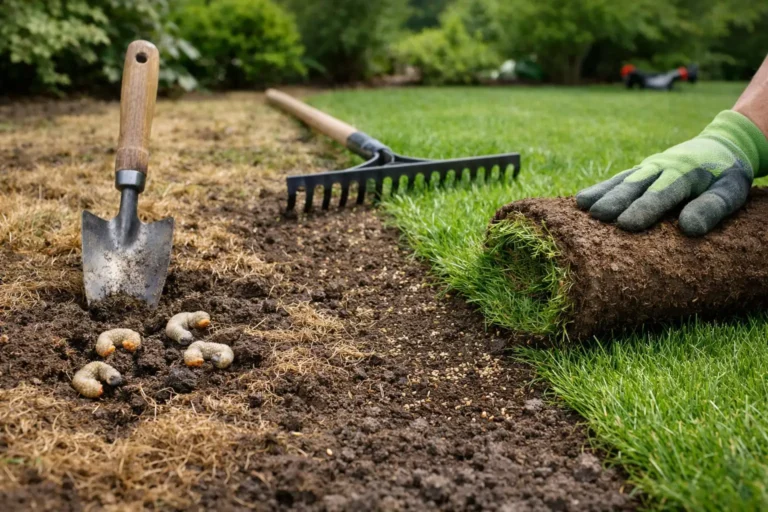
The first step is removing the existing turf and clearing out what is causing failure at the surface. That may include dead grass, weed-heavy sections, old root matter, and debris left behind from previous work. If there are signs of grub damage or disease pressure, those issues need to be identified before new sod goes down.
Removal and site cleanup
Tearing out the old lawn creates a clean starting point. It also gives the installer a chance to see what is happening underneath. Hidden low spots, buried rubble, and hard-packed areas are common, especially on newer lots and recently renovated properties.
This stage matters because laying sod over an unstable base rarely holds up. The lawn may green up quickly, but the surface can settle, drain poorly, or develop thin spots once the roots try to grow into the soil below.
Grading and soil preparation
This is where the job is won or lost. Proper grading helps direct water away from the house, smooths uneven ground, and creates the right base for mowing and everyday use. Soil preparation improves contact between the sod and the ground while giving roots access to air, moisture, and nutrients.
Sometimes a yard needs only light regrading and soil amendments. Other times it needs imported topsoil, reshaping, or correction around hardscape edges. There is no honest one-size-fits-all answer. The right approach depends on how the site drains, how compacted it is, and what condition the subsoil is in.
Fresh sod installation
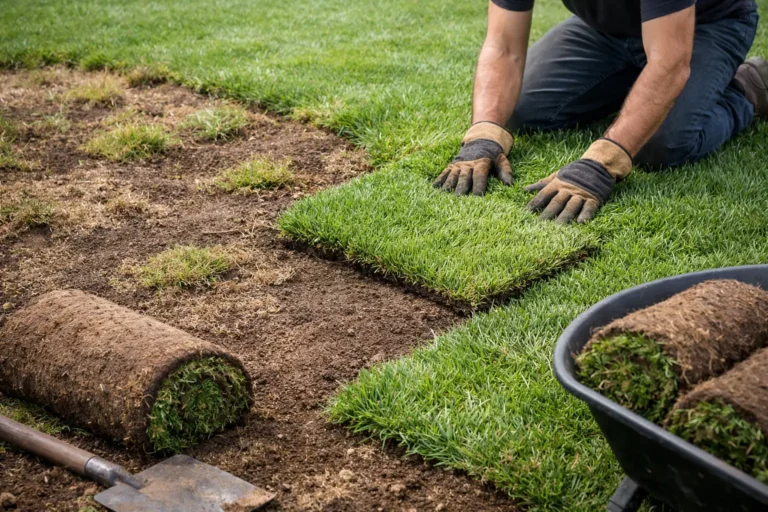
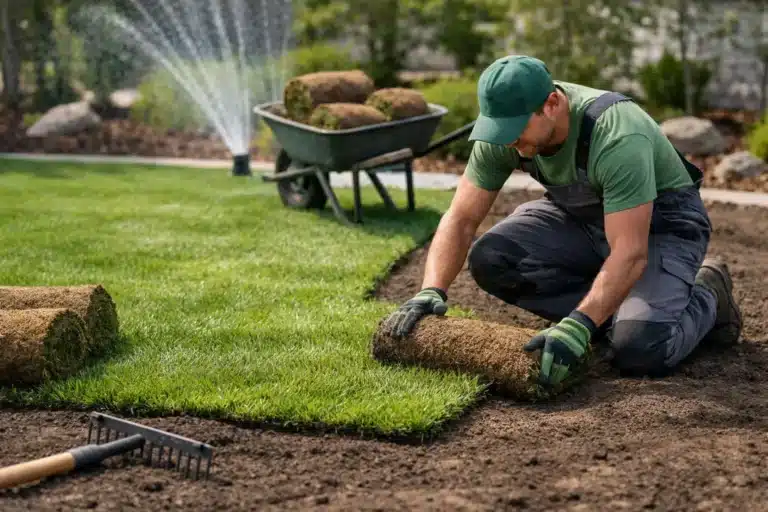
Once the base is ready, the sod should be installed tightly and evenly on the same day if possible. Premium, farm-fresh sod gives the project its immediate finished look, but it also reduces stress during establishment. The fresher the product, the better the rooting potential.
Installation speed matters here. Sod is a living product, and delays between cutting, delivery, and placement can affect performance. When the prep is solid and the sod is laid correctly, the lawn starts with the best possible advantage.
Why replacement often beats reseeding
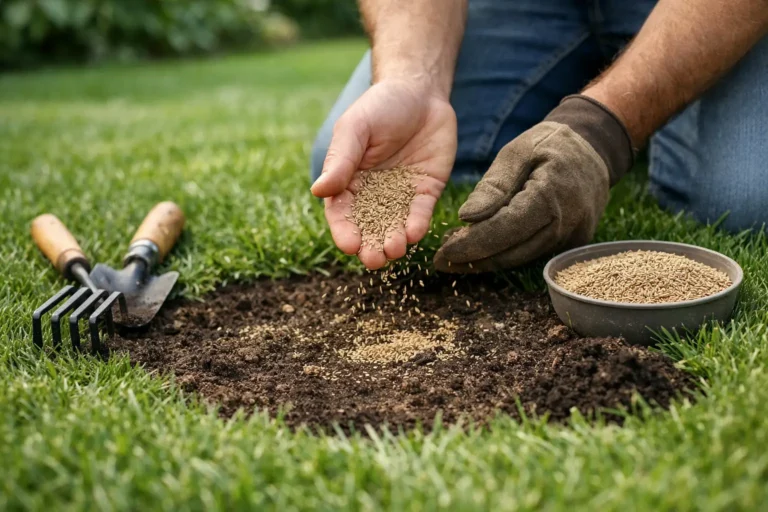
Seeding has its place. It can cost less up front and works well in some repair situations. But for a full-property reset, it usually comes with a longer timeline and more risk.
Seed is vulnerable to washout, uneven germination, weed pressure, and inconsistent moisture. It also takes longer to become a dense, finished lawn. If the underlying problem is grading or poor soil, seed does not solve that. It simply grows into the same conditions that caused the first failure.
Sod replacement gives immediate coverage, faster use, and a more predictable result. That is a major advantage for homeowners who want curb appeal now, and for builders or managers working toward turnover dates and tenant expectations. The trade-off is that sod demands good prep and disciplined watering during the establishment period. You get speed, but you still need the foundation done right.
Common problems a new lawn should solve
A lawn replacement project should do more than swap brown grass for green grass. It should correct the conditions that made the old lawn struggle.
Poor drainage is one of the most common issues. If water pools in low areas or runs the wrong way, the lawn stays stressed no matter how much fertilizer goes down. Uneven grading can also make mowing difficult and leave the yard looking rough even with healthy grass.
Compaction is another major factor. Heavy foot traffic, equipment use, and construction activity can squeeze the air out of the soil and make root growth difficult. In that case, the lawn may look acceptable for a short time, then stall out in summer heat.
Then there is simple surface inconsistency. Thin topsoil, buried stone, leftover construction material, and poor finishing work can lead to patchy rooting across the same yard. That is why a full tear-out can be more cost-effective than repeated spot fixes. You address the full system at once instead of chasing symptoms section by section.
What to expect after installation
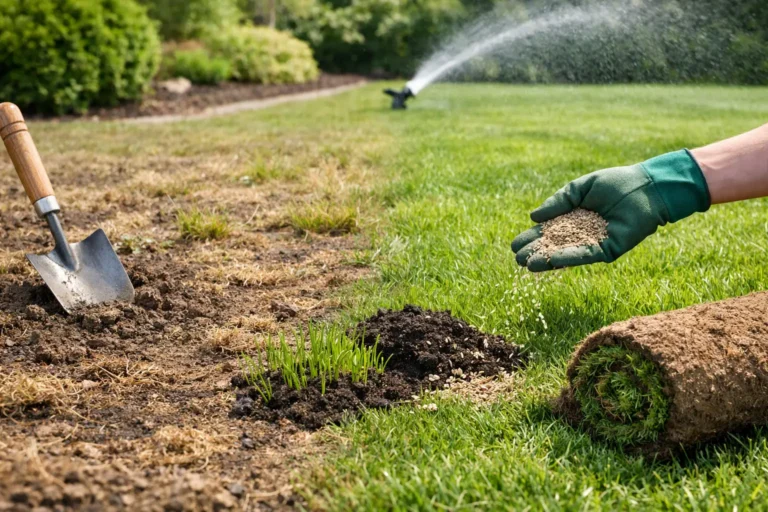
A new sod lawn looks finished quickly, but it is still in its establishment phase. The first few weeks matter. Watering needs to be consistent enough to keep the sod and the top layer of soil moist while roots begin to knit into the base.
Traffic should stay light early on. Mowing usually begins once the sod has started rooting and reached the proper height. Fertilization timing depends on the soil condition and the installation plan. Too much too soon can create stress instead of strength.
This is another reason professional prep matters. When the base is level and the soil is properly prepared, the watering pattern is more uniform and the sod roots more evenly. That translates into fewer weak spots and a cleaner finish once the lawn settles in.
Choosing the right contractor for lawn tear out replacement
Lawn replacement looks simple from the curb because the final product is clean and straightforward. The hard part is what happens before the sod arrives. That is why it pays to work with a company that specializes in lawn installation rather than treating it like a side service.
Ask how the contractor handles tear-out, grading, soil prep, and drainage concerns. Ask what kind of sod they use and how quickly it is installed after delivery. Ask whether they inspect for underlying causes like grubs, compaction, or poor runoff. Straight answers matter.
Price should be clear, but cheap numbers can hide skipped prep. If a quote sounds low, there is a fair question behind it: what is being left out? Cutting corners on grading or soil work may save money on day one and cost more once the lawn starts sinking, thinning, or holding water.
A specialist should be able to explain the process in plain language and tell you where the site conditions call for more work, not less. That kind of honesty is usually what leads to the best finished lawn.
For property owners who want a fast, clean reset, a properly planned replacement is often the shortest path to a lawn that finally works the way it should. A green lawn is nice to look at. A lawn built on the right base is the one that keeps looking good after the first few rains, the first hot stretch, and the first full season of use.
5 Comments