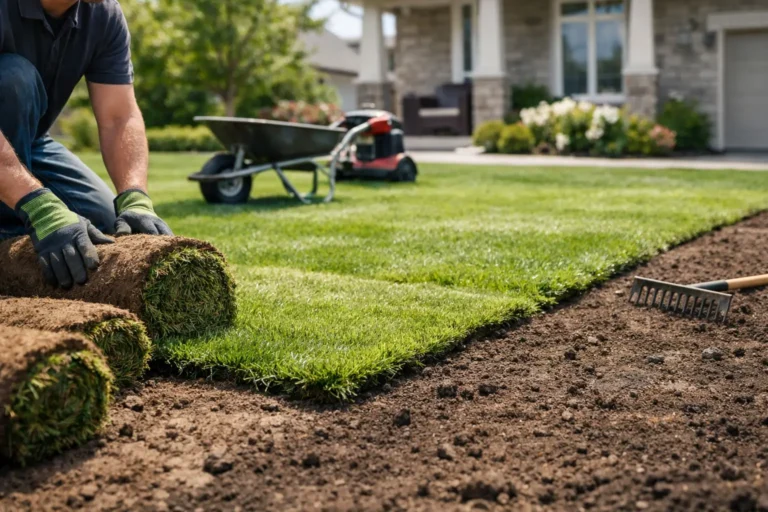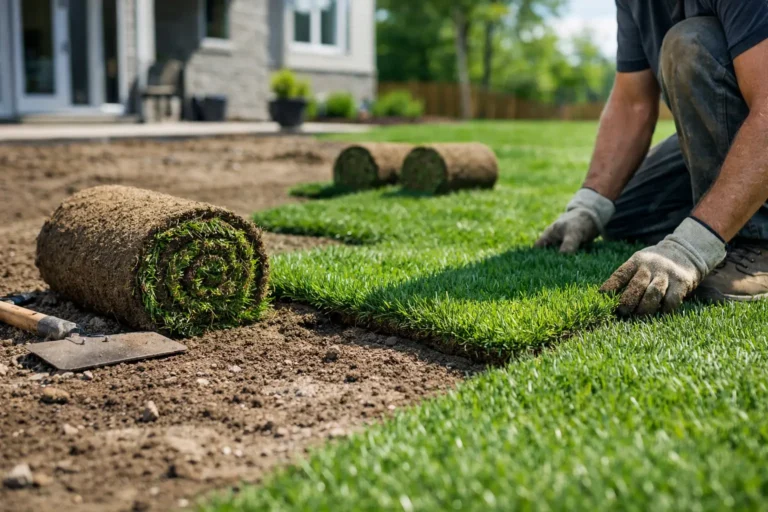

A front lawn can go from embarrassing to impressive in a single day, but only if the work below the grass is handled properly. If you need to replace your front lawn quickly, sod is the fastest path to a finished-looking yard – provided the old lawn, soil, grading, and watering plan are not treated like afterthoughts.
Fresh sod gives you instant green curb appeal. It does not, however, magically fix compacted soil, grub damage, standing water, construction debris, or a front yard that slopes toward the house. Those problems have a funny way of coming back after the crew leaves. The goal is not just a fast lawn replacement. It is a lawn that roots, drains, and stays green.
When You Need to Replace a Front Lawn Quickly
Most homeowners do not replace a front lawn because they are bored with mowing. They call when patchy grass has become mostly dirt, weeds have taken over, grubs have damaged the root system, or a renovation has left the yard looking like a construction site.
Sod makes sense when time matters. Unlike seed, which needs weeks of careful watering and can still come in thin or uneven, sod delivers an immediate, uniform surface. It is especially useful before listing a home, after new construction, following driveway or utility work, or when the front yard has become a curb-appeal problem that will not improve with another bag of fertilizer.
That said, speed should not mean rushing the diagnosis. If the existing lawn failed because water sits near the foundation or the soil is packed as hard as a parking lot, laying new sod over the same conditions is just giving the problem a fresh green hat.
The Fastest Method: Full Tear-Out and Fresh Sod
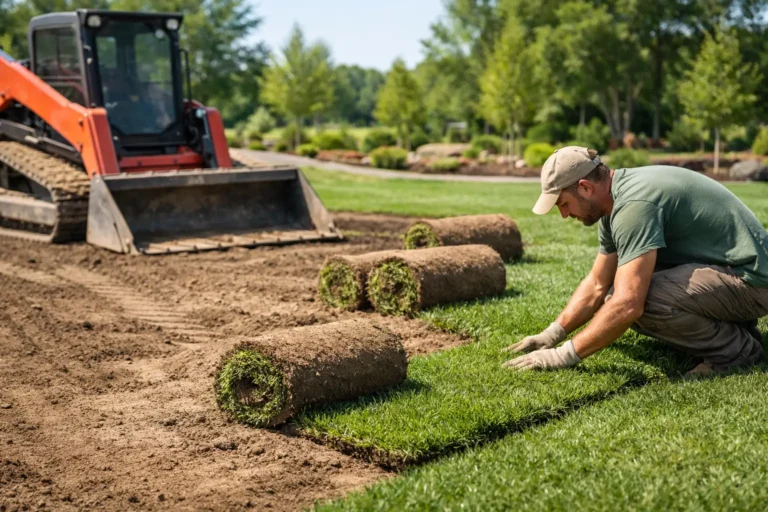
For a severely damaged lawn, a full tear-out and sod replacement is usually faster and more dependable than trying to nurse the old turf back to life. The process is straightforward when it is planned correctly: remove the failed lawn, correct the base, install quality sod, then water it like it matters.
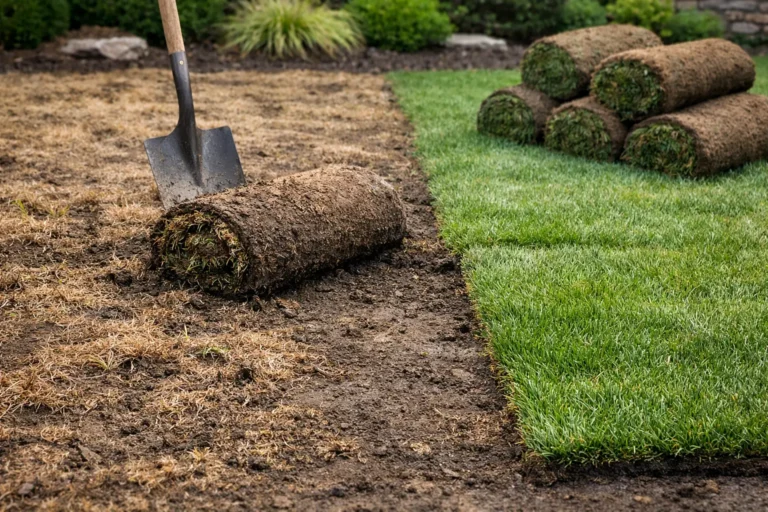
A proper replacement starts by cutting out the old grass, weeds, thatch, and compromised root zone. This creates a clean surface for grading and soil preparation. Simply spreading topsoil over struggling grass and dropping sod on top may look good for a few days, but it often creates uneven levels, poor root contact, and drainage trouble.
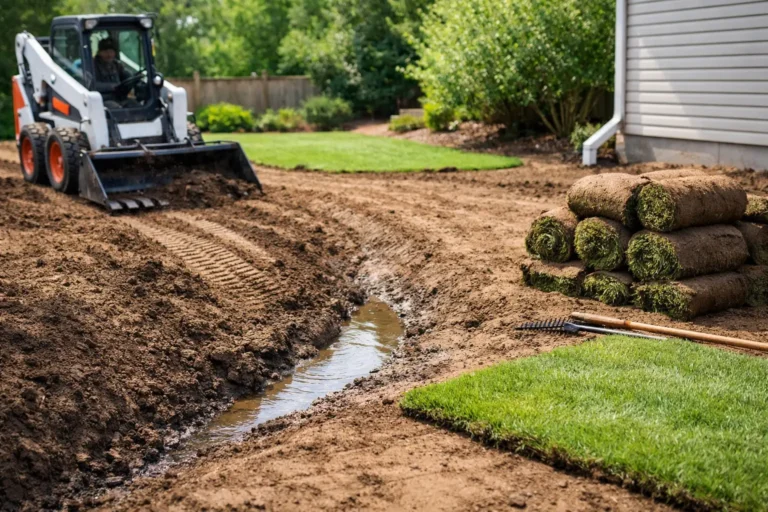
Once the old lawn is removed, the ground is graded to move water away from the home and prevent low spots. In the Waterloo Region, that step is not optional fluff. Heavy clay soils, spring rain, and freeze-thaw cycles can expose every shortcut. A level-looking lawn is not always a properly graded lawn.
The next step is adding and working in quality screened topsoil where needed. New sod needs loose, healthy soil to root into. The surface is then leveled, compacted lightly for stability, and raked smooth before installation. Think smooth enough that you are not mowing a surprise obstacle course next month.
Fresh, farm-cut sod is laid tightly with staggered seams so the lawn holds together as it roots. Crews trim edges around walkways, gardens, driveways, and curbs, then roll the sod to improve contact between the roots and the prepared soil. That root-to-soil contact is a big deal. Without it, sod can dry out quickly and struggle to establish.
How Fast Can the Job Be Done?
For many average front lawns, installation can be completed in one day once materials, access, and weather cooperate. Larger properties, extensive grading, difficult access, drainage corrections, or a combination of front and backyard work can add time. The actual sod installation is often the quick part. Preparation is where the lasting result is built.
A professional crew can move efficiently because it has the right equipment, enough labor, and a system for managing removal, soil, grading, and sod delivery in the right order. That matters when sod arrives fresh and needs to be installed promptly.
Weather can change the schedule. Light rain is generally not a problem and can even help with installation. Saturated soil, extreme heat, or a yard that has turned into mud can delay the job for good reason. Working wet ground too aggressively compacts it and makes a mess that no homeowner wants to explain to the neighbors.
What Can Slow Down a Front Lawn Replacement?
The fastest lawn replacements are the ones with no surprises. Before installation, take a hard look at the conditions that may affect the work.
Underground utilities, irrigation heads, landscape lighting, buried pet fences, tree roots, and narrow access points all need to be identified. Existing concrete and driveway elevations also matter. New soil and sod add height, and the finished lawn should sit correctly below hard surfaces while still draining away from the house.
Grub damage deserves special attention. If grubs caused the original lawn to peel back like loose carpet, replacing the sod without addressing the pest issue can lead to a repeat performance. The right treatment timing depends on the type of grub and season, so this is one area where a quick visual inspection can save a lot of frustration.
Shade is another trade-off. Premium sod can establish in partial shade, but dense shade from mature trees or buildings limits how much turf can thrive long term. In those areas, selective pruning, adjusted mowing, or a different landscape solution may be more realistic than expecting a sun-loving lawn to perform miracles.
Watering Is What Makes Quick Sod Replacement Stick
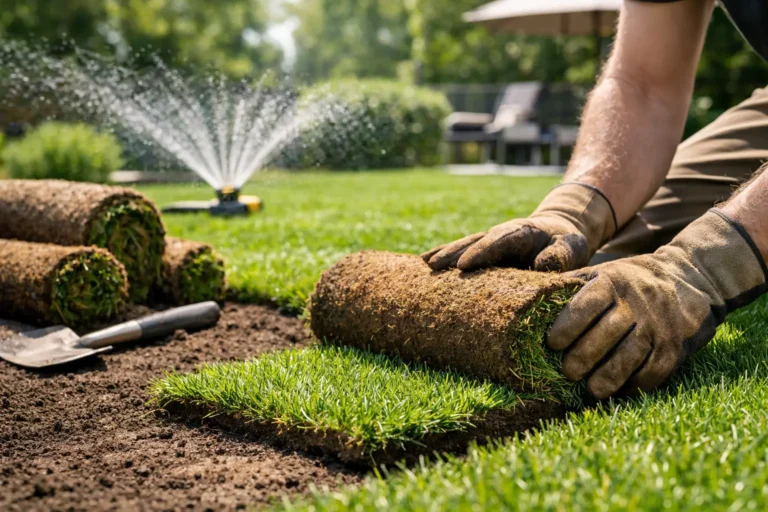
New sod needs consistent water immediately after installation. For the first couple of weeks, the goal is to keep both the sod and the soil beneath it moist. Water early in the morning, soak the lawn thoroughly, and check underneath a corner of the sod to make sure moisture is reaching the base instead of just darkening the surface.
During hot or windy weather, new sod may need more frequent watering. During cool, rainy periods, it may need less. The lawn should be moist, not floating. Overwatering can create soft soil, encourage disease, and make it harder for roots to find their way down.
After roughly two weeks, gently tug on a sod edge. If it resists lifting, roots are beginning to establish. At that point, transition toward deeper, less frequent watering to encourage a stronger root system. Do not stop watering cold turkey just because the lawn looks great from the sidewalk. It is still settling in.
Wait to mow until the sod has rooted enough to stay firmly in place, usually around two weeks depending on conditions. Use a sharp mower blade, keep the first cut high, and avoid turning aggressively on the new turf. Fresh sod is not fragile, but it is not ready for a family soccer tournament on day three either.
Why Professional Preparation Pays Off
There is no shortage of places to buy sod. The difference is what happens before and after it hits the ground. A dedicated sod contractor brings the equipment and experience to remove failed turf efficiently, shape the grade, build a suitable soil base, and install fresh material without leaving you with lumpy seams and a vague watering lecture.
Right On Sod approaches lawn replacement as a complete system, not a green product drop-off. That means paying attention to drainage, soil condition, finished elevations, and the rooting requirements that determine whether your front yard looks good next month and next season.
For homeowners, a professional installation also reduces the most common DIY headaches: underestimating soil needs, ordering too little sod, installing it too slowly, or realizing too late that the lawn now sends water toward the foundation. There is a place for DIY projects. A full front-yard replacement with grading concerns is often not the one to learn on.
Get the Lawn You Want Without the Long Wait
A fast front lawn replacement should leave you with more than instant color. It should give you a clean grade, a smooth surface, healthy soil, and sod that has a real chance to root deeply before Ontario weather tests it.
If your front yard is bare, patchy, grub-damaged, uneven, or worn out after construction, do not spend another season hoping it will sort itself out. Get the site assessed, fix the cause of the failure, and install fresh sod with a plan for the first few weeks. A great front lawn starts looking better immediately – and gets stronger from there.