

A new lawn can look incredible on day one and still fail by week six if the ground underneath is wrong. That is why yard grading matters so much. If water sits near your foundation, runs across walkways, or pools in the middle of the yard after every storm, the problem is not your sod. It is the slope, the soil, or both.
Most homeowners notice grading issues after construction, after a lawn starts thinning out, or after one ugly rainstorm turns the yard into a shallow pond. Builders often leave rough grades behind. Renovations can shift drainage patterns. Even an older lawn can slowly settle over time and start holding water where it should not. If you are planning sod installation, grading is not the extra. It is the part that decides whether the finished lawn actually performs.
What yard grading actually does
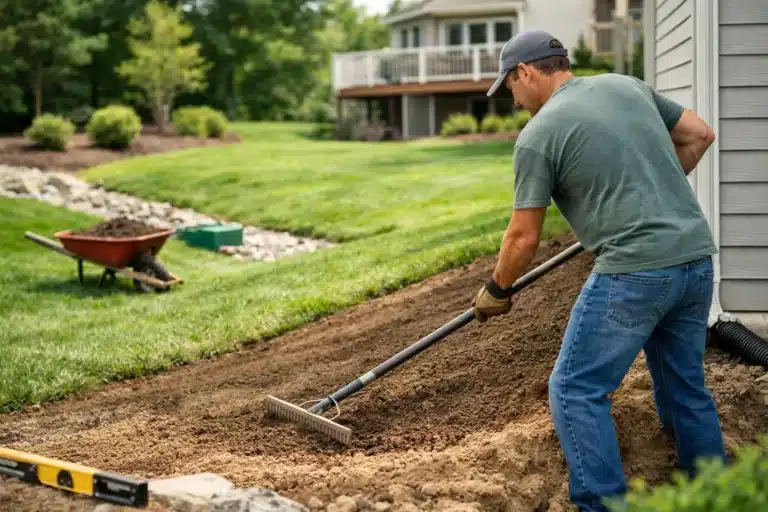
Yard grading is the process of shaping the ground so water moves where it should and stays away from where it should not. In practical terms, that usually means creating a gentle slope away from the home, smoothing out low spots, correcting drainage paths, and setting up the soil base so sod can root evenly.
Good grading is not about making the yard look flat. Flat sounds nice until the first heavy rain. Most lawns need subtle pitch so water drains away from the house and does not collect in dead zones. A properly graded yard also makes mowing easier, reduces soft muddy patches, and gives sod a more consistent surface to establish.
There is a catch, though. Too much slope can cause runoff, erosion, and dry areas where water rushes past instead of soaking in. Too little slope causes ponding. The goal is balance, not brute force. A skid steer and good intentions are not the same as proper yard prep.
Signs your yard grading is off
Some grading problems are obvious. Others hide in plain sight until the lawn starts struggling.
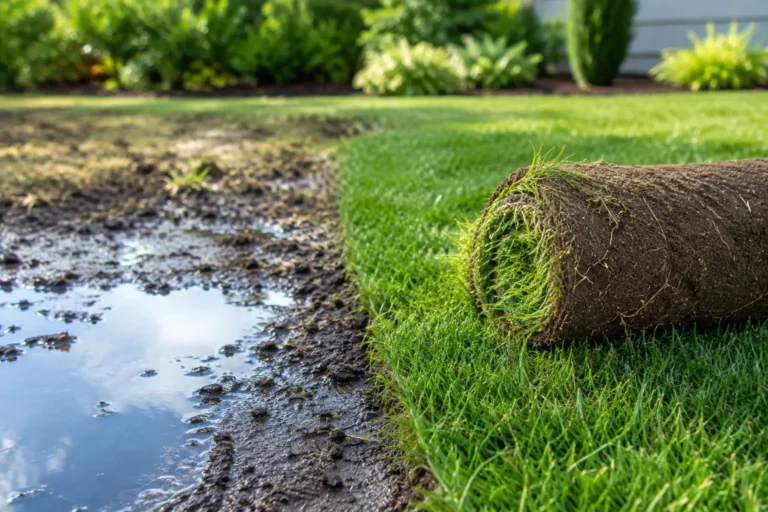
If water pools near the foundation, that is a red flag. If downspouts dump water into areas that stay wet for days, same problem. If parts of the lawn feel spongy, die out repeatedly, or develop moss while the rest of the yard is fine, uneven drainage is usually involved. You may also notice soil washing away, mulch shifting after rain, or soggy strips along fences and patios.
For new homes, rough grading is especially common. The lot may technically drain, but not in a way that supports a healthy finished lawn. After construction, topsoil is often thin, compacted, or missing altogether. That means even if the yard looks level from the driveway, it may still be poorly prepared for sod.
Why grading comes before sod
Sod is the finish layer, not the fix.
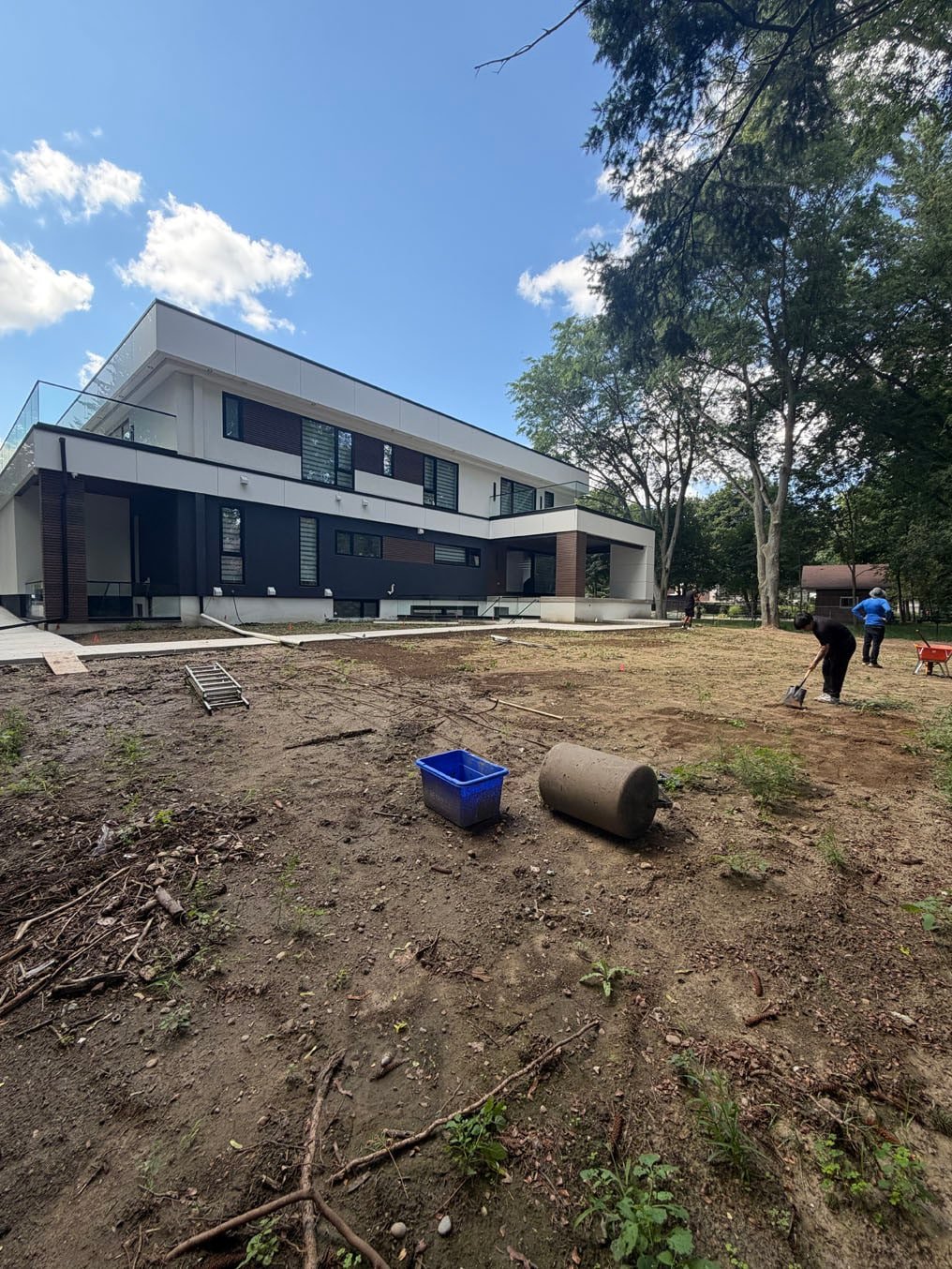
If the base is too compacted, roots struggle. If the grade sends water toward the house, sod will not solve that. If the yard has dips and humps, the lawn may look decent for a short time, then decline as water collects in some sections and dries out in others.
This is where people get burned. They pay for a fresh lawn, water it properly, and expect a clean result. Then the same low spots that killed the old grass start showing up again. The lawn is not failing because sod is bad. It is failing because the grading work was skipped or done halfway.
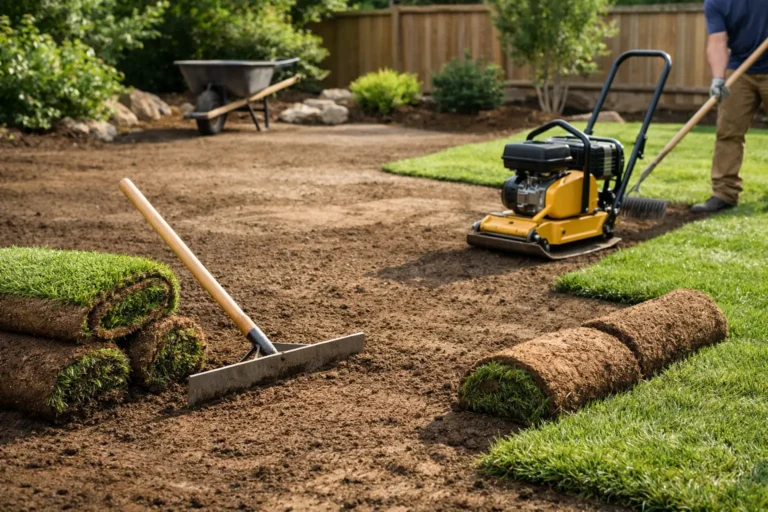
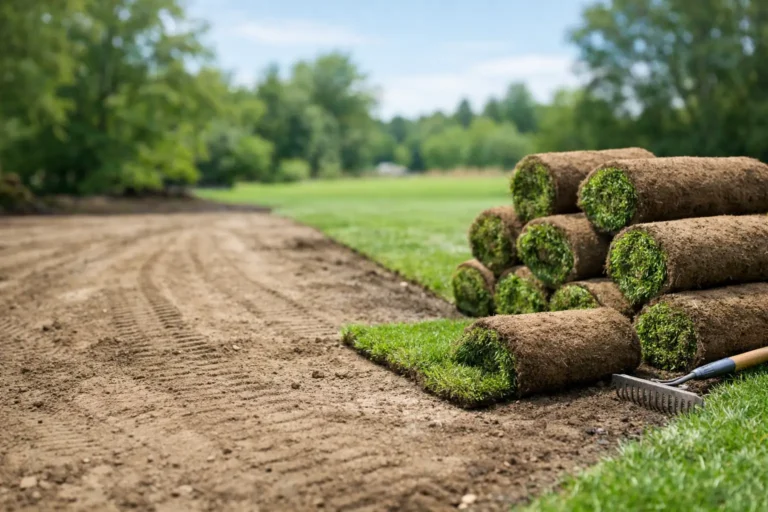
A proper install usually starts with removing debris, correcting the grade, improving the soil profile, and making sure the final surface is smooth, stable, and ready to root. That extra preparation is what gives sod the fast, clean transformation people actually want.
Yard grading and drainage are connected
When people talk about drainage, they often jump straight to drains, trenching, or expensive underground solutions. Sometimes those are needed. Often, the simpler answer is better grading.
A yard that slopes correctly can move a surprising amount of water without drama. That is especially true when paired with healthy soil that absorbs moisture instead of shedding it like concrete. In many cases, regrading the lawn and improving the soil base solves the issue without turning the property into a construction zone.
That said, it depends on the site. Some yards have heavy clay, tight side yards, neighboring runoff, or lot elevations that make drainage trickier. Some need swales or targeted collection points. Some need downspout redirection in addition to grading. The right answer depends on where the water starts, where it goes now, and where it should go instead.
The soil under your lawn matters more than most people think
You can grade the surface perfectly and still have problems if the soil below is poor. Compacted subsoil, thin topsoil, and clay-heavy fill are common issues after construction and major landscaping work.
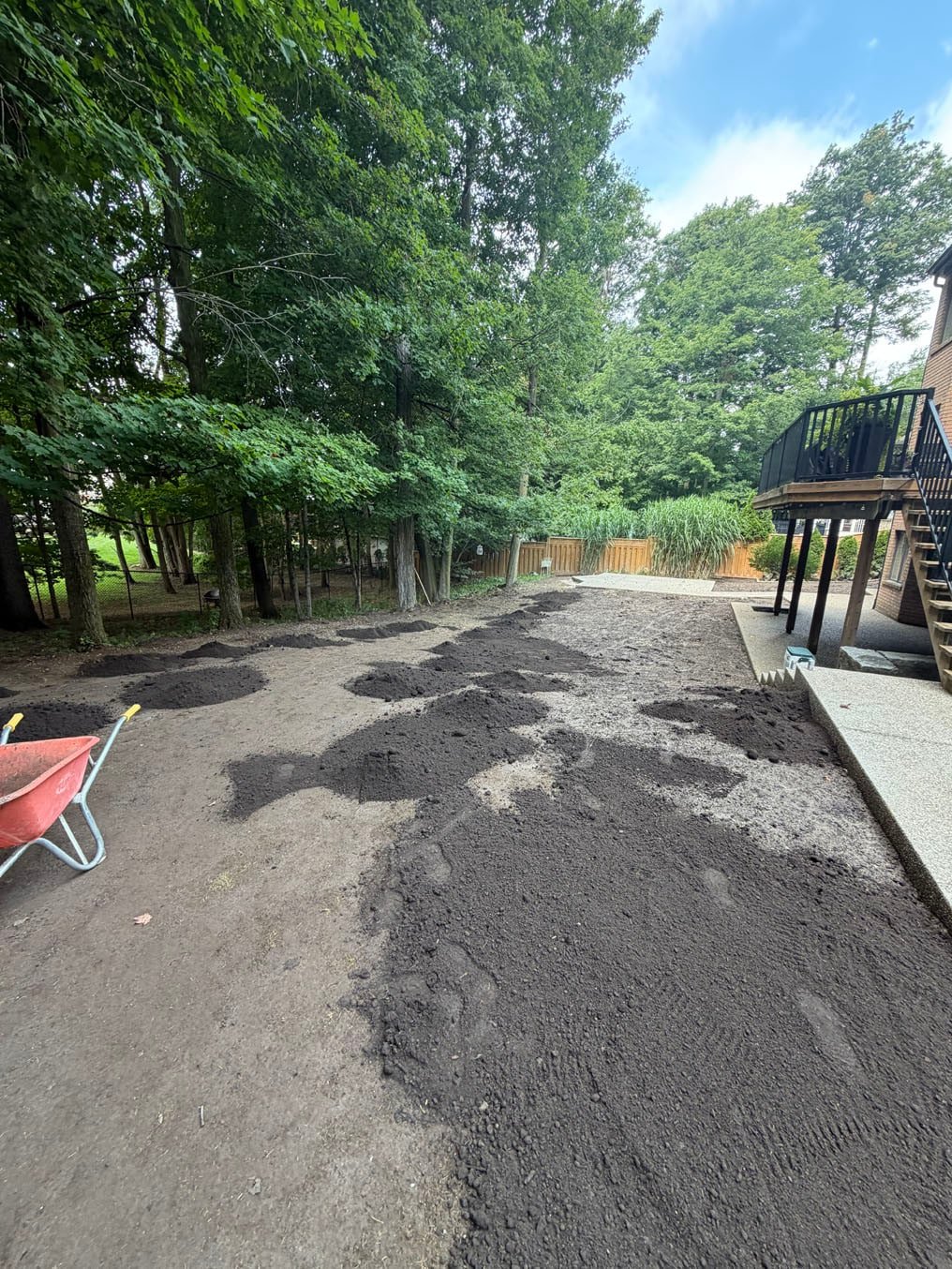
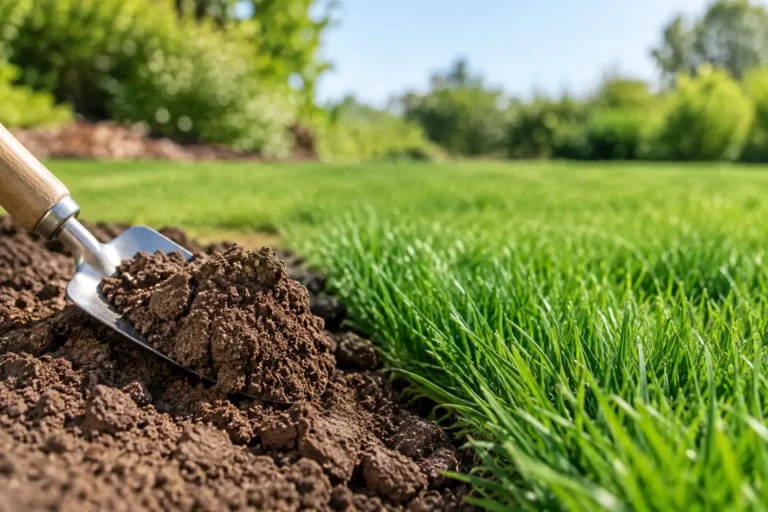
Sod needs a root-friendly layer that drains well enough to avoid saturation but holds enough moisture to support establishment. That is a narrow lane. Too sandy, and it dries out fast. Too dense, and roots sit in wet soil and struggle. Proper prep usually includes loosening compacted areas, adding quality soil where needed, and creating a finished surface that is both smooth and functional.
This part is easy to underestimate because you do not really see it once the lawn is installed. But your lawn sees it every day. The best-looking sod in the world cannot outwork bad soil forever.
Can you do yard grading yourself?
Small touch-ups, maybe. Full yard grading before sod, usually not.
If you are dealing with one shallow low spot in the lawn, a minor correction might be manageable. But if water is moving toward the house, the lot is uneven, or you are starting from a rough construction-grade yard, this is not a weekend rake-and-hope project. Grading needs the right equipment, the right materials, and a clear understanding of drainage. Otherwise, it is easy to create a yard that looks better for a week and drains worse for years.
There is also the finish standard. Sod shows every bump. If the prep is lumpy, the lawn will be lumpy. If the transitions around driveways, patios, or walkways are off, it shows immediately. A professional grading crew is not just moving dirt. They are setting the stage for a lawn that looks tight, drains properly, and holds up.
What a professional yard grading job should include
A good grading job starts with assessing the lot, not guessing from the curb. The slope around the home, hard surfaces, fence lines, neighboring grades, and existing drainage patterns all matter. Then the crew adjusts elevations, removes high spots, fills low areas with appropriate soil, and creates a consistent final grade that supports both drainage and lawn performance.
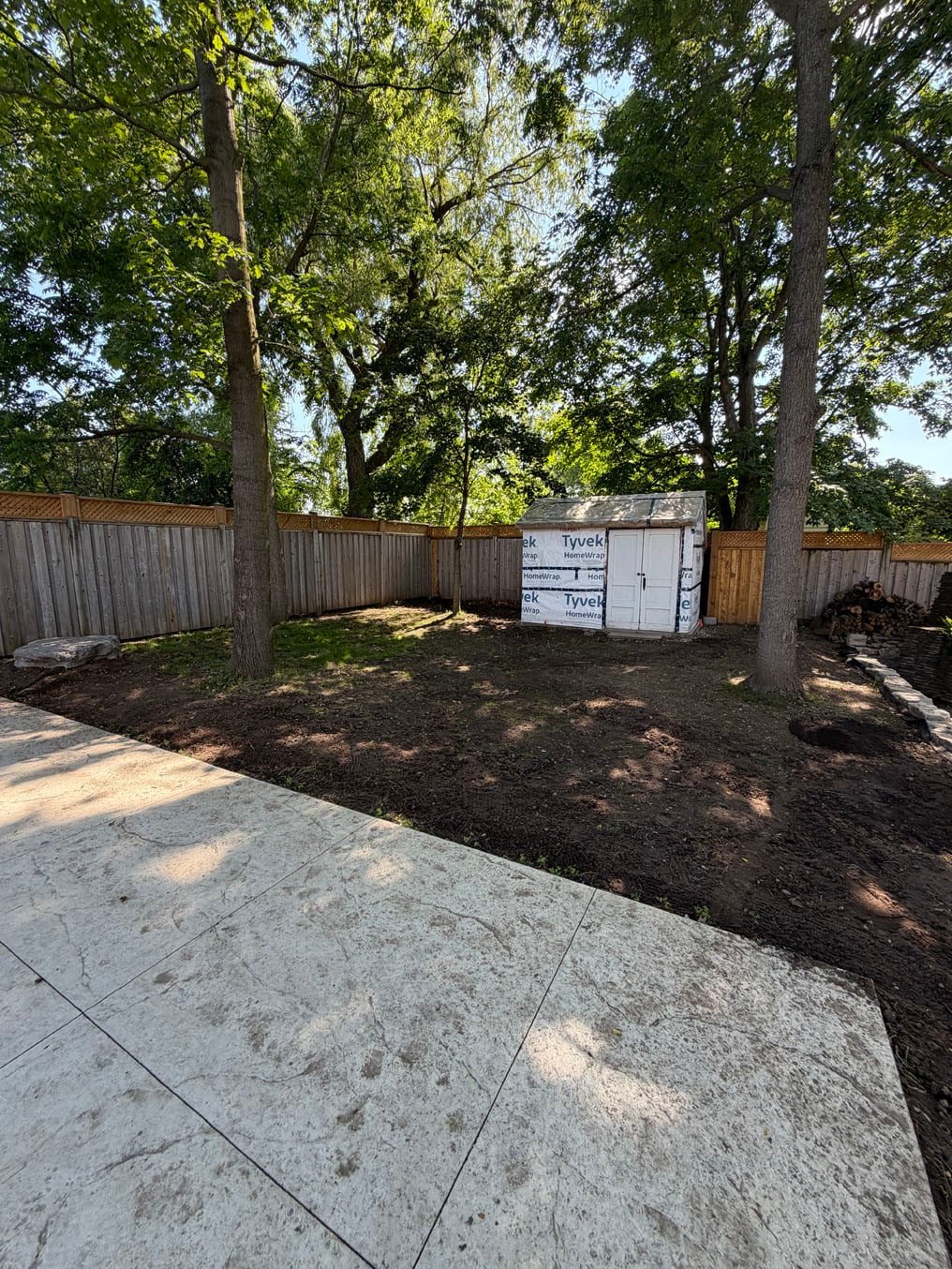
Before sod goes down, the soil should be prepared for rooting, not just spread around and called done. That means breaking up compaction where needed, adding proper topsoil, and finishing the surface cleanly enough that the sod sits tight and even.
If you are hiring this out, ask simple questions. How will water move away from the house? What soil is being used? Will the final grade be ready for sod right away? If the answer sounds vague, that is your answer.
When grading is worth doing now
If you are already replacing a lawn, this is the best time to fix the grade. Doing sod first and grading later is like painting a wall before patching the drywall. It costs more, takes longer, and nobody ends up happy.
It is also worth doing now if your yard has standing water, visible settlement, grub damage combined with low spots, or rough post-construction conditions. The longer poor grading sits, the more it tends to affect everything around it – grass health, foundation drainage, patios, mulch beds, and how usable the yard actually feels.
For homeowners in places like Kitchener, Waterloo, and Cambridge, where spring thaws and heavy summer rain can expose every weak spot in a yard, proper grading is not overkill. It is prevention.
The result you should expect
When yard grading is done right, the lawn looks better right away, but the real win shows up later. Water drains more predictably. Sod roots more evenly. The surface feels smoother underfoot and easier to mow. You stop watching every rainstorm like it is a home inspection.
That is the standard worth paying for. Not just a greener yard this week, but a lawn that is built on a base that makes sense.
If your yard is holding water, sloping the wrong way, or getting prepped for new sod, fix the ground first. Grass is the visible part. The grade is what makes it last.
One Comment