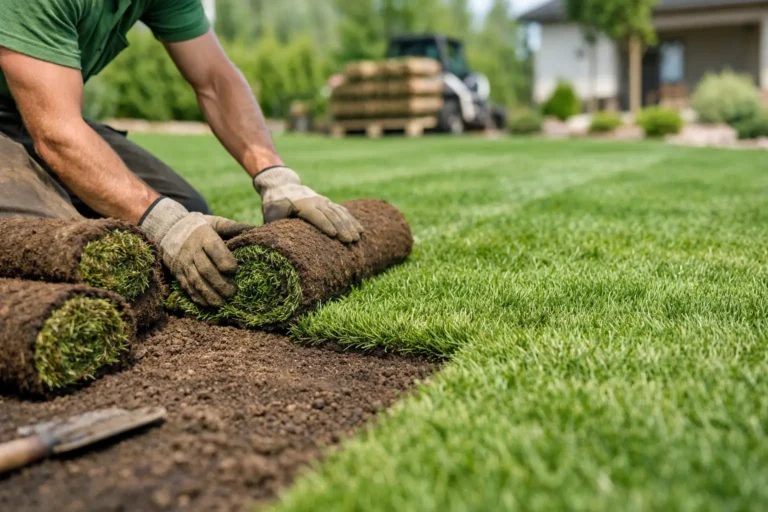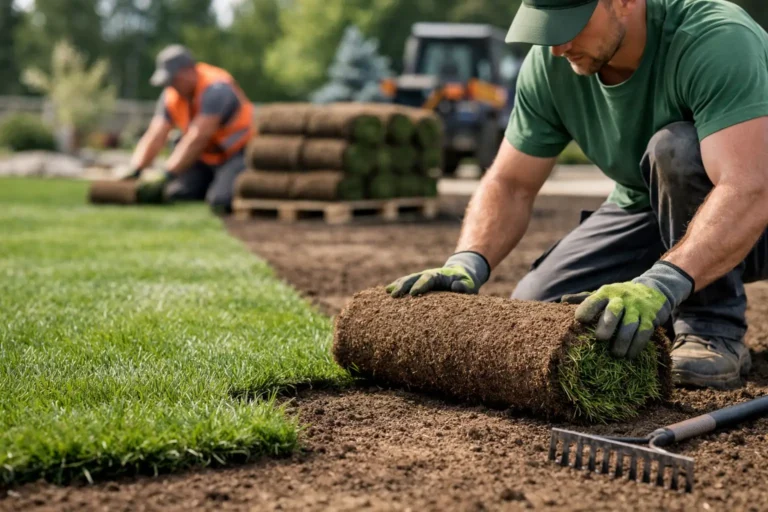

A build can be finished on paper and still feel unfinished the minute a buyer steps onto a muddy lot. That last impression matters. Sod installation for builders is often the final step that turns a construction site into a home people can picture themselves living in, and it only works when grading, soil prep, timing, and installation are handled properly.
For builders, this is not just about grass. It is about keeping handoffs clean, reducing call-backs, meeting municipal or development expectations, and delivering curb appeal without slowing down the schedule. A sod job that goes in too early, too late, or on poorly prepared ground can create drainage issues, rooting problems, and unhappy homeowners fast.
Why sod installation for builders is different
Builder projects move on deadlines, not wishful thinking. The site usually has been through excavation, backfilling, heavy traffic, and multiple trades before the lawn is even considered. That means the ground is rarely ready for sod just because the house is ready for occupancy.
This is where specialized sod work matters. A dedicated sod installer looks at compaction, final grade, drainage patterns, topsoil quality, and access conditions before the first roll is laid. General landscaping crews may treat sod as an add-on. For builders, that approach can create problems that show up after possession.
There is also the scale factor. A single custom home and a multi-lot subdivision need different planning. On one lot, the challenge may be tight access or poor drainage near the foundation. On a larger run of homes, consistency becomes the bigger issue. Buyers notice when one lot looks finished and the next looks rough, even if both were technically completed.
What builders actually need from a sod contractor
Speed matters, but speed without control is expensive. Builders need accurate estimating, clear communication, and crews that show up when scheduled. They also need a contractor who understands that site conditions change and can adjust without turning every issue into a delay.
The real value is in predictable execution. That means the grade is checked before sod delivery. The soil is prepared to support rooting, not just appearance. The installation is timed to avoid unnecessary stress on the turf. And the finish is clean enough that the property looks ready for turnover.
A strong sod contractor should also understand the trade-offs. For example, installing during a hot dry stretch may still be possible, but watering demands go up immediately and expectations need to be set. If the lot is still soft from recent rain, rushing equipment across it can damage the grade and create more work. Good contractors do not just say yes to every date. They explain what will protect the result.
The parts of builder sod work that cannot be skipped
Proper grading comes first
If the grade is wrong, the lawn will never perform the way it should. Water needs to move away from the house, not sit against the foundation or pool in low spots. Finished grading also affects how smooth the lawn looks once established. Sod can hide small imperfections for a few days, but it cannot fix poor grade underneath.
On builder lots, grade issues often come from compacted fill, rushed topsoil placement, or traffic from other trades after the lot was supposedly finished. That is why a final grading check before installation matters so much.
Soil preparation makes or breaks rooting
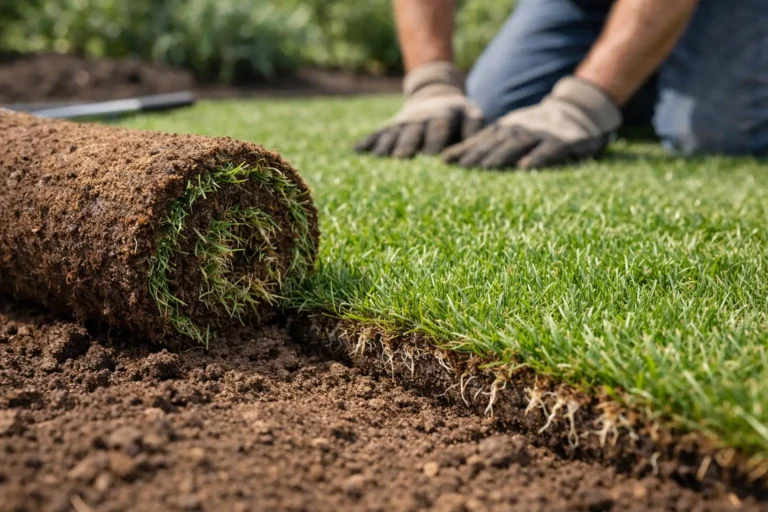
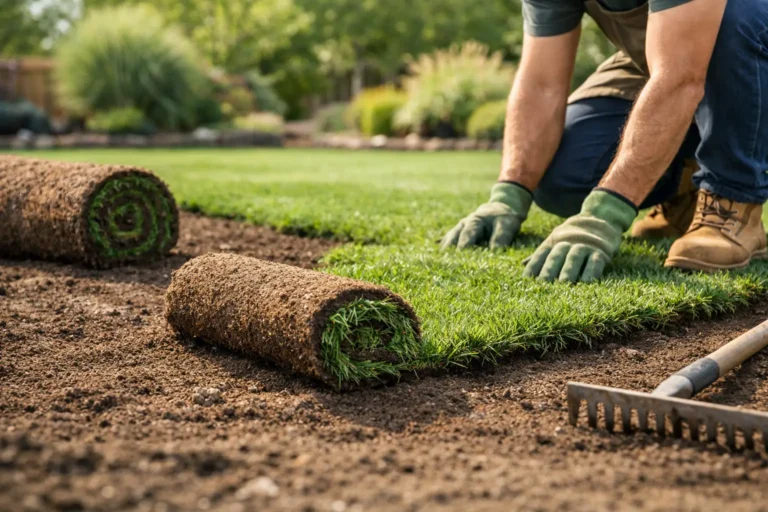
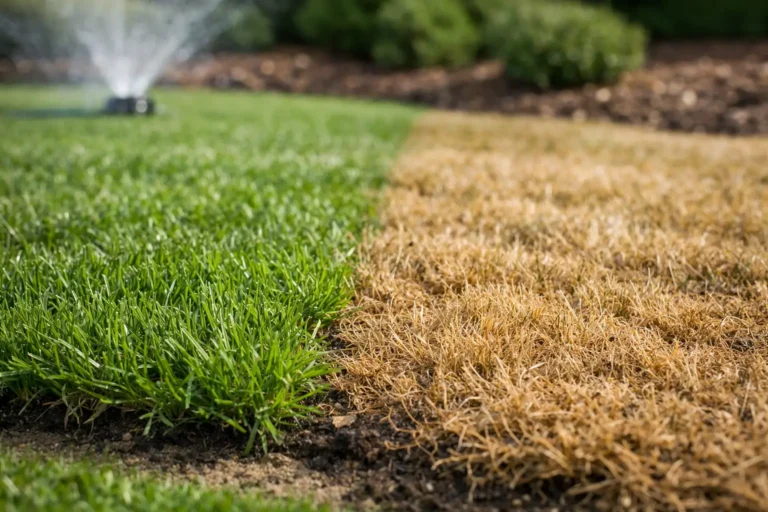
Fresh sod needs contact with loosened, workable soil to root properly. If it is laid on hard, compacted ground, it may green up briefly from watering and then struggle once the surface dries out. To the homeowner, it looks like the lawn failed for no reason. In reality, the root zone was never set up properly.
Ontario conditions add another layer here. Clay-heavy soils, drainage challenges, and seasonal weather swings can all affect establishment. Builders who want fewer problems after turnover need more than a quick cosmetic install. They need the soil prepared for actual rooting.
Timing has to match the site
Sod is one of the last visible tasks on a lot, which is exactly why it often gets squeezed. But it should not go in while other work is still likely to tear it up. Fencing, paving, utility adjustments, and final exterior touch-ups can all undo a clean lawn install if sequencing is off.
The best builder jobs happen when sod is treated as part of the closing plan, not an afterthought. That means booking early, coordinating around other trades, and making sure water access and site readiness are confirmed before installation day.
Common builder problems with sod – and how to avoid them
One common issue is assuming every lot is the same. In reality, one property may drain perfectly while the lot next to it holds water after every rain. Using the same approach across every site usually leads to uneven results.
Another problem is underestimating how much compaction construction causes. Heavy equipment, repeated foot traffic, and stockpiled materials all affect the soil. If that ground is not loosened and corrected, the sod may look finished on day one and fail weeks later.
There is also the handoff problem. Builders are often blamed for lawn issues that started with poor prep, inconsistent watering instructions, or rushed installation. A professional sod specialist helps reduce that risk by delivering a cleaner finish and clearer expectations for initial care.
Budget shortcuts can also backfire. Saving money by reducing prep or using lower-quality sod may trim the invoice, but it increases the chance of rework, warranty complaints, and poor buyer impressions. When you factor in those costs, cheap sod is rarely the lower-cost option.
Commercial-level coordination without the hassle
Builders do not need more vendors creating more emails, more site visits, and more confusion. They need a contractor who can estimate quickly, coordinate access, and complete the work without constant supervision.
That is especially true on developments where multiple homes need to be completed in phases. A good sod partner can help plan installations lot by lot, keep quality consistent, and flag grade or prep issues before they become expensive. That kind of coordination saves time because it prevents last-minute scrambling.
For crews working in Kitchener, Waterloo, and Cambridge, local experience matters too. Soil conditions, weather timing, and drainage patterns are not identical from one region to the next. A contractor who works these conditions regularly is more likely to spot trouble before sod is down.
What a reliable builder sod process should look like
It should start with a straightforward site review and an honest estimate. Not every lot needs the same amount of prep, and pretending otherwise usually creates a change-order conversation later.
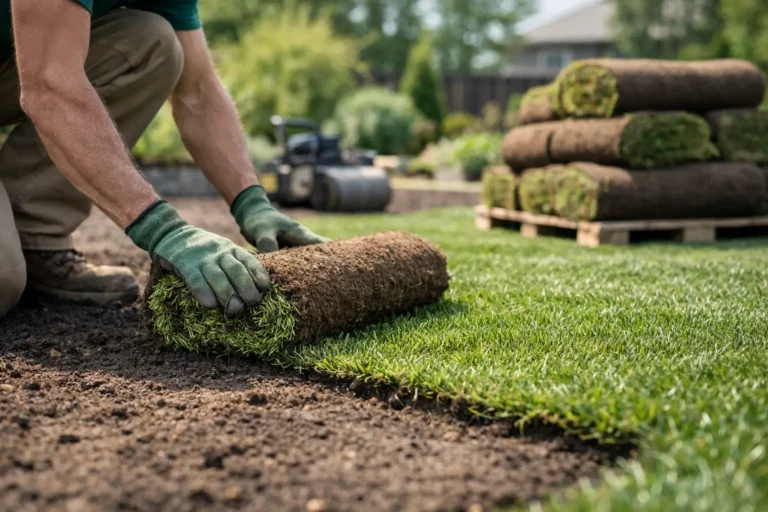
From there, the ground should be graded and prepared properly, with attention to drainage, smoothness, and soil condition. Once the site is ready, premium sod should be installed quickly and tightly, with clean edges and solid ground contact.
After installation, the builder should have clear guidance on immediate watering and what to tell the homeowner at handoff. This is one of the simplest ways to avoid confusion. A beautiful lawn can still struggle if nobody explains the first two weeks properly.
That practical, end-to-end approach is where a dedicated specialist stands apart. Right On Sod focuses on that kind of work because sod is not treated as a side service. It is the core job, and that shows in the prep, timing, and finish.
When it pays to bring in a sod specialist early
If a project has drainage concerns, rough grading, or multiple lots to coordinate, early involvement usually saves money. It is easier to fix prep issues before sod day than after buyers start asking why water is pooling or sections are drying out.
It also helps when timelines are tight. A specialist can tell you quickly whether the site is ready, what needs to be corrected, and how to sequence the install so the result holds up. That kind of clarity is valuable when every trade is pushing toward completion.
The best builder relationships are not based on flashy promises. They are built on responsiveness, clean work, and lawns that establish properly after the keys are handed over.
A finished home deserves a finished landscape. If you want the lawn to support the build instead of creating one more problem to manage, treat sod like the final construction step it really is.