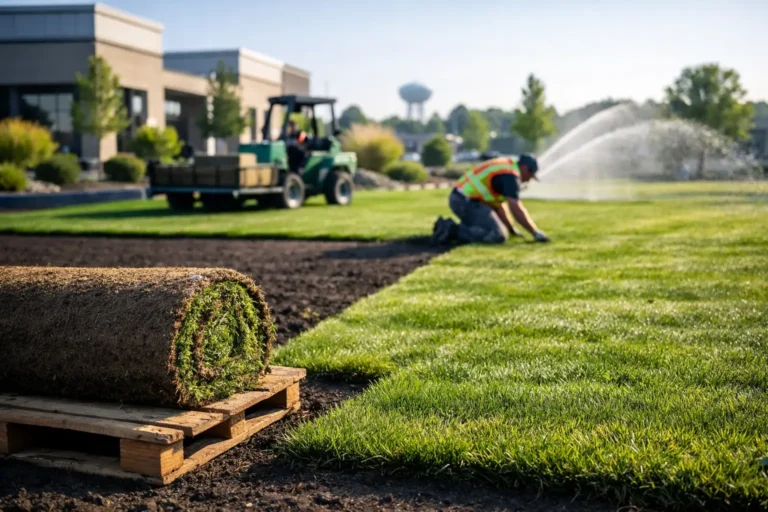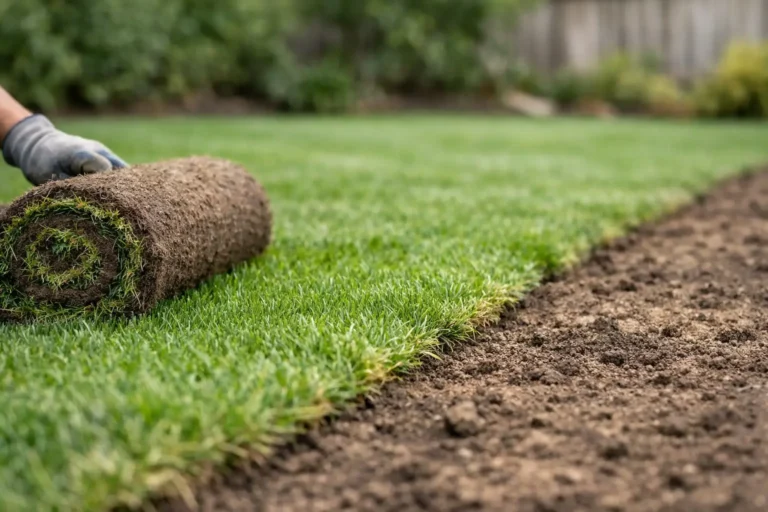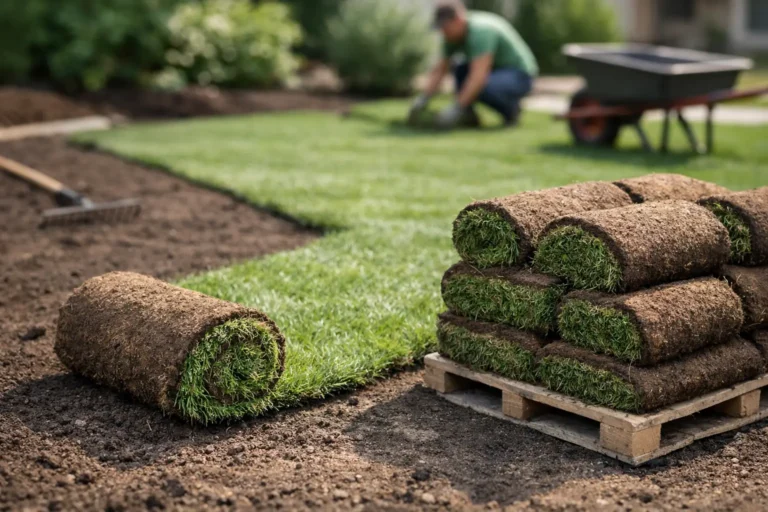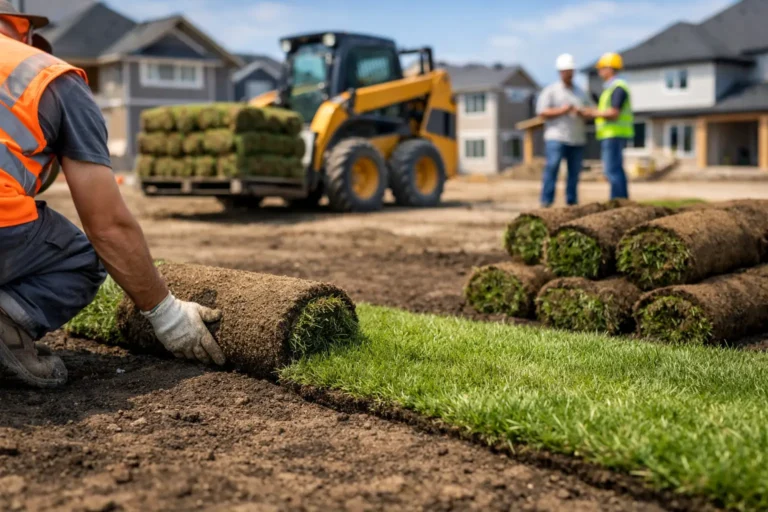

If you’re pricing out a new lawn, the first number you’ll probably search is sod cost per square foot. That’s a useful starting point, but it rarely tells the whole story. A lawn that looks great for a week and a lawn that takes root, drains properly, and stays healthy through Ontario weather are two very different jobs.
That’s why square-foot pricing matters, but only when you understand what’s included. In most cases, the real cost is shaped by the condition of the site, the amount of prep required, access to the yard, and whether you’re installing over a clean base or trying to fix years of lawn problems.
What sod cost per square foot usually includes
At the most basic level, sod pricing covers the sod itself and the labor to install it. But a proper quote often includes much more than rolling out fresh grass. For a lawn to establish quickly, the ground underneath has to be ready for it.
That usually means some combination of removing dead turf, leveling uneven areas, adding or improving topsoil, and preparing the surface so the sod can root evenly. If a price sounds unusually low, it may only reflect the material and a basic lay-down, not the work that actually gives you a durable result.
For homeowners, this is where confusion happens. Two quotes can both mention sod by the square foot, but one may include grading and soil prep while the other does not. On paper, the cheaper number wins. A month later, the more expensive problems show up.
Average sod cost per square foot by job type
A simple, open, easy-to-access yard will usually cost less per square foot than a property with tight access, rough grading, or old lawn removal. Smaller jobs can also carry a higher square-foot rate because setup, delivery, and labor still take time even when the area is limited.
In practical terms, a clean new-build lot with good access may be more straightforward than an older backyard with compacted soil, low spots, grub damage, and broken-up turf that needs to come out first. The second project often takes more labor before the first roll of sod is even installed.
That’s why the right question is not just, “What is the sod cost per square foot?” It’s, “What does the price per square foot include for my property?” That’s the number that actually helps you budget.
What changes the price the most
Site preparation is usually the biggest cost driver. If the base is uneven, hard-packed, full of weeds, or holding water, the lawn needs more than fresh sod. It needs correction underneath. Good prep costs more upfront, but it protects the investment.
Access is another major factor. If crews can move materials straight from the truck to the lawn, installation is faster and more efficient. If they need to wheel everything through a narrow gate, around a fence line, or up elevation changes, labor increases.
The size of the project matters too. Larger lawns often benefit from better pricing efficiency, while very small repairs or narrow side yards can cost more per square foot. Not because the sod is better, but because labor and delivery don’t scale down neatly.
Timing can also affect price. Peak season installations are in high demand, and the best installers get booked quickly. Waiting too long can limit scheduling options, especially if you want the job done during ideal growing conditions.
Cheap sod is not always cheap
Homeowners sometimes focus on material cost alone, especially when comparing DIY numbers to a professional install. On paper, buying sod and laying it yourself may look like the lower-cost option. Sometimes it is. But only if the site is already ready, you know how to handle grading, and you can install and water it correctly right away.
The hidden cost shows up when sod is laid on poor soil, over existing problems, or without enough attention to drainage and leveling. Fresh sod can make a lawn look finished overnight, but appearance on day one is not the same as long-term success.
A lower square-foot price can also mean thinner prep, lower-quality turf, rushed installation, or gaps in aftercare guidance. Those savings disappear quickly if sections fail, edges shrink back, or water starts pooling after the first heavy rain.
When full lawn replacement makes more sense
Not every lawn needs a complete tear-out and replacement. But if you’re dealing with widespread dead grass, heavy weed pressure, severe patchiness, grub damage, poor grading, or repeated failed repairs, replacing the lawn can be the faster and more reliable fix.
In those cases, the sod cost per square foot may be higher than a basic repair, but the value is better because you’re solving the underlying issue instead of paying for short-term patchwork. This is especially true after construction, major renovations, or years of neglected lawn health.
A fresh installation also gives you the chance to correct slope, improve the soil profile, and create a more even, usable surface. That matters for curb appeal, drainage, mowing, and how the lawn performs over time.
What homeowners should ask before accepting a quote
A solid estimate should be clear about scope. Ask whether the quote includes old grass removal, topsoil, grading, cleanup, and watering instructions. If there are known drainage or soil issues, ask how they’ll be addressed before sod is installed.
It also helps to ask what kind of sod is being used and how fresh it will be at installation. Premium farm-fresh sod establishes faster and tends to handle the transition better than material that has been sitting too long.
Another good question is how the company handles uneven areas, edges, and transitions to driveways, gardens, and walkways. Details like that affect the finished look more than many homeowners expect.
Budgeting by square footage without guessing
If you know your lawn size, square-foot pricing is still the quickest way to build a rough budget. Just treat it as a range, not a promise. A simple front lawn and a full-property replacement may share the same total area but have very different installation demands.
For example, two 2,000-square-foot jobs can land far apart in price if one is flat and ready while the other needs tear-out, grading, and soil improvement. The area is the same. The labor is not.
That’s why accurate estimating matters. A quick phone number can be helpful for ballpark planning, but an on-site assessment is what turns a rough number into a reliable one. It protects you from under-budgeting and reduces surprises once work begins.
Why local experience matters
In places like Kitchener, Waterloo, and Cambridge, sod installation is not just about laying grass neatly. The underlying soil, drainage patterns, and weather swings all affect how well a lawn takes root. A contractor who specializes in sod work understands how to prep for those conditions instead of treating every yard the same.
That local experience often shows up in the quote. Not because the price is inflated, but because the scope is realistic. If a yard needs grading correction or soil work to support healthy rooting, it should be priced honestly from the start.
That’s the difference between a fast cosmetic fix and a professional installation built to last.
Paying for results, not just coverage
The best way to think about sod pricing is this: you are not only buying square footage of grass. You are paying for preparation, installation quality, and the odds that the lawn will establish properly.
A fair price should give you confidence that the base is right, the sod is high quality, and the work will be done efficiently. That matters whether you’re upgrading curb appeal before listing a home, replacing a damaged backyard, or finishing a new build.
Right On Sod approaches pricing the same way most customers do – straightforwardly. People want to know what the job costs, what’s included, and whether the lawn will look good after the crew leaves and still look good weeks later.
If you’re comparing quotes, don’t chase the lowest number too quickly. Look for the company that explains the work clearly, prices the site honestly, and treats prep as seriously as the sod itself. That’s usually the lawn you end up being happiest with.