

If your lawn is thin, weedy, or just plain tired, asking can you lay sod over grass is completely reasonable. On the surface, it sounds like a shortcut that saves time and labor. In practice, it usually creates a lawn that struggles to root, dries out fast, and starts failing long before it should.
The short answer is no – you generally should not lay new sod directly over existing grass. Fresh sod needs firm contact with prepared soil so the roots can knit into the ground below. If old grass, weeds, thatch, or uneven buildup sit between the new sod and the soil, that root connection gets interrupted. The result can look fine for a week or two, then start lifting, browning, shrinking, or dying off in patches.
For homeowners looking for a fast lawn transformation, that is the exact opposite of what you want. New sod should give you immediate curb appeal and a strong start, not a temporary green cover that hides bigger problems underneath.
Why you usually can’t lay sod over grass
Sod is a live product, not outdoor carpet. It needs moisture, oxygen, and direct contact with loose, healthy soil. When you install it over an existing lawn, the layer underneath becomes a barrier.
Old grass does not disappear neatly under the new sod. It decomposes unevenly, traps air pockets, and can hold too much moisture in some areas while starving roots in others. If the existing lawn is thick, the new sod may sit too high and never fully settle. If the old lawn is patchy, you can end up with an uneven surface that feels soft in one spot and hard in another.
That underlying grass can also compete with the new sod. Any surviving grass or weeds may push through the seams, especially if the original lawn had crabgrass, clover, or aggressive perennial weeds. What looked like a clean reset can quickly turn into a mixed lawn with poor density and inconsistent color.
There is also a grading issue. Adding sod on top of existing grass raises the finished height of the lawn. That can create problems around driveways, walkways, patios, fence lines, and sprinkler heads. In some cases, it can even affect drainage by changing how water moves across the yard and away from the house.
What happens if you try it anyway
People try this shortcut because they want to avoid tearing out the old lawn. The trouble is that most of the cost of sod replacement is not the sod itself – it is the preparation that gives the sod a real chance to last.
If you lay sod over grass, a few things commonly happen. The sod may feel spongy underfoot because it is bridging over old vegetation instead of bonding to soil. The edges may dry out faster than expected. Sections may root at different rates, which leads to a lawn that looks established in one area and stressed in another.
In worse cases, the old layer underneath starts rotting. That can create heat, odor, fungal pressure, and a weak base. Once that happens, no amount of watering fixes the underlying problem. You are watering a bad installation, not building a healthy lawn.
That is why professional sod jobs focus so heavily on tear-out, grading, and soil prep. The visible green surface matters, but the success of the lawn is decided underneath.
Can you lay sod over grass if the lawn is very short?
Even if you mow the old lawn extremely short, the answer is still usually no. Cutting grass low is not the same as removing it. The crowns, roots, thatch, and weeds are still there, and those are exactly the materials that interfere with sod-to-soil contact.
Scalping a lawn can sometimes make removal easier, but it does not replace removal. If anything, it can create a misleading sense that the surface is ready when it is not. New sod installed over a scalped lawn may look flatter on day one, but it still carries the same rooting and drainage risks.
The right way to replace a lawn with sod
A proper sod installation starts by clearing out what should not stay. That usually means removing the old grass, weeds, and debris, then dealing with any soil issues before the new lawn goes down.
Remove the existing lawn
This can be done with a sod cutter, mechanical removal, or another site-appropriate method. The goal is to get rid of the vegetation layer that blocks rooting. If the old lawn has grub damage, heavy weeds, or bare hard-packed areas, those conditions also need to be addressed before installation.
Regrade and level the surface
This is one of the most overlooked steps. A fresh lawn only looks as good as the grade underneath it. Low spots hold water. High spots dry out first. Poor slope can send water toward the house or leave puddles after rain.
A properly graded lawn gives sod a more uniform base and helps with drainage, mowing, and long-term appearance. For many properties, this is where the biggest improvement happens.
Prepare the soil
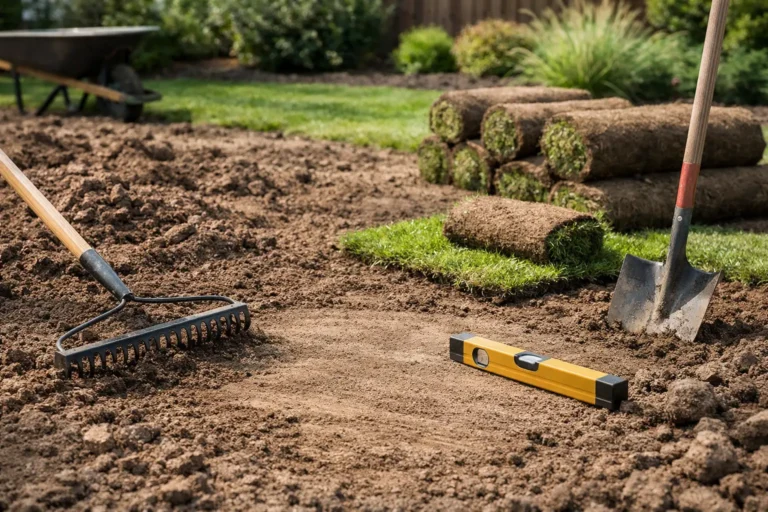
Good sod prep is about creating a root zone. That may include loosening compacted ground, bringing in quality topsoil, and improving the surface so roots can move into it quickly. If the soil is hard, thin, or full of rubble from construction, laying sod without fixing that first is asking the new lawn to struggle.
Install fresh sod tightly and evenly
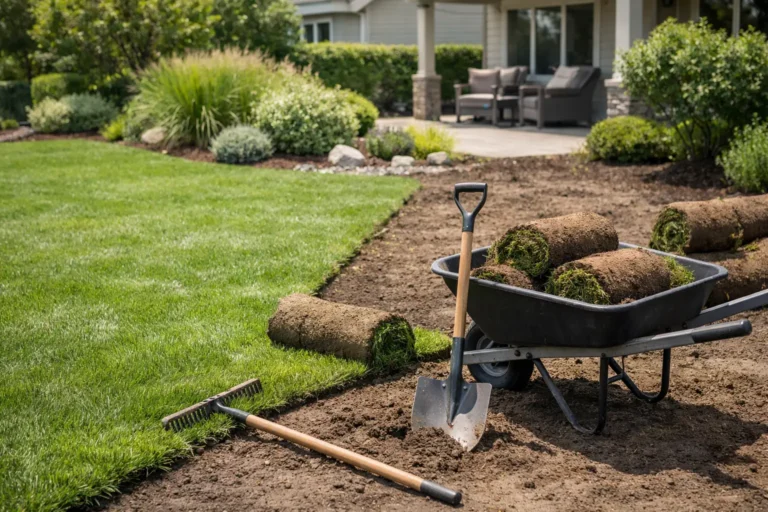
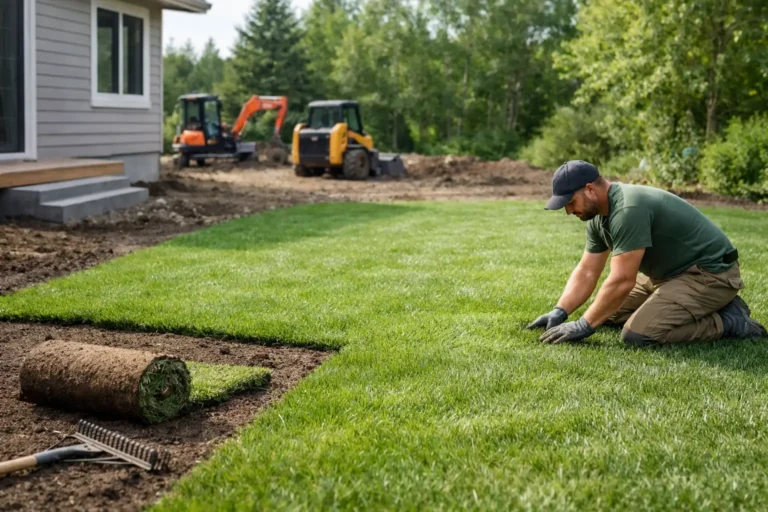
Once the base is ready, the sod should be laid in a staggered pattern with tight seams and full soil contact. Rolling the sod helps press it into the prepared surface. After that, watering has to be consistent and timely so the roots do not dry out before they establish.
Are there any exceptions?
There are a few edge cases where people talk about laying sod over grass, but they are not good options for most residential lawns. If there is only a tiny isolated patch of weak grass, and the area is being lightly reworked at the surface, a small repair may blend in without a full tear-out. Even then, the best practice is still to remove the old vegetation in that patch before placing new sod.
Some people also confuse topdressing or overseeding with sod installation. Those are different solutions for different lawn conditions. If the lawn is mostly healthy and just thin in spots, sod replacement may be more than you need. If the lawn is mostly failing, laying sod over it is not enough.
That is the trade-off. A partial or shortcut fix costs less up front, but a full replacement gives you a cleaner, more reliable result when the existing lawn is beyond saving.
How to tell if your lawn needs full replacement
If more than a small percentage of your yard is dead, heavily weedy, uneven, or damaged by grubs or drainage problems, patching tends to become expensive guesswork. New sod makes the most sense when the existing lawn has multiple issues at once.
Watch for signs like widespread bare areas, soft or sunken spots, chronic puddling, heavy weed pressure, poor soil after construction, or grass that never thickens no matter how much you water and fertilize. Those are not surface-level problems. They usually point to failures in the base layer, which is why proper prep matters so much.
For many homeowners, the appeal of sod is speed. You do not want to spend a season trying one more product or one more patch repair if the lawn clearly needs a reset. A well-prepared sod installation gives you that reset right away.
Why professional prep pays off
The biggest difference between a lawn that looks good for two weeks and one that performs for years is preparation. That is where experience shows. A sod specialist knows how to spot grading issues, compaction, shallow topsoil, grub damage, and drainage trouble before the new lawn goes down.
That matters even more in areas where weather swings, clay-heavy soils, and drainage challenges can work against rooting. A fast install is valuable, but only if the lawn is set up properly from the start.
At Right On Sod, this is why full lawn replacement is treated as more than just rolling out green pieces. Tear-out, soil prep, grading, and installation all have to work together. That is what gives homeowners the quick visual upgrade they want without cutting corners underneath.
If you are asking can you lay sod over grass, the better question is this: do you want a lawn that looks finished today, or one that actually establishes and lasts? The second option takes more prep, but it is the one worth paying for.
One Comment