

A lot of sod failures start before the first roll hits the ground. If you want to know how to prepare yard for sod, the real answer is this: the prep matters just as much as the sod itself. Good sod laid over bad soil is still a bad lawn waiting to happen.
That catches plenty of homeowners off guard. Fresh sod looks great on day one almost no matter what you put underneath it. The problems show up later – soft spots, dry edges, poor rooting, low areas that hold water, and seams that never really settle in. If you want that clean, finished look to last, the yard needs to be built properly from the ground up.
How to prepare yard for sod without cutting corners
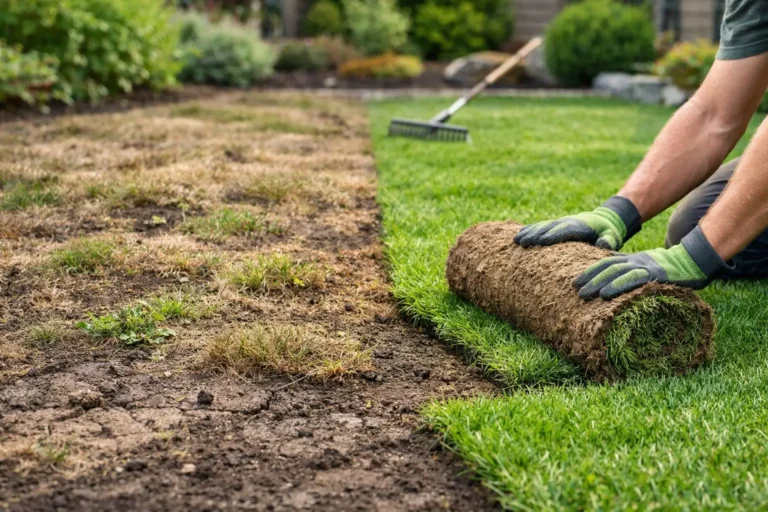
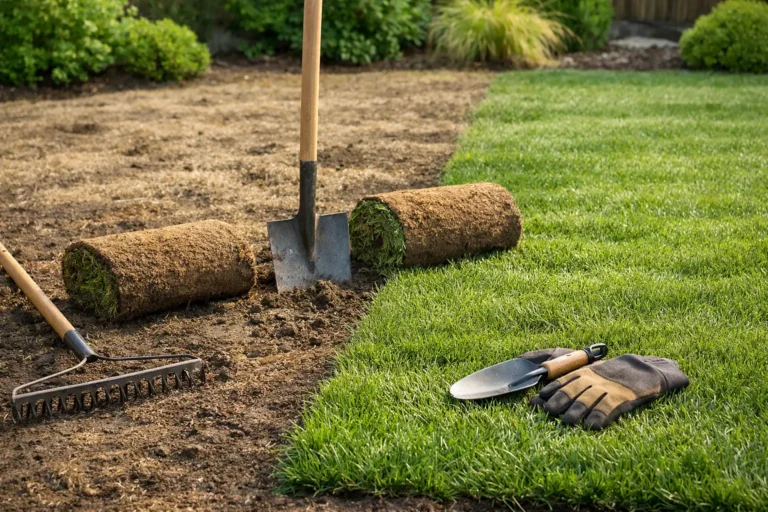
The first job is clearing the space completely. Old grass, weeds, rocks, construction debris, roots, and any leftover material need to go. If you are replacing an existing lawn, this usually means stripping or tearing out the old turf rather than just laying new sod on top. Sod over old grass is one of those ideas that sounds fast and ends up expensive.
For newer homes, the issue is often compacted subsoil and builder-grade leftovers. You may have chunks of concrete, buried gravel, or hard-packed clay sitting just below the surface. That stuff has to be addressed before any topsoil goes down. Otherwise, water movement and root development become a mess.
Once the area is clear, the yard should be checked for grading. This is where many lawn projects are won or lost. The surface needs to slope away from the house enough to move water, but not so aggressively that the lawn looks unnatural or becomes hard to mow. You also want to eliminate dips and humps so the sod sits flat and makes full soil contact.
If your yard has drainage issues now, sod will not magically fix them. In fact, new sod often makes drainage flaws easier to spot because the surface is so uniform. Low spots, puddling, erosion paths, and runoff toward the foundation should be corrected before installation, not after the lawn is rooted and established.
Start with the soil, not the sod
People love to ask what kind of sod is best, but the better question is what kind of base you are laying it on. Sod roots need loose, workable soil with enough organic matter to hold moisture and enough structure to drain properly. In many yards, especially around Kitchener, Waterloo, and Cambridge, the native soil can lean heavy and compacted. That means soil prep is not optional.
A proper base usually starts with quality topsoil spread to the right depth for the site. If there is already healthy, usable soil in place, it may only need loosening and amendment. If the existing ground is poor, compacted, or contaminated with rubble, bringing in fresh soil is often the better move.
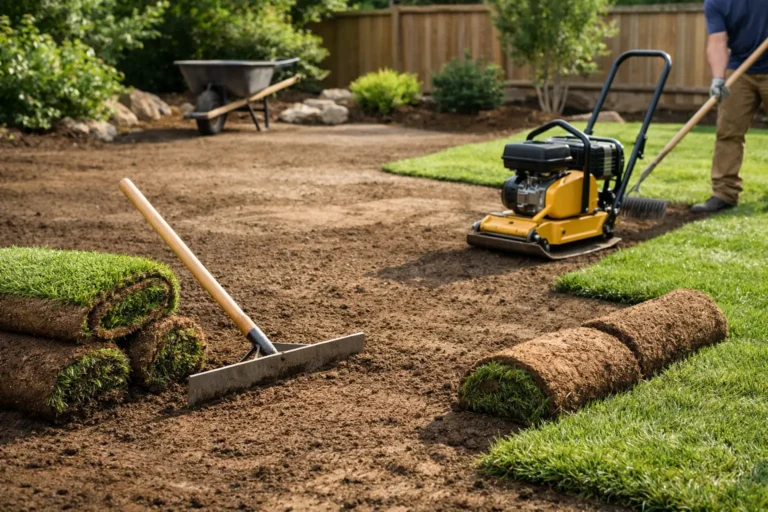
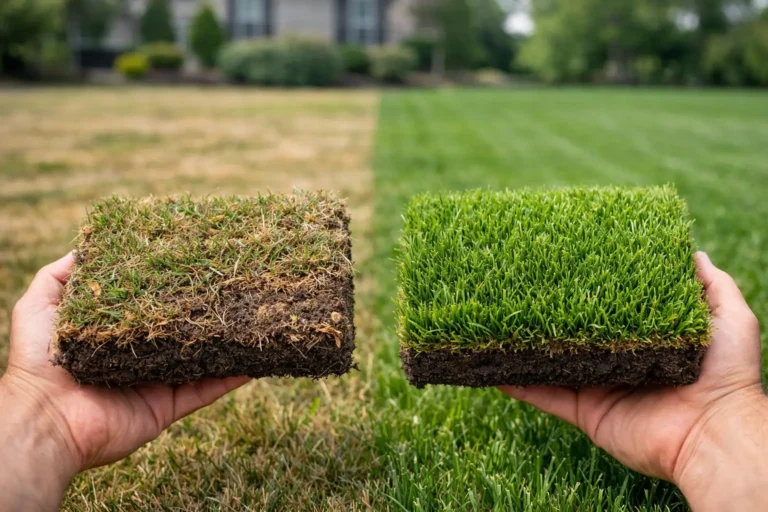
Then the soil gets worked. Tilling or mechanically loosening the upper layer helps roots penetrate instead of sitting near the surface. That matters because shallow roots dry out fast and struggle in summer heat. Loose soil also helps the sod knit into the ground instead of acting like a green carpet laid over concrete.
There is a trade-off here, though. Over-tilling can create a fluffy base that settles unevenly later, especially if the soil is too wet when it is worked. Good prep means loosening the soil enough for rooting, then properly leveling and firming it so the finished surface stays stable.
Get the grade right before the lawn goes in
The yard should be final graded before the sod arrives. That means shaping the surface to the finished height you actually want, taking into account driveways, patios, walkways, garden beds, and any irrigation components. Sod is not a tool for hiding bad grading. It is a finish layer.
A final grade should feel smooth underfoot without being overly soft. If you walk the area and sink into it, that is a warning sign. If it feels hard as brick, that is also a problem. You want a firm, even base that allows for root contact and water movement.
This is also the point where edges matter. Clean transitions along walkways, curbs, patios, and planting beds make the whole job look sharp. Sloppy prep creates sloppy lines, and no premium sod can rescue a crooked finish.
Should you add fertilizer before sod?
Usually, yes. A starter fertilizer can help support early root development, especially when the lawn is being installed over freshly prepared soil. The exact product depends on the soil condition and time of year, but the idea is simple: give the new lawn what it needs to establish quickly.
What you do not want is to overdo it. Too much fertilizer can stress fresh sod rather than help it. If the site already has nutrient-rich soil, the application should reflect that. More is not better here.
Should you roll the yard before laying sod?
Sometimes lightly, yes, but not in a way that compacts the life out of the soil. The goal is to firm the final surface enough to spot low areas and create a level base. It is not to create a hardpan. If the soil has been properly prepared, a light finish pass can help produce a cleaner install.
Moisture matters before installation day
Soil moisture is one of those boring details that turns into a big deal fast. If the ground is powder dry, it pulls moisture away from the sod immediately. If it is muddy, you end up with ruts, uneven surfaces, and poor working conditions.
The sweet spot is slightly moist soil that can be shaped and leveled cleanly. In practical terms, the yard should not be soaking, but it should not be bone dry either. This gives the sod a better environment to root into from the start.
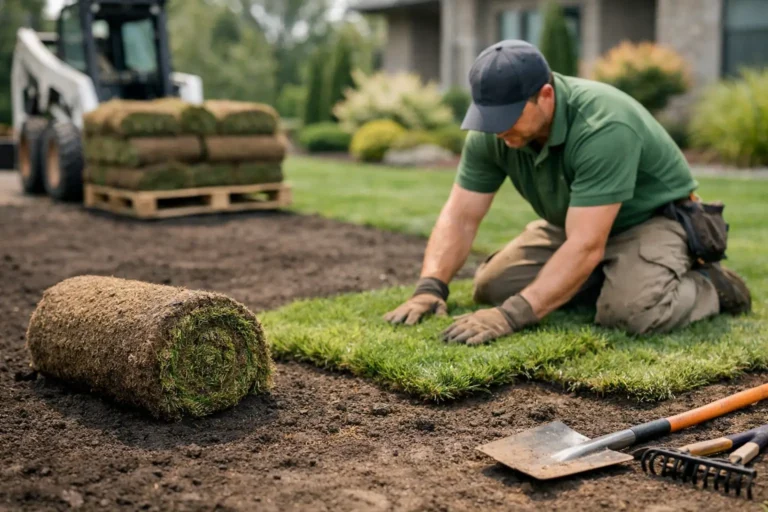
Timing matters too. Sod is a perishable product. Once it is delivered, it should be installed quickly. Letting rolls sit too long in the sun is a great way to turn premium grass into a compost experiment.
Common mistakes when preparing a yard for sod
Most sod prep problems come down to rushing. Homeowners want the instant transformation, which is fair – that is the whole appeal of sod. But skipping prep to save a day can cost you months of frustration.
One common mistake is leaving weeds or old turf in place. Another is ignoring drainage because the yard looks “mostly fine.” It usually looks mostly fine until the first heavy rain. Poor soil depth is another big one. If there is only a thin skim of decent soil over compacted subsoil, the lawn may survive, but it will not thrive.
Then there is uneven grading. A yard can look level from the patio and still have enough dips and ridges to create water issues and a bumpy finish. Prep should be checked from multiple angles and physically walked, not just eyeballed from a distance.
How to know the yard is actually ready
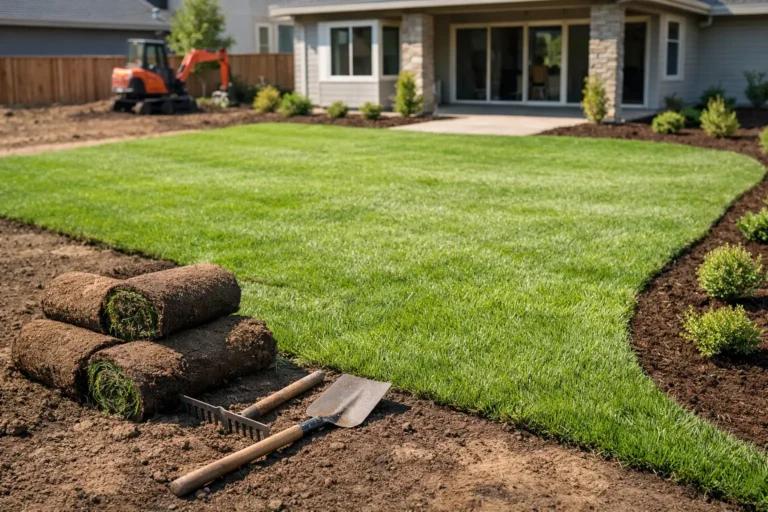
The yard is ready for sod when the area is cleared, the grading is corrected, the soil is improved, the surface is smooth, and the moisture level is right. It should look finished before the sod goes down, just brown instead of green.
That is a useful standard because it keeps the focus where it belongs. If the base still looks rough, if low spots are obvious, or if you are hoping the sod will somehow flatten everything out, the yard is not ready yet.
For larger properties, replacement lawns, or post-construction lots, this is often where having a dedicated sod installer matters. A specialist is not just showing up with grass. They are reading grade, correcting surface problems, and building a lawn that has a real chance to perform well over time. That is a big reason homeowners call Right On Sod when they want the job done once and done properly.
After prep, installation and watering have to follow through
Even perfect prep can be undermined by poor installation and weak aftercare. Sod needs tight seams, good soil contact, and immediate watering. The first couple of weeks are about keeping the root zone consistently moist while the lawn establishes. Too little water dries out the edges and seams. Too much water can create disease pressure or soft, unstable ground.
This is another place where it depends on weather, sun exposure, soil type, and time of year. A shady side yard and a full-sun front lawn will not always need the same schedule. But in every case, prep gives you a head start. A properly prepared yard drains better, roots faster, and handles that early watering period with fewer surprises.
If you are investing in new sod, treat the prep like part of the lawn, because it is. The grass is what you see, but the groundwork is what decides whether that fresh green look sticks around. A beautiful lawn is not built by luck. It is built by getting the base right before the first roll goes down.
One Comment