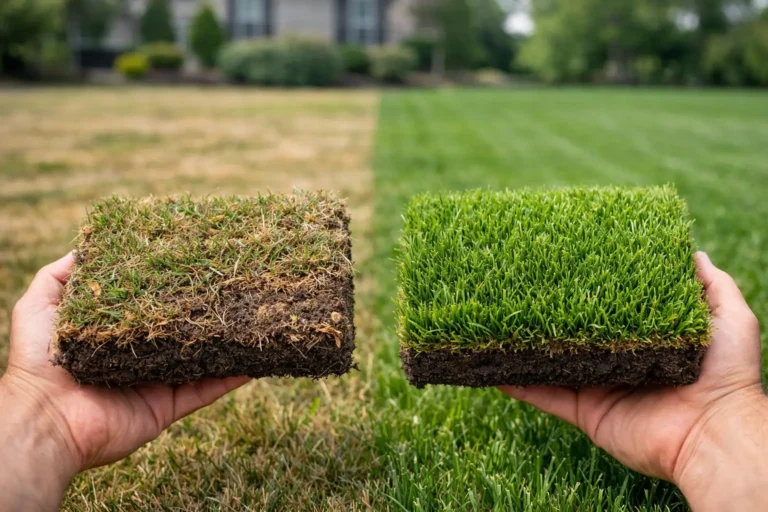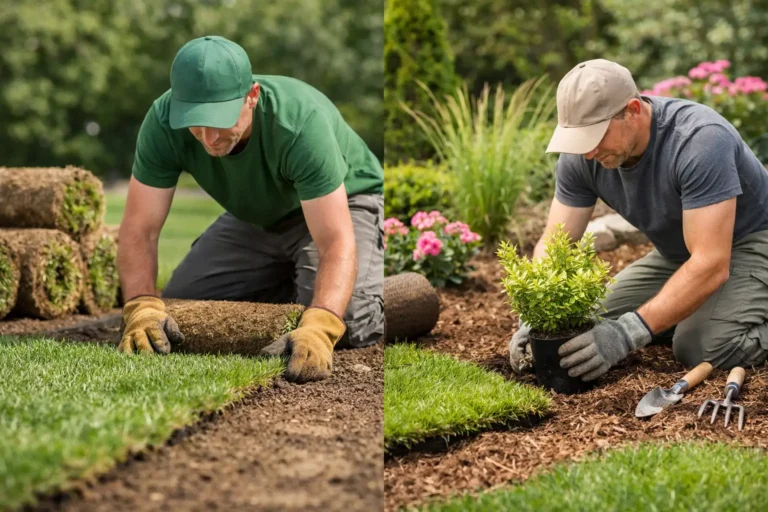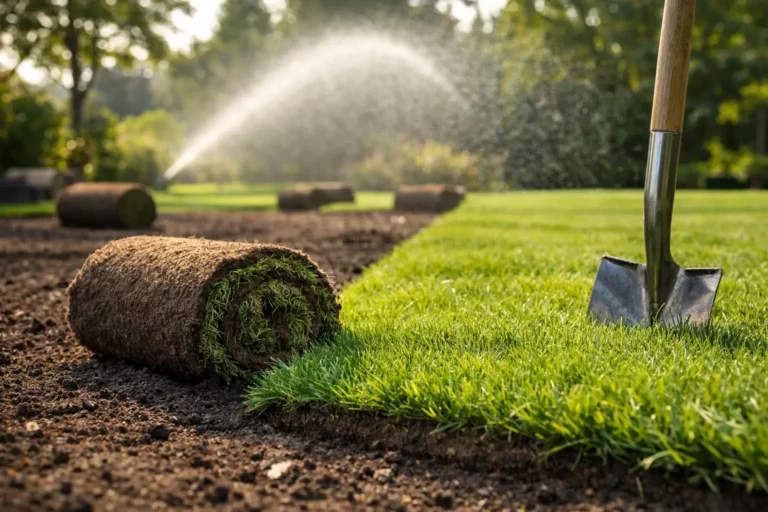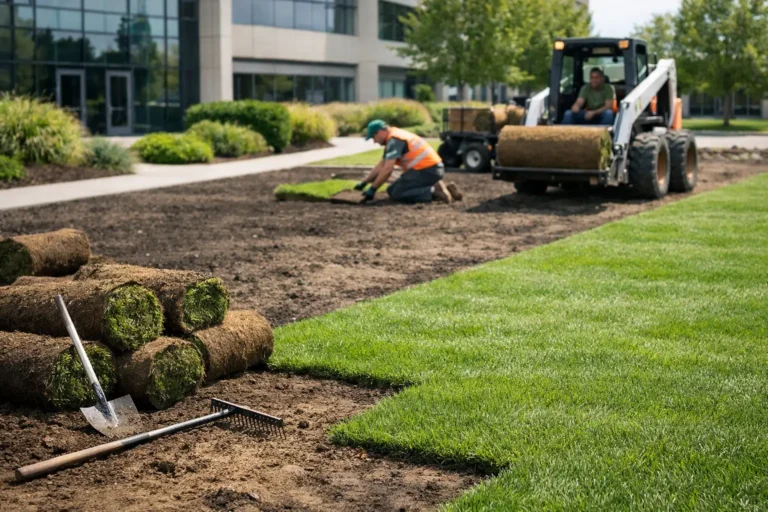

If your lawn turns crispy by July, stays soggy after rain, or looks great for one season and rough the next, the problem usually is not just bad luck. In Ontario, grass choice matters more than most people think. The best grass options Ontario homeowners should consider are the ones that can handle cold winters, humid summers, clay-heavy soils, and the kind of foot traffic that comes with kids, dogs, and real life.
A lawn here has to work for the climate, not just look pretty on a seed bag. That is why cool-season grasses dominate in Ontario. They establish best in spring and fall, stay greener in cooler temperatures, and recover better from winter than warm-season types. But even within that category, not every option performs the same way.
Best grass options in Ontario for real-world lawns
For most Ontario properties, the conversation usually comes down to Kentucky bluegrass, perennial ryegrass, fine fescue, tall fescue, or a blend of two or three. Each has strengths. Each also has a catch. The right pick depends on how you use your lawn, how much sun it gets, and how much patience you have for maintenance.
Kentucky bluegrass
Kentucky bluegrass is the classic good-looking lawn grass. It has that dense, rich green finish people picture when they want a clean, premium front yard. It spreads through underground rhizomes, which means it can fill in damaged spots over time instead of just sitting there and hoping for the best.
That self-repair ability is a big reason it is so popular in sod. If you want a lawn that looks polished quickly and has a strong chance of recovering from regular wear, this is usually a leading option.
The trade-off is maintenance. Kentucky bluegrass likes full sun, prefers decent soil prep, and usually needs more water than some other grasses during hot, dry stretches. In areas with poor irrigation or shallow topsoil, it can struggle faster than people expect. It also does not love heavy shade.
For many homeowners, this is the best-looking choice. For neglected backyards with tree cover and dry patches, maybe not.
Perennial ryegrass
Perennial ryegrass is fast. That is its superpower. It germinates quickly, establishes quickly, and gives lawns a faster green-up than slower species. If you are repairing worn areas or blending seed for a quicker result, ryegrass earns its keep.
It also handles foot traffic well, which makes it useful for active yards and shared green spaces. The leaf texture is fine enough to look attractive, but the plant itself is tough enough for practical use.
Where it falls short is long-term self-repair. Unlike Kentucky bluegrass, it does not spread aggressively to fill bare spots. If damage happens, it generally needs overseeding rather than bouncing back on its own. It can also be more vulnerable to extreme winter conditions in some situations, especially if the lawn goes into winter stressed.
Still, in a blend, perennial ryegrass does a lot of heavy lifting. It helps lawns establish faster and look better sooner.
Fine fescue
Fine fescue is often the answer for yards with more shade, lower fertility, and owners who do not want to spend every weekend babysitting the lawn. It grows with a softer, finer appearance and tends to perform better than bluegrass in lower-light conditions.
It also has lower fertilizer and water demands, which makes it appealing if you want a decent lawn without a high-maintenance routine. In the right setting, it is efficient and underrated.
But it is not the champ for heavy wear. If your backyard doubles as a soccer field, dog racetrack, and neighborhood gathering spot, fine fescue may wear down faster than tougher options. It can also look less dense than bluegrass in high-profile areas where people want that thick, uniform finish.
This is a smart grass for the right property, especially where shade is a real issue. It is not always the best choice for high-traffic family lawns.
Tall fescue
Tall fescue has gained more attention because it brings better drought tolerance and a deeper root system than many traditional cool-season grasses. For Ontario homeowners dealing with summer heat, water restrictions, or dry, exposed areas, that matters.
It is also durable and can hold up well under use. Modern turf-type tall fescues look much better than older coarse versions, so this is no longer the ugly tough-guy grass from decades ago.
The drawback is that it does not spread the way Kentucky bluegrass does. If damaged, it usually needs reseeding or repair. Depending on the blend and cultivar, the texture can also be a little different from the ultra-smooth look some homeowners want.
If your top priority is resilience and less summer stress, tall fescue deserves a serious look.
Why blends usually beat a single grass type
For many Ontario lawns, a blend is the safest bet. There is a simple reason for that. Most properties do not have one perfect condition from edge to edge. The front yard may be full sun. The side yard may stay damp. The backyard may have shade, pet traffic, and compacted soil from construction.
A well-chosen blend spreads out the risk. Kentucky bluegrass can provide density and recovery. Perennial ryegrass can help with fast establishment and wear tolerance. Fescues can add shade performance or drought resistance. Instead of betting the whole lawn on one trait, you get a more balanced result.
That is especially useful in Ontario, where weather swings are not subtle. One year is wet. The next is hot and dry. A blend gives you a better chance of having a lawn that still looks respectable when the season gets weird.
Best grass options Ontario homeowners should choose by lawn condition
If your lawn gets lots of sun and you want the best visual finish, Kentucky bluegrass or a bluegrass-heavy blend is usually the front-runner. It delivers the premium look most people want, especially when soil prep and watering are done properly.
If your yard takes a beating from kids, pets, or regular foot traffic, a blend with perennial ryegrass makes a lot of sense. It establishes fast and stands up well to daily use.
If your property has more tree cover or partial shade, fine fescue becomes much more useful. Bluegrass alone often gets blamed for failing in shade when the real issue is that it was the wrong grass for the spot.
If summer drought stress is your biggest headache, tall fescue or a tall fescue blend can give you a tougher lawn with deeper rooting. It is not magic, but it usually handles dry conditions better than more shallow-rooted options.
If the site has poor grading, compacted soil, standing water, or thin topsoil, the grass choice matters, but the prep matters more. The best seed or sod in the world will not fix bad drainage. That is like putting fresh paint on a cracked wall and hoping nobody notices.
Grass type matters, but installation matters more
This is the part many homeowners learn the hard way. You can pick one of the best grass options in Ontario and still end up with a weak lawn if the base is wrong.
Proper grading affects drainage. Soil preparation affects rooting. Good topsoil depth affects moisture retention and nutrient access. Even premium sod will struggle if it is installed over hard, compacted subsoil with no real prep underneath.
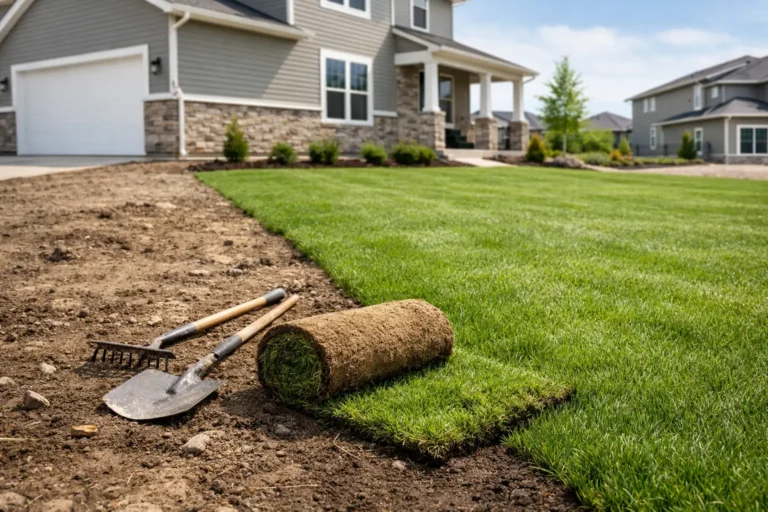
That is why lawn replacement is not just about rolling out green. It is about building conditions the grass can actually live in. On newer builds especially, the soil is often disturbed, compacted, or stripped of what healthy turf needs. If the base is poor, the lawn may look good on day one and disappointing by month three.
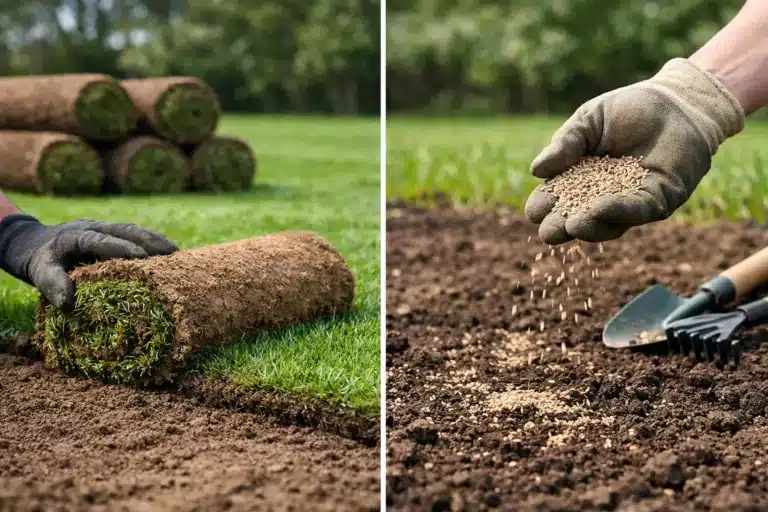
For homeowners who want fast transformation without guessing, sod is often the most reliable route. It gives you an immediate finished look and avoids the long wait, washout risk, and patchy early stages that come with seed. But again, speed only pays off when the ground underneath is properly prepared.
So what is the best choice for most Ontario homes?
For a typical residential lawn in Ontario, a high-quality bluegrass blend or a bluegrass and ryegrass blend is usually the sweet spot. You get strong appearance, decent recovery, and solid overall performance for front and back yards that see normal family use.
If shade is a big factor, add fescue into the conversation. If drought tolerance is the main concern, lean harder toward turf-type tall fescue. If the lawn has drainage issues, fix the grading before worrying too much about the grass label.
That practical, site-specific approach is what gets results. It is also why working with a dedicated sod specialist can save time, money, and a lot of frustration. A good lawn is not just picked. It is built.
Right On Sod sees this all the time on lawn replacements and new installations. Homeowners often think they need different grass when what they really need is better prep, better grading, and the right fit for their property conditions.
A great Ontario lawn is not about chasing the fanciest grass on paper. It is about choosing a variety that matches your yard, your expectations, and how much work you actually want to do. Get that part right, and your lawn has a fighting chance to stay green, thick, and worth looking at long after the first photo-op.