

If your lawn suddenly feels spongy underfoot, starts browning in patches, or peels back like loose carpet, grub control for lawns needs to move to the top of your list. Grubs do their damage below the surface, which is why so many homeowners wait too long. By the time birds, skunks, or raccoons start tearing at the turf, the root system is already under serious stress.
That is the frustrating part of grub damage. It often looks like drought, heat stress, or poor soil at first. Then the lawn gets weaker fast. If you want to protect healthy sod or save an existing lawn before it turns into a repair job, timing matters just as much as treatment.
What grubs do to a lawn
Grubs are the larval stage of certain beetles, and they feed on grassroots. A few grubs in the soil are not automatically a crisis. Healthy turf can tolerate low grub activity without major visible damage. The real problem starts when grub numbers climb high enough to thin the root system and weaken the lawn’s grip on the soil.
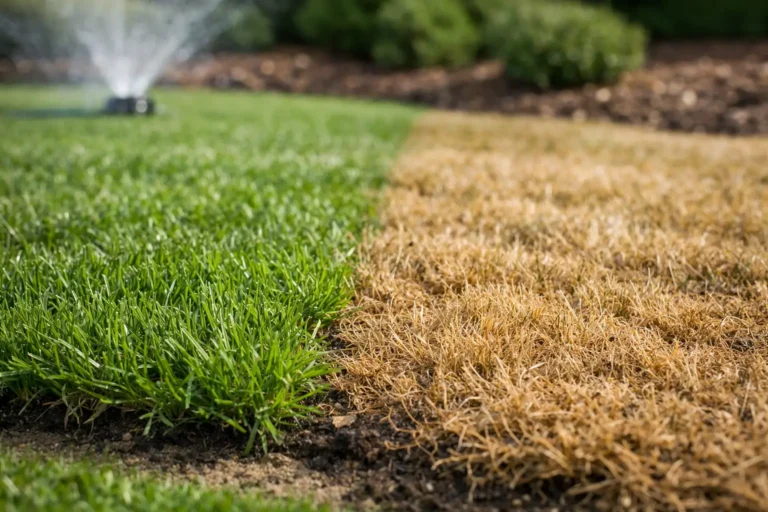
Once that happens, the grass loses access to water and nutrients even if you are watering properly. You may notice irregular brown patches that do not green up, sections that lift easily, or areas where the lawn feels soft and unstable. Secondary damage is often worse than the feeding itself because animals will dig for the grubs and tear apart large sections overnight.
For newer lawns and recently installed sod, this is especially important. Fresh sod needs strong root development to establish well. A grub issue during that establishment window can set the whole lawn back.
Grub control for lawns starts with proper diagnosis
Not every patchy or browning lawn has grubs. This is where many property owners waste time and money. They treat for insects when the real issue is compacted soil, poor drainage, drought stress, disease, or shallow rooting. Good grub control starts with confirming what is happening below the surface.
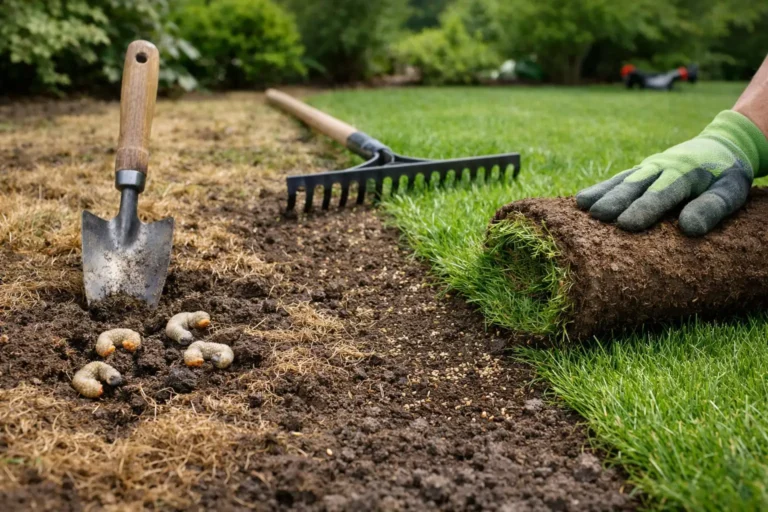
The simplest way to check is to cut into a damaged area and peel back a section of turf. If the grass lifts easily and you find several white, C-shaped larvae in the top layer of soil, grubs are likely involved. The number matters. One or two here and there may not justify aggressive treatment. Larger concentrations in visibly damaged areas usually do.
This is also why a blanket approach is not always the best one. Some lawns need active treatment. Others need repair work and stronger growing conditions so the turf can recover. The right call depends on lawn age, severity of damage, time of year, and how much root loss has already happened.
Timing makes or breaks results
There is no single treatment date that works for every situation. Grub control is seasonal, and product choice depends on whether you are trying to prevent a problem or stop active feeding.
Preventive treatments are typically applied before newly hatched grubs begin feeding heavily. These are usually the best option if your property has a history of grub damage or if you want to protect a valuable lawn before visible problems start. Preventive control tends to be more effective because it targets grubs when they are young and easier to manage.
Curative treatments are different. These are used when grubs are already present and causing damage. They can help reduce an active infestation, but they work best within a narrower window. If the grubs are too mature or temperatures shift, results may be less reliable. That is why waiting until the lawn is badly torn up is rarely the cheapest or easiest route.
In Ontario conditions, seasonality matters. Weather patterns, soil temperatures, and rainfall all affect grub activity and treatment performance. A local approach usually gets better results than following generic advice pulled from a package label without considering current lawn conditions.
Signs you should not ignore
A lawn does not need to be completely ruined before action makes sense. Early signs are easier and cheaper to address. Brown patches that expand despite watering, turf that lifts with little resistance, increased bird activity, and animal digging are all strong warnings.
Another clue is inconsistency. If one section of the lawn crashes while nearby grass looks fine, it may not be a simple watering issue. Grubs often create irregular damage patterns because populations are not perfectly uniform across the yard.
If the lawn is newly sodded or recently repaired, quick action matters even more. Weaker rooting means less tolerance for insect pressure. A mature, healthy lawn can sometimes recover from moderate damage. A newer lawn may not.
Treatment is only part of the job
Killing grubs is one step. Restoring the lawn is another. If the root system has been chewed down hard, dead turf will not bounce back just because the insects are gone. That is where many homeowners get frustrated. They apply a product, wait, and expect green growth to return on its own.
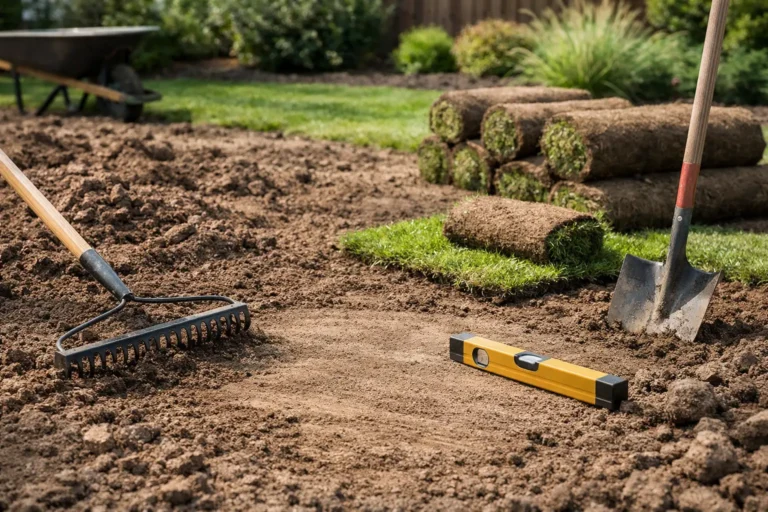
Sometimes that happens if damage was light and the grass still has enough healthy crown tissue to recover. Often, though, the lawn needs repair work. That may mean removing loose dead turf, addressing the soil surface, improving grading or drainage if water issues are contributing to stress, and then repairing bare sections with new sod.
This is one reason specialized lawn companies tend to spot problems faster. Grub damage does not happen in isolation. It interacts with drainage, soil prep, compaction, and root development. If the lawn was already struggling, grubs can push it over the edge.
When repair makes more sense than repeated treatment
Some lawns are too far gone for spot treatment to be the whole answer. If large sections pull up easily, animal damage is extensive, or the turf has already died off, a repair or partial replacement may be the smarter investment.
That does not mean every damaged lawn needs a full tear-out. In some cases, targeted sod replacement is enough. In others, widespread damage combined with poor grading or thin topsoil means a larger reset will give better long-term value. The key is being honest about what the lawn can realistically recover from.
A strong-looking lawn depends on what is happening below the surface. If roots are gone and the soil conditions are poor, surface-level fixes usually lead to repeat problems. Property owners who want fast, visible improvement often get better results by combining grub treatment with proper lawn repair instead of trying to nurse dead turf along for weeks.
How to reduce the chance of future grub damage
No lawn is completely immune, but healthier turf handles pressure better. Thick, well-rooted grass is harder to damage quickly and often shows less severe symptoms. Proper watering, seasonal fertilization, and solid soil preparation all help build resilience.
It also helps to avoid the two extremes that weaken lawns most. One is neglect. The other is overcorrecting with constant products and guesswork. A lawn that is overwatered, underfed, compacted, or rooted poorly is easier for grubs to overwhelm.
If your property has had repeat grub problems, it may be worth planning around that pattern rather than reacting late each year. Preventive treatment in the right window can be a practical move, especially for premium lawns, newer sod, or highly visible front yards where damage stands out right away.
Choosing the right help
Grub issues are one of those lawn problems that look simple until they are not. The treatment itself may be straightforward, but deciding whether the lawn needs prevention, active control, repair, or full replacement takes experience. That matters if you want results without wasting a season.
For homeowners, builders, and property managers, the real goal is not just killing insects. It is restoring a lawn that looks clean, healthy, and professionally finished. If the turf is still viable, targeted treatment may be enough. If the lawn is compromised, the better move may be combining control with sod repair or replacement so the property does not stay patchy for months.
That practical approach is what saves time. It is also what protects curb appeal and property value, especially when the lawn is a visible part of the home or commercial site.
Right On Sod handles grub-related lawn problems with that bigger picture in mind. Not just what is damaging the grass now, but what it will take to get the lawn back to a strong, healthy finish.
If your lawn is showing signs of grub damage, do not wait for the next round of digging and dead patches to make the decision for you. The sooner you confirm the problem, the more options you usually have, and the better your lawn tends to come out on the other side.
6 Comments