

A beautiful new lawn should not come with a free backyard pond. Can sod fix drainage? Sometimes it can improve how the surface handles rain, but sod is not a magic sponge that corrects a yard pitched the wrong way. If water sits for days, flows toward your foundation, or turns parts of the lawn into mud every spring, the real fix starts below the grass.
The good news is that drainage issues are usually fixable. The key is diagnosing whether you have a soil problem, a grading problem, a compaction problem, or a bigger water-management issue before the sod goes down. Install premium sod over the right base, and you get a lawn that looks great fast and has a real chance to stay healthy.
Can Sod Fix Drainage on Its Own?
Sod can help with minor drainage symptoms, especially when the existing lawn is thin, bare, compacted at the surface, or full of shallow ruts. A properly prepared sod installation includes loosening the topsoil, removing debris, adding or redistributing quality soil where needed, and creating a smoother finish grade. Those steps can improve surface runoff and help rain soak in more evenly.
But sod itself does not change the slope of your lot. It cannot raise a low spot enough to redirect runoff, repair a broken downspout, or make dense clay disappear. If water is collecting because the yard slopes toward the house, fresh sod will still be growing in a puddle. It may look sharp on installation day, then struggle once the next heavy rain rolls through.
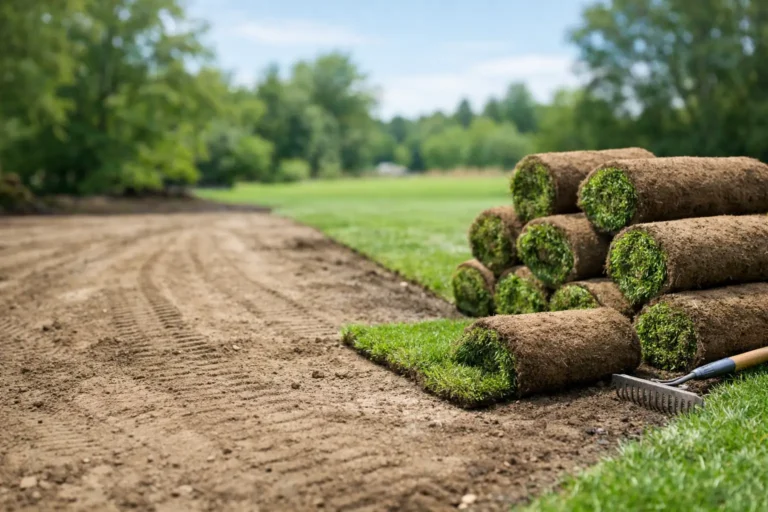
Think of sod as the finished surface, not the drainage system. Good drainage preparation gives sod the conditions it needs to root. Skipping that preparation is like putting new flooring over a soft, wet subfloor. It might look fine for a minute. It will not stay fine.
When New Sod Can Improve a Wet Lawn
There are situations where a lawn replacement does make a meaningful difference. If the problem is mostly poor surface condition, a proper tear-out, soil preparation, and regrading can reset the lawn from the ground up.
Shallow low spots and uneven ground
Small depressions collect water because they are the lowest point around them. During a sod project, those areas can often be filled and blended into the surrounding grade so water keeps moving instead of pooling. This is one of the most common reasons homeowners see better drainage after a new lawn installation.
The word “small” matters. A shallow birdbath-sized dip is different from a yard that drops toward the home or a large area that receives runoff from several neighboring properties. Bigger grading issues need a more deliberate plan.
Compacted or damaged topsoil
Construction traffic, repeated mowing on wet ground, heavy foot traffic, and years of neglect can leave soil packed tight. Water then struggles to move through the top layer. It either runs across the lawn, carrying soil with it, or sits on top and creates mud.
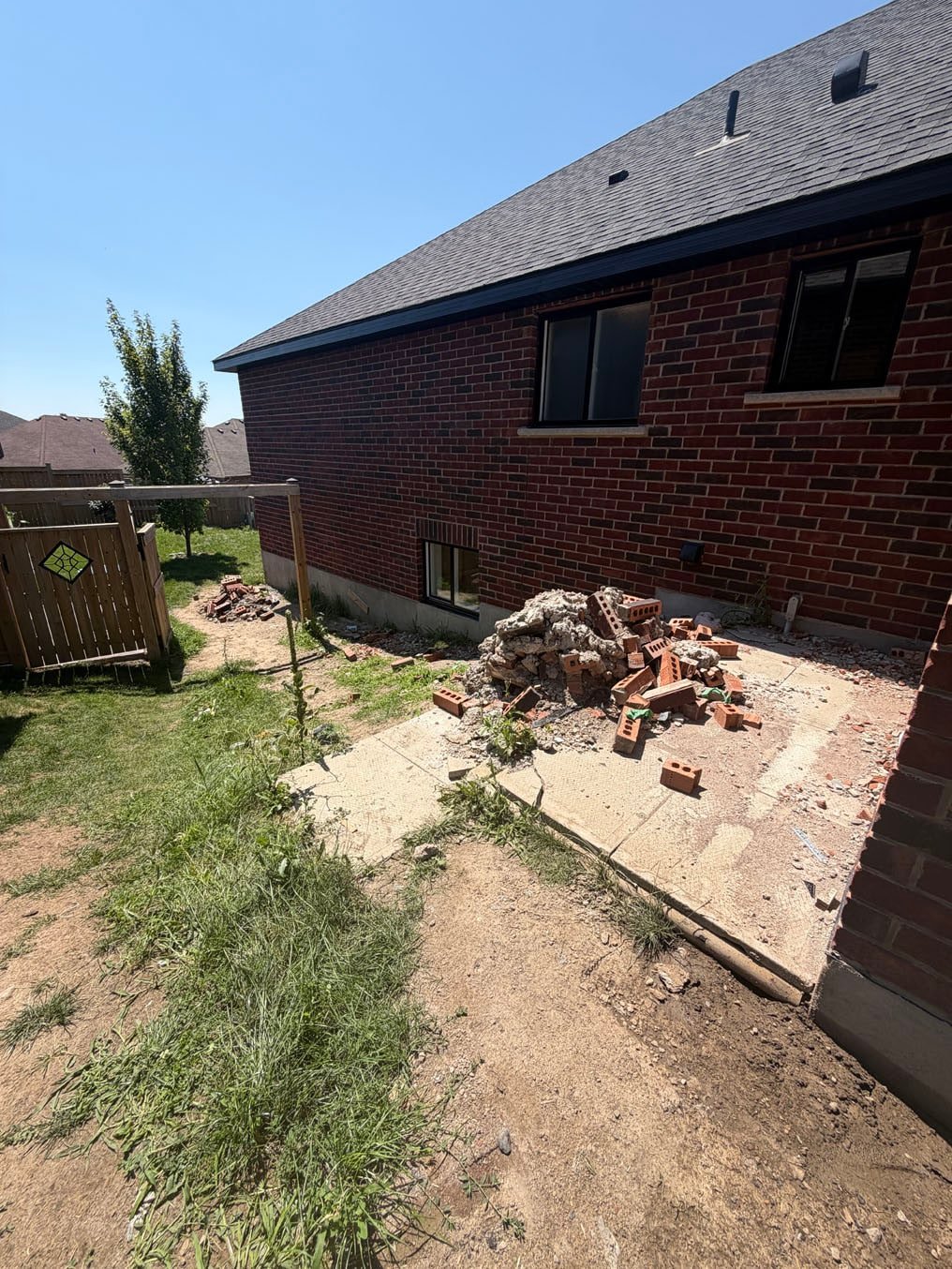
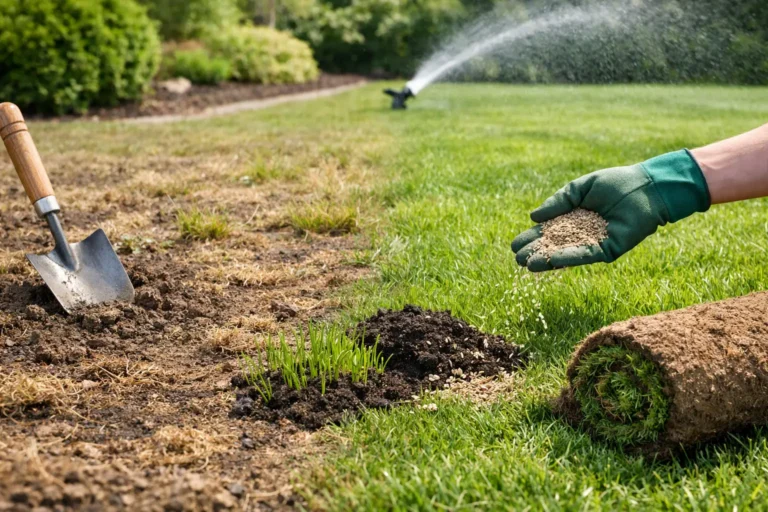
Removing dead turf and working the soil before sod installation helps open that surface layer. Fresh topsoil can also improve the rooting zone when the existing material is thin, rocky, or depleted. Healthy roots create pathways for water and air, which is a lot better than a bare patch that turns into a hardpan every summer.
Bare areas that erode in storms
Grass roots help hold soil in place. On a mild slope, sod can reduce erosion by covering exposed dirt quickly and establishing a dense root system. That does not replace proper drainage infrastructure, but it can protect a properly graded slope from washing out during ordinary rainfall.
Fresh sod needs consistent watering while it roots, so timing and technique matter. Overwatering a newly sodded lawn is a fast way to create soft, soggy conditions. The goal is moist soil beneath the sod, not standing water on top of it.
Signs You Need Grading Before Sod
A drainage check should happen before ordering turf, not after the new lawn starts failing. Walk the property after a decent rain and look at where water starts, where it travels, and where it stops.
You likely need grading work before sod if water drains toward your foundation, pools for more than 24 to 48 hours after rain, or regularly floods walkways, patios, and driveways. Other warning signs include exposed roots, washed-out soil, moss in sunny areas, muddy tire tracks, and grass that dies in the same low area every year.
Pay close attention to the perimeter of the house. The finished grade should generally carry water away from the foundation. If soil, mulch, or sod is too high against siding or sits above the intended grade line, that can create a separate moisture issue. A nice lawn is not worth directing water toward your basement.
In Kitchener, Waterloo, and Cambridge, clay-heavy soil is common enough to make this conversation worth having. Clay can hold water longer than sandy soil, particularly in flatter yards or places where construction has compressed the ground. That does not mean every clay yard needs drains everywhere. It does mean a proper finish grade and realistic watering plan matter more.
What Proper Drainage Prep Looks Like
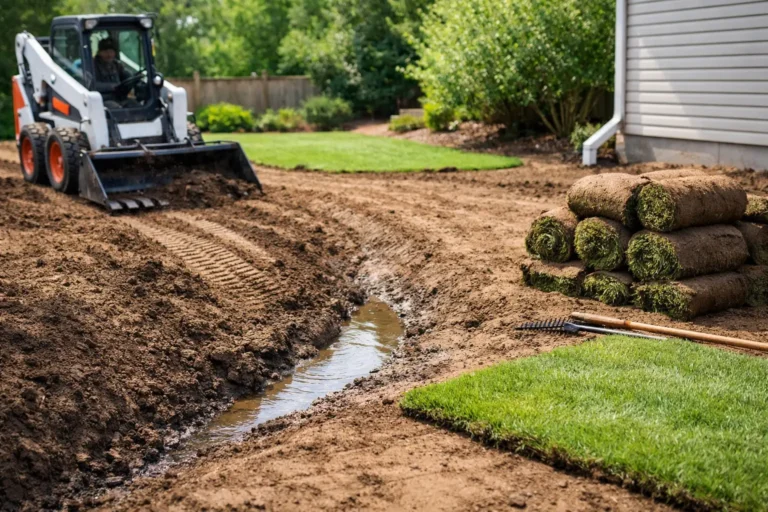
Drainage is not one single service. The right approach depends on what is causing the water to linger. For a lawn installation, the process often begins by stripping old turf and weeds, then inspecting the exposed ground instead of guessing what is happening under the grass.
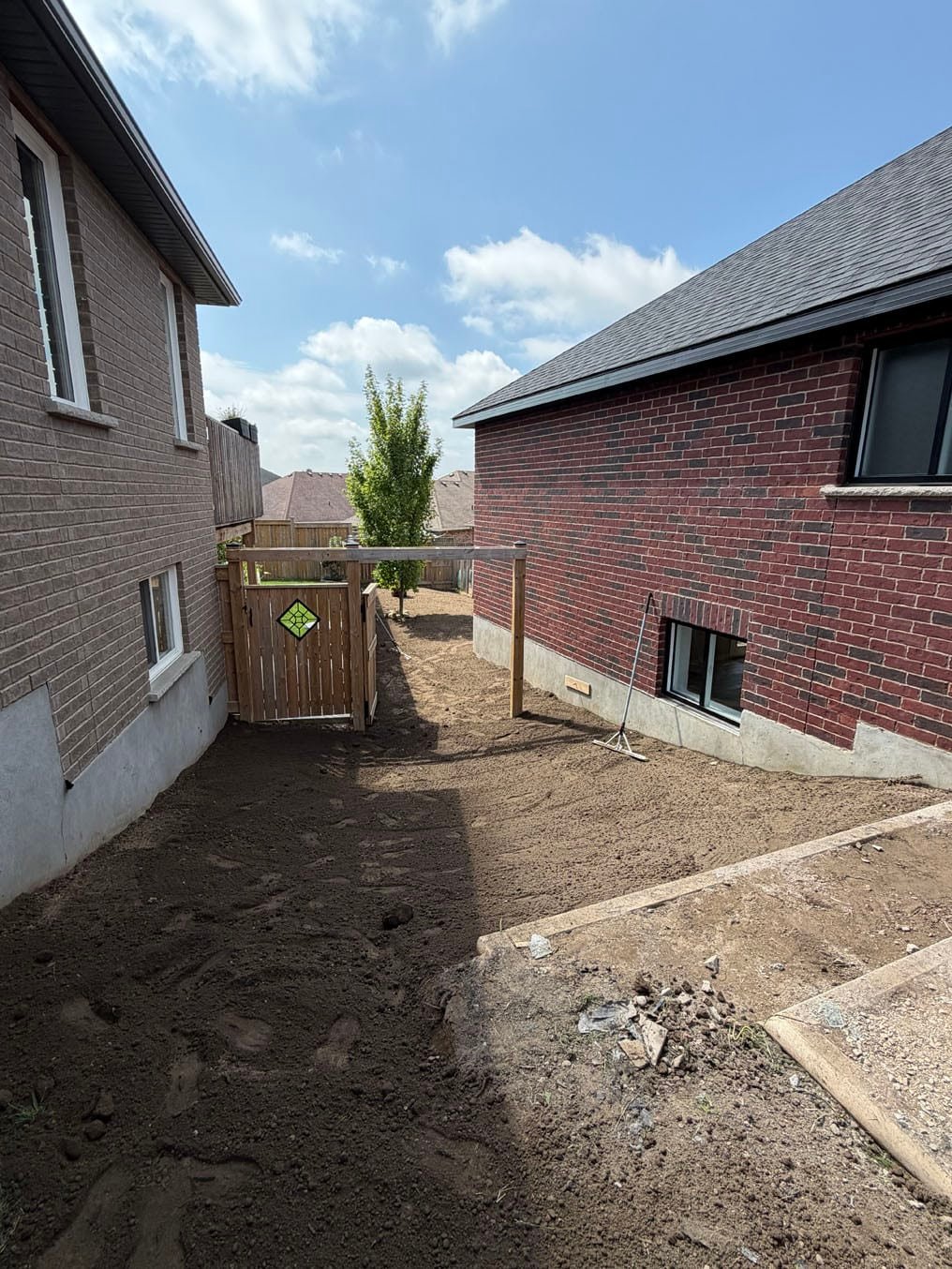
A sod specialist can then correct minor elevations, smooth abrupt transitions, and shape the surface so water has a clear path away from structures. Topsoil may be added where it improves the growing zone, but piling soil into a low area without checking the overall slope can simply move the problem somewhere else.
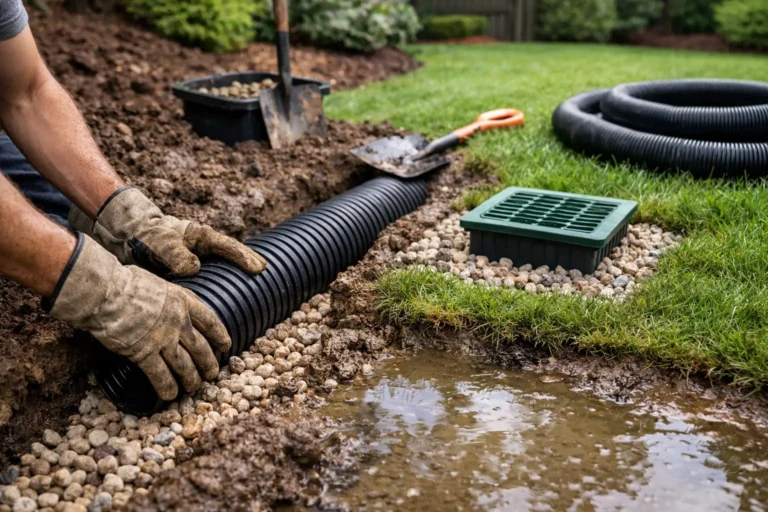
For more serious cases, the solution may involve catch basins, drainage swales, extensions for downspouts, or other drainage work coordinated with the landscape plan. Sod belongs at the end of that process. It is the clean finish after the water has somewhere sensible to go.
The trade-off: more prep now, fewer headaches later
Grading and soil work add cost compared with rolling sod over an existing lawn. That is the honest part. But installing fresh sod over poor drainage can cost more in the long run when sections fail, rut, or need replacement after one wet season.
The best value is not always the cheapest installation quote. It is the one that addresses the reason your old lawn looked rough in the first place. A fast transformation is great. A fast transformation that still drains properly next spring is better.
How to Protect New Sod From Water Problems
Once the grade is right, a few habits make a major difference. Keep downspouts discharging away from the lawn area near the house, and do not aim them at a newly sodded low spot. Avoid walking or parking equipment on sod when the soil is saturated, since compression can undo some of the preparation work.
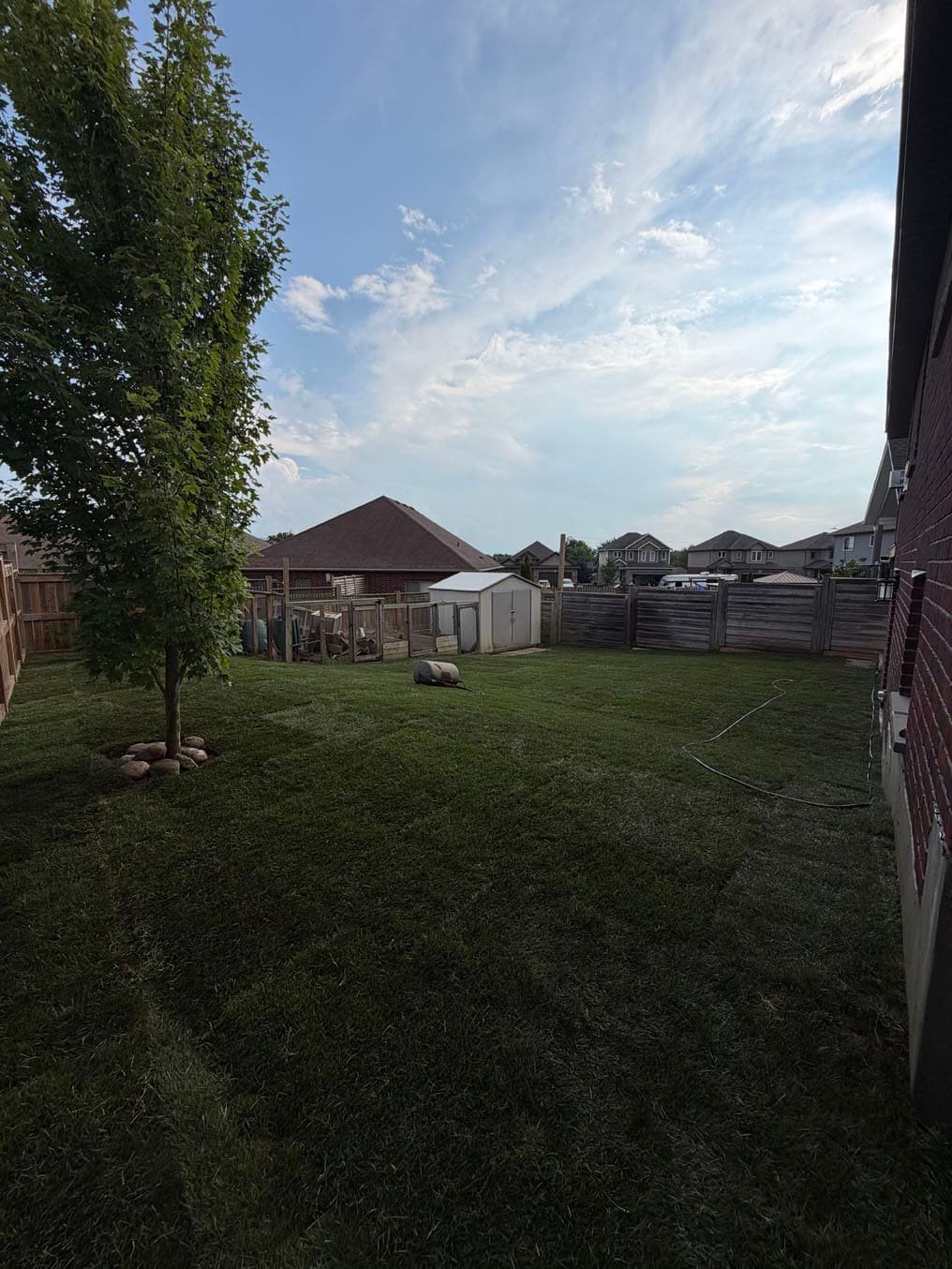
Water new sod according to weather and soil conditions, not a fixed timer. During establishment, the sod and soil beneath it need to stay consistently moist. After a soaking rain, shut the sprinklers off. Adding more water to an already saturated lawn does not make roots grow faster. It just gives disease, runoff, and soft soil a head start.
After the lawn is established, mow at an appropriate height and avoid scalping. Slightly taller grass shades the soil, supports stronger roots, and handles normal weather swings better. Fertilizer can support healthy growth too, but it will not solve a drainage problem. No bag of lawn food has ever regraded a backyard.
Get the Cause Fixed Before the Green Goes Down
If you are planning a lawn replacement, treat standing water, recurring mud, and uneven ground as part of the project scope. A quick conversation and site assessment can reveal whether sod is the answer, whether grading needs to come first, or whether a larger drainage solution is necessary.
Right On Sod approaches lawn installation as more than a roll-and-go job. The visible result is the fresh green lawn. The work that protects that result happens underneath it, in the soil prep and finish grade.
A lawn should be the place where the kids play, the dog runs, and the neighbors get a little jealous – not the lowest point in the neighborhood. Fix the water path first, then let the sod do what it does best: turn a prepared yard into a lawn you can actually enjoy.
One Comment