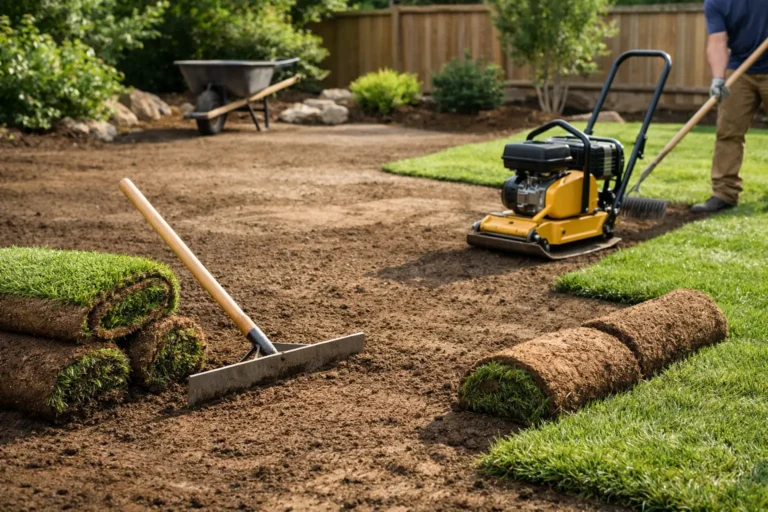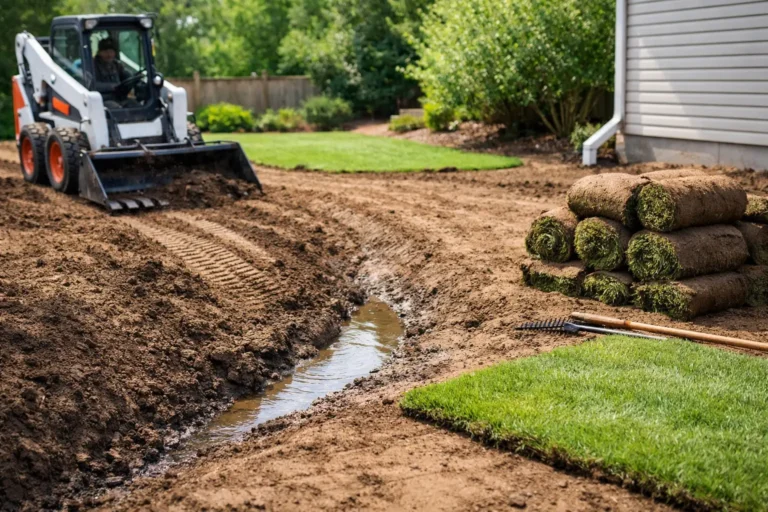

A lawn can look level from the street and still be working against you underneath. If water sits for hours after rain, footprints leave dents, or new grass struggles to root, the problem is often below the surface. The right clay soil solutions do not involve dumping a bag of topsoil over the problem and hoping for the best. They start with drainage, grading, and building a root zone that gives sod a real chance to establish.
Clay soil is common across Kitchener, Waterloo, and Cambridge. It holds water and nutrients well, which is not all bad. But when it is compacted or poorly graded, it can hold too much water, dry into concrete-like clumps, and make lawn roots work far harder than they should.
Why Clay Soil Gives Lawns a Hard Time
Clay particles are extremely small and pack tightly together. That means water moves through them slowly, especially after construction traffic, a lawn renovation, or years of regular foot traffic. In spring and during heavy rain, the ground can stay saturated. In dry weather, the same soil can become hard and cracked.
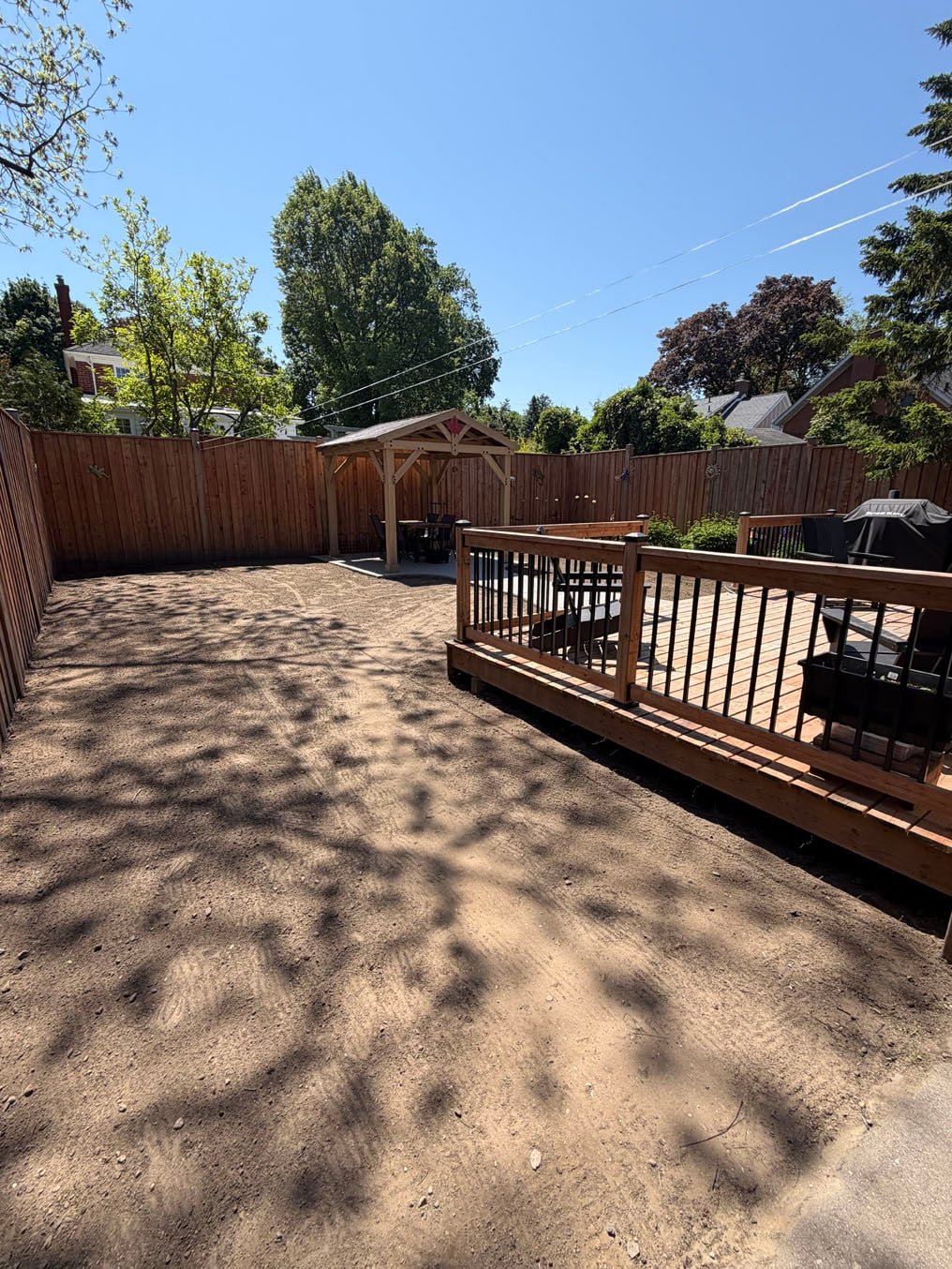
For established turf, that cycle causes shallow rooting, thin growth, moss in damp areas, and bare patches where water repeatedly pools. For freshly installed sod, it can be even more frustrating. Sod needs consistent moisture during establishment, but it also needs oxygen around its roots. A soggy root zone is not a healthy root zone.
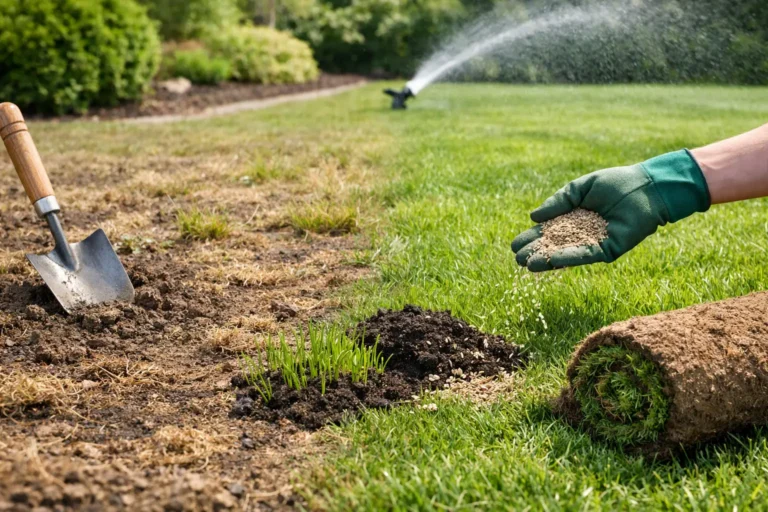
The visible symptom does not always reveal the real cause. A yellow patch might be a nutrient issue, but it can also be waterlogged soil. A bare area may look like grub damage, yet poor drainage or compacted clay may be the reason the grass never thickened back in.
Clay Soil Solutions Start With the Water
Before adding compost, seed, or new sod, watch what happens when it rains. The goal is not to make every lawn drain instantly. Lawns need moisture. The goal is to prevent standing water, soften the impact of heavy rain, and keep water moving away from the house and low-use areas.
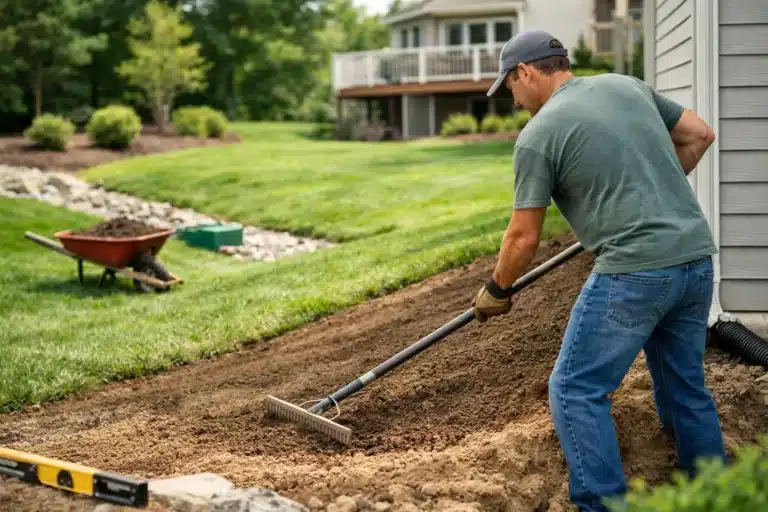
A properly graded lawn should direct surface water away from the foundation while avoiding abrupt slopes that wash out during storms. Small grade corrections can make a major difference, especially around downspouts, walkways, patios, and the edge of a new build. If water always collects in one area, more soil alone may simply create a higher puddle.
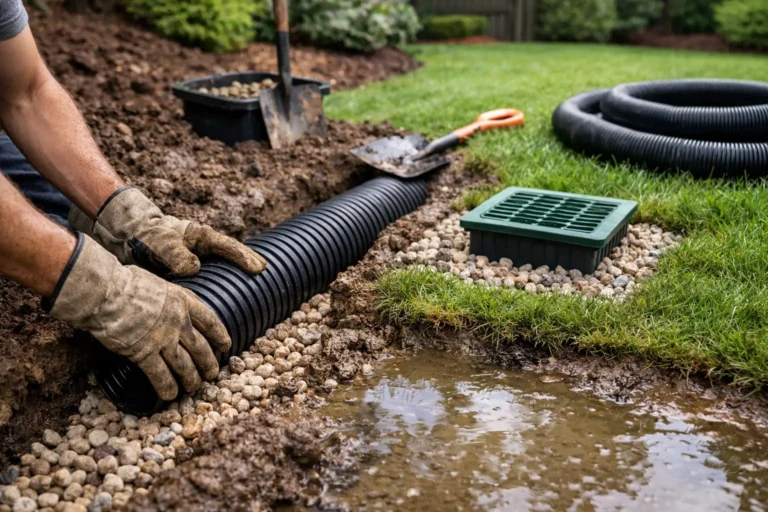
In some yards, the fix is reshaping the grade and adding a better topsoil layer before sod installation. In others, a swale, catch basin, or drainage system may be needed. That depends on where the water comes from, where it can legally and safely go, and whether the low spot is caused by the yard itself or a neighboring grade. There is no one-size-fits-all drainage fix, despite what the big-box aisle might suggest.
Check the Downspouts First
Downspouts are a frequent troublemaker. If roof runoff empties beside the foundation or across a clay-heavy lawn, that area gets more water than the soil can handle. Extending discharge away from the house and toward a suitable outlet can reduce saturated turf and protect the foundation at the same time.
Do not send water toward a neighbor’s property or directly onto a sidewalk. A drainage plan should solve a problem without creating a brand-new one two feet away.
Improve the Root Zone, Not Just the Surface
One of the most effective clay soil solutions is incorporating quality organic matter into the upper soil profile before a lawn is installed or replaced. Compost helps separate dense clay particles, improving pore space for air and water. It also supports soil biology and creates a more forgiving environment for grass roots.
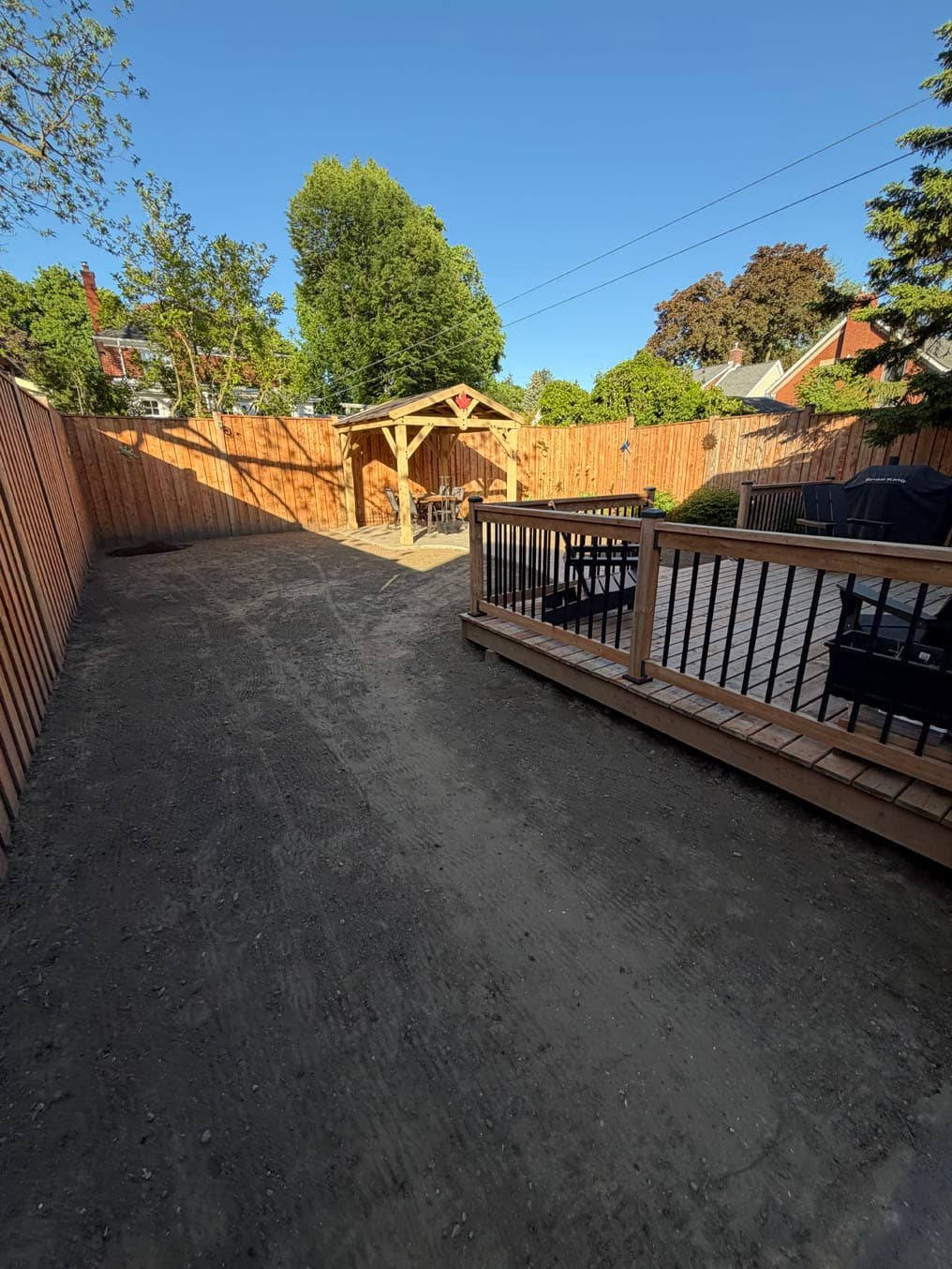
The key word is incorporated. A thin layer of compost or topsoil spread on top of hard clay may look better for a week, but it can create a distinct layer that roots struggle to cross. During proper lawn preparation, the existing soil and imported soil should be blended and worked to an appropriate depth. That creates a more consistent root zone rather than a lawn sitting on a hardpan shelf.
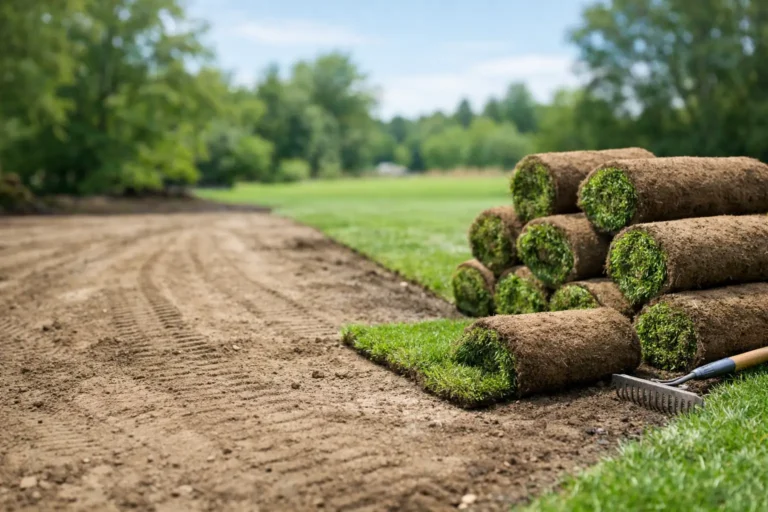
For a full sod replacement, this is the time to do the job right. Old turf can be removed, problem areas regraded, compacted ground loosened, and quality soil added where it is genuinely needed. Then premium sod is installed over a prepared base that supports rooting from day one. Fast green results are great. Fast green results that still look good next season are better.
Be Careful With Sand
Adding sand to clay sounds logical because sand drains quickly. Unfortunately, mixing a small amount of sand into heavy clay can make the soil denser and more cement-like. It is a classic lawn mistake with a very unglamorous ending.
Sand can be useful in a carefully designed soil blend, but it must be used in the right proportion and alongside organic matter. For most residential lawns, improving grade, loosening compaction, and using good topsoil and compost are more practical starting points.
Gypsum Is Not a Miracle Fix
Gypsum is often promoted as a cure for clay soil. It can help in specific soils with high sodium levels, but it is not a universal answer for the dense clay found in many local residential yards. If drainage and compaction are the real issues, gypsum alone will not change the outcome.
Spend the budget on diagnosis and preparation first. A soil test can identify pH and nutrient deficiencies. A site assessment can show whether the bigger issue is grade, runoff, compaction, or poor soil quality from construction.
Relieve Compaction at the Right Time
Core aeration can help established clay lawns by pulling small plugs from the soil and creating pathways for air, water, and roots. It works best when the lawn is actively growing and the soil is moist but not soaked. Aerating mud does not improve a lawn. It makes a mess with ambitions.
Aeration is most helpful where the turf is healthy enough to recover and the grade is already functional. It will not correct standing water caused by a low spot, buried debris, or a drainage path aimed at your lawn. Think of it as maintenance, not a substitute for site repair.
After aeration, a light topdressing with compost can gradually improve the surface soil over time. This is a sensible option for homeowners who have an established lawn with mild clay-related issues. If the lawn is mostly weeds, bare ground, and puddles, a full renovation may be the more cost-effective move.
Give New Sod the Conditions It Needs
Fresh sod can transform a tired yard quickly, but it cannot overcome bad preparation forever. On clay soil, correct watering is especially important. The sod should be kept consistently moist while roots establish, but the lawn should not stay saturated around the clock.
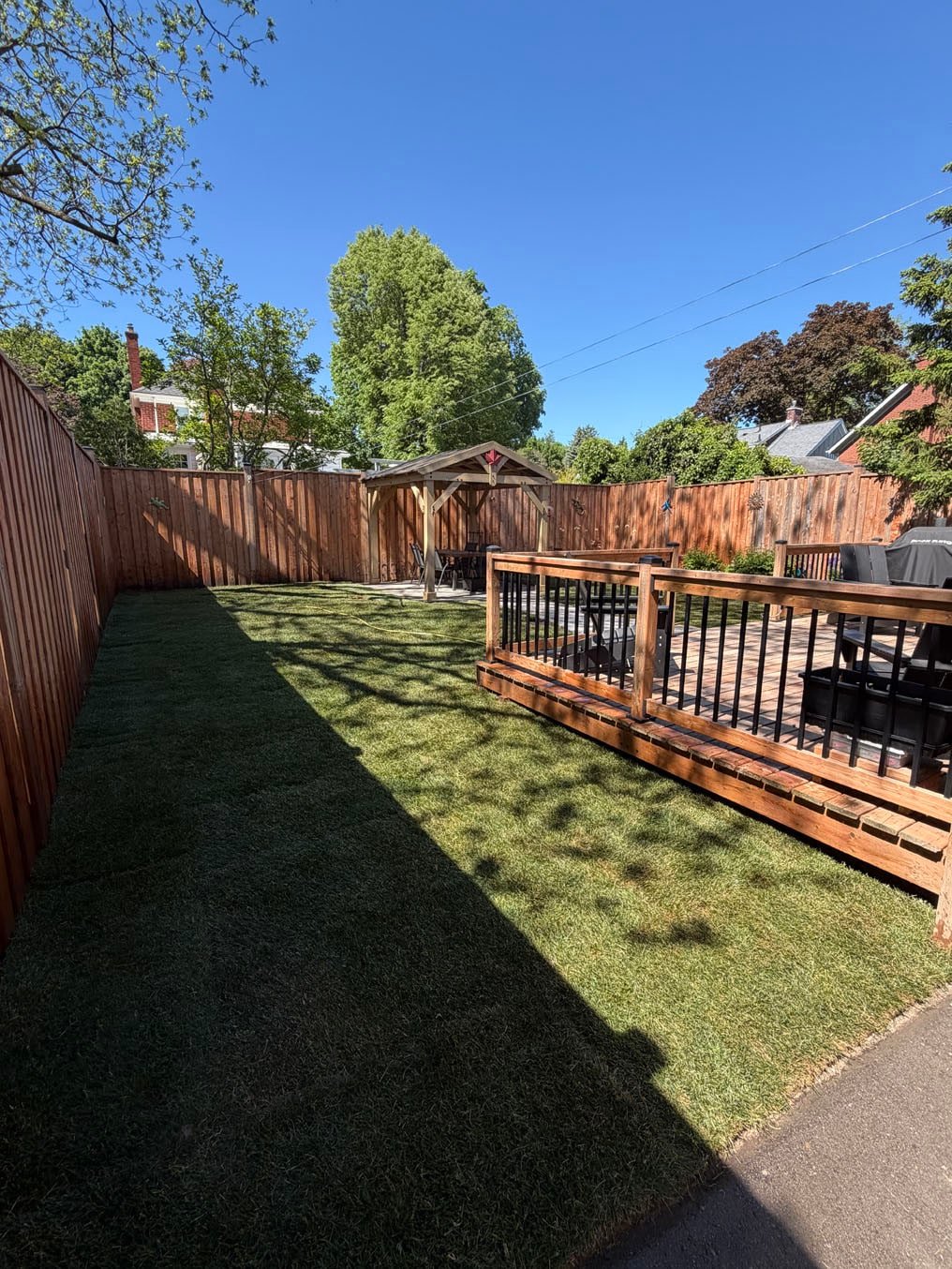
Water deeply enough to moisten the soil beneath the sod, then adjust based on weather, sun exposure, and drainage. Lift a corner of a sod piece after several days. If the soil beneath is damp and roots are beginning to knit into it, you are on the right track. If it is bone dry, watering is too light. If it is muddy and smells sour, watering or drainage needs attention.
Avoid heavy traffic while the sod is rooting. Keep mower blades sharp and do not cut too low once mowing begins. Taller grass blades shade the soil, reduce stress, and encourage a stronger root system. On clay, those roots are doing important work.
When a Lawn Replacement Makes More Sense
There comes a point where repeated patching costs more than fixing the foundation of the lawn. A full tear-out and replacement is worth considering when the yard has widespread bare areas, chronic puddling, uneven grade, compacted soil, or a mix of weeds and thin turf that never responds to maintenance.
This approach gives you one clean opportunity to address the underlying issues before new sod goes down. It is also often the smarter choice after construction, major landscaping work, or drainage repairs. Starting with proper grading and soil preparation prevents you from paying twice for a lawn that should have been built properly the first time.
A clay-heavy yard does not have to stay muddy in spring, cracked in summer, and patchy in between. Get the water path and soil preparation right, then let quality sod do what it does best: make the property look finished, healthy, and ready to enjoy.