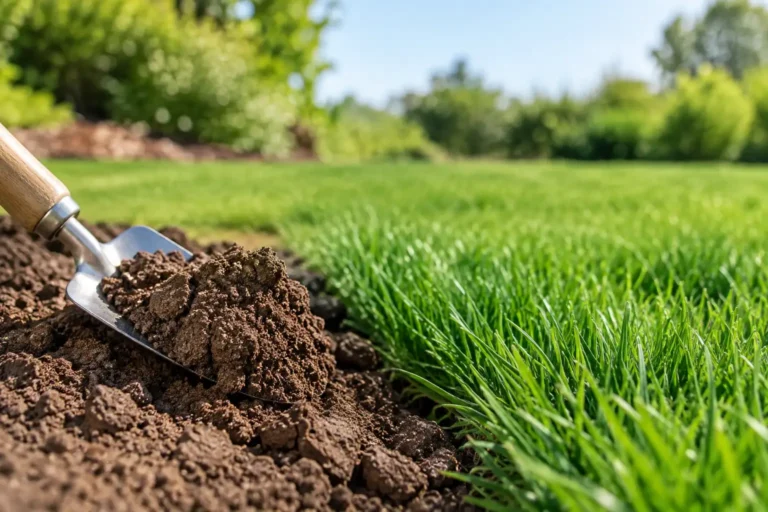

Water sitting on a new lawn is not a “give it time” problem. It can soften soil, wash out seed and topsoil, weaken sod roots, and send water where it absolutely does not belong: toward your foundation. When comparing a drainage swale versus French drain, the right choice comes down to one question: can water move across the surface, or does it need a hidden path through the ground?
Both systems can protect a lawn, but they solve different drainage problems. Pick the wrong one and you may spend good money only to keep watching puddles form after every hard rain. Pick the right one and your yard dries faster, your sod roots properly, and your grading finally does its job.
What a drainage swale does
A drainage swale is a broad, shallow channel shaped into the grade of the yard. It carries water over the surface from a high area to a safe outlet, such as a lower part of the property, a drainage easement, or an approved catch area. It is not a ditch carved through the middle of the lawn. A properly built swale has gentle side slopes, a smooth flow line, and enough pitch to keep water moving without eroding the soil.
For most lawns, a swale is the first drainage solution worth considering because it works with gravity instead of fighting it. Water lands on the surface, follows the planned grade, and exits the problem area. Once the lawn is established, the swale often blends in so well that most people do not notice it until the next storm proves why it is there.
A swale is usually the better fit when the yard has a broad low area, runoff from a neighboring slope, or surface water flowing toward the house. It also makes sense on new construction lots where rough grading left a dip, a hump, or a backyard that drains like a bathtub.
The catch is that a swale needs somewhere legal and practical to discharge water. You cannot simply redirect runoff into a neighbor’s yard and call it a drainage plan. Local grading rules, property lines, and easements matter.
What a French drain does
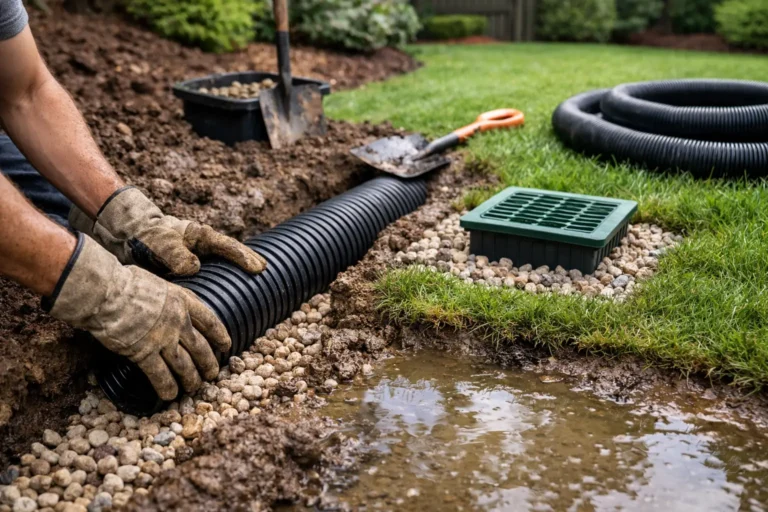
A French drain is a trench containing clean drainage stone and a perforated pipe wrapped in filter fabric. Water enters the stone, reaches the pipe, and travels underground to a suitable outlet. The pipe is typically installed with a steady slope so water does not sit inside it.
French drains are useful when surface grading alone cannot collect the water efficiently. Think of water seeping into one persistently soggy corner, runoff collecting along a retaining wall, or a narrow side yard where a visible swale would be awkward or impractical. They can also intercept subsurface water before it reaches a lawn or foundation area.
A French drain is not magic pipe buried in a trench. If there is no outlet, no meaningful slope, or no real plan for where the collected water goes, it can become an expensive gravel-filled puddle. Poorly installed drains can clog with soil, settle over time, or fail to move water during the exact weather event they were supposed to handle.
Drainage swale versus French drain: the real differences
The biggest difference is where the water travels. A swale moves water on top of the ground. A French drain collects and moves water below ground. That basic distinction affects cost, appearance, maintenance, and how well each system handles different conditions.
A swale is generally simpler to build and easier to inspect. If water is moving too slowly, the grading issue is visible. Repairs often involve adjusting soil, reshaping the flow line, or restoring turf. Because it uses open surface flow, a swale can carry a lot of stormwater when it is sized and graded correctly.
A French drain is more discreet, which can be a major advantage in tight spaces or finished landscapes. But it requires excavation, stone, pipe, fabric, and a proper discharge point. It also needs more precision. A pipe that is too flat, crushed during backfill, or installed without enough clean stone will not deliver the result you paid for.
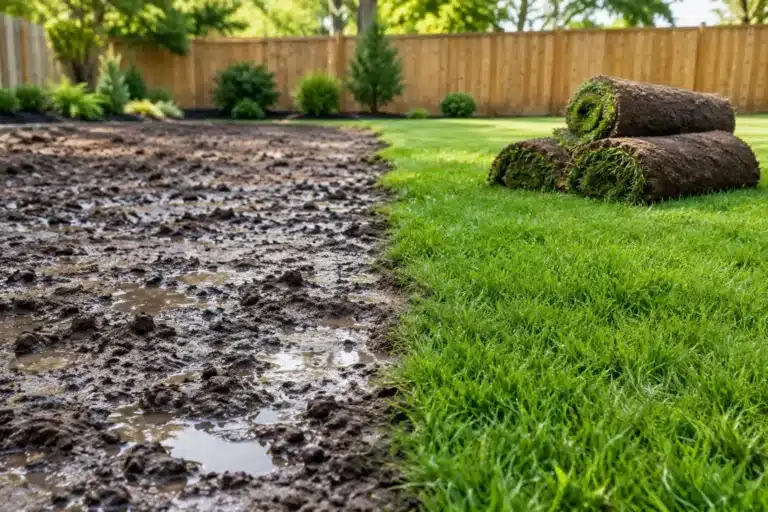
For a lawn installation, the surface grade still matters even if a French drain is included. Sod laid over a poorly graded yard will not fix pooling water. It may hide the problem for a few weeks, then expose it with yellowing turf, soft spots, and thin root growth. Fresh sod deserves a proper foundation, not wishful thinking with a green top layer.
When a swale is the better choice
Choose a swale when the problem is primarily surface runoff and the yard has enough room to create a gentle drainage route. This is often the practical answer for broad backyards, side yards with a natural outlet, and lots where water needs to be directed away from the home.
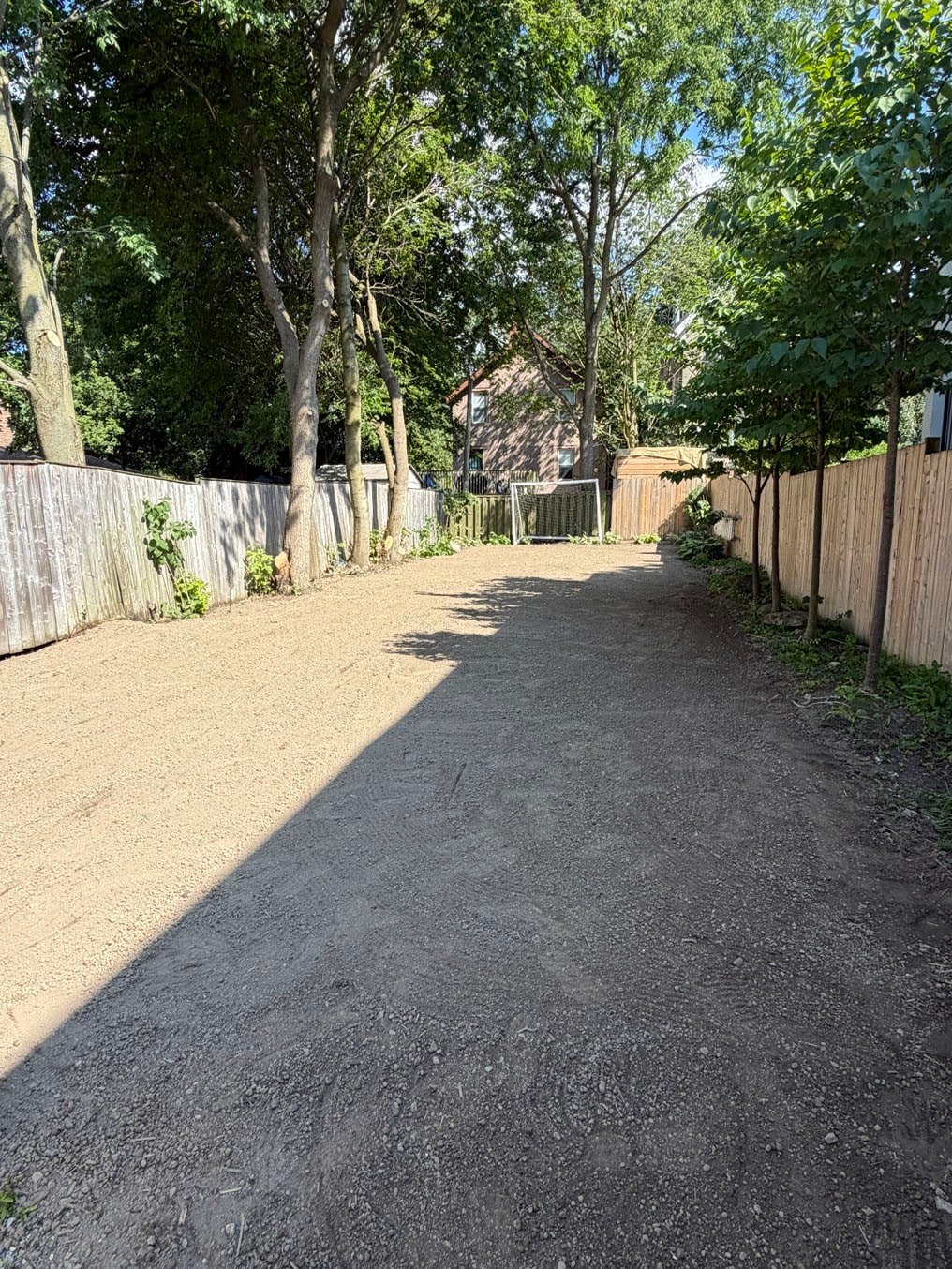
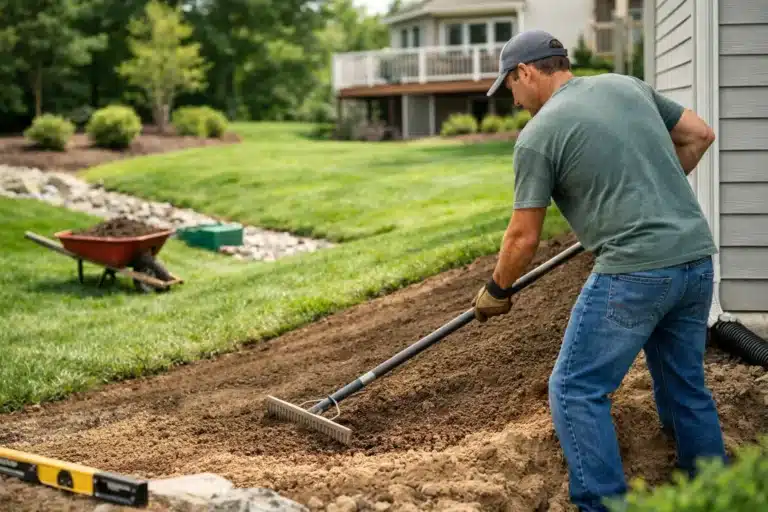
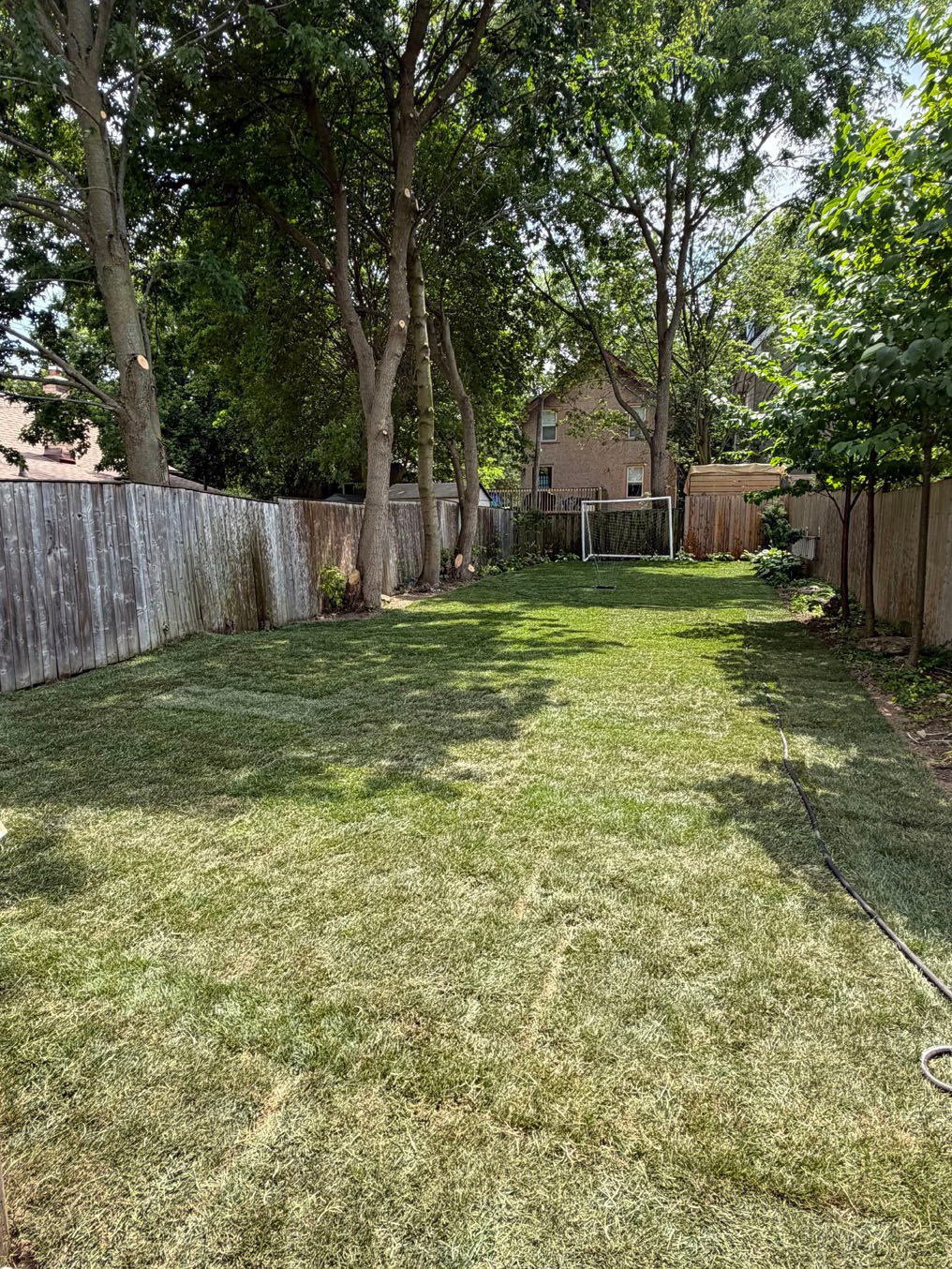
A well-built swale also works nicely with sod because it can be shaped during final grading and sodded right over. The finished lawn remains usable and clean-looking, while the grade quietly handles rainwater. The swale may be subtle, but it should never be so subtle that it stops draining.
Swales are especially effective when installed before a full lawn replacement. That is the time to correct the base, bring in or remove soil as needed, and create smooth transitions across the yard. Trying to reshape a lawn after sod has rooted is possible, but it is more disruptive and usually more costly.
When a French drain is worth the investment
Choose a French drain when water is entering from below the surface, concentrating in a confined area, or trapped where reshaping the entire yard is not realistic. A narrow strip between homes, the uphill side of a patio, or the base of a retaining wall are common examples.
It can also help when downspout water cannot be safely managed at the surface. However, roof runoff should not be dumped right beside the foundation or fed into a small drain system without considering volume. Heavy storms move a surprising amount of water. The outlet and pipe size need to match the job.
In many properties, the best answer is not strictly one or the other. A swale can handle broad surface water while a French drain addresses one stubborn wet zone. The systems work well together when each has a clear role and a proper discharge plan.
What to check before installing sod
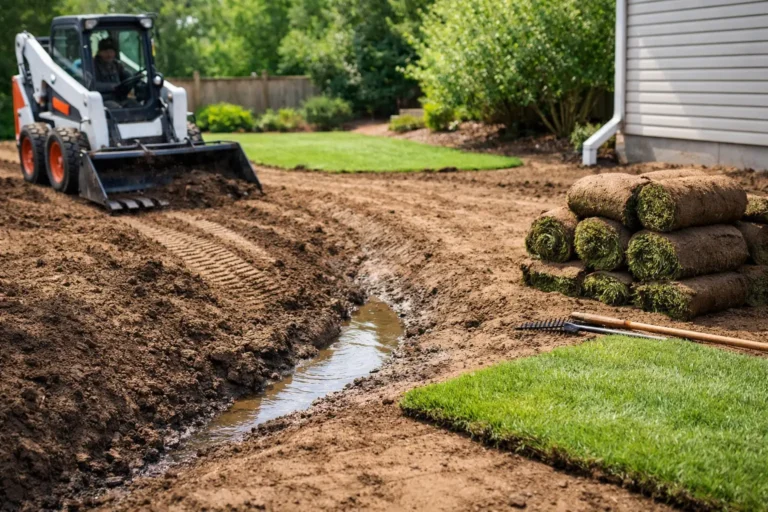
Before new sod goes down, walk the property after a decent rain. Look for standing water that remains after the rest of the lawn has drained, muddy traffic paths, washed-out mulch, downspout discharge near the house, and water lines on fences or hardscaping. Those clues tell you where the water is coming from and where it wants to go.
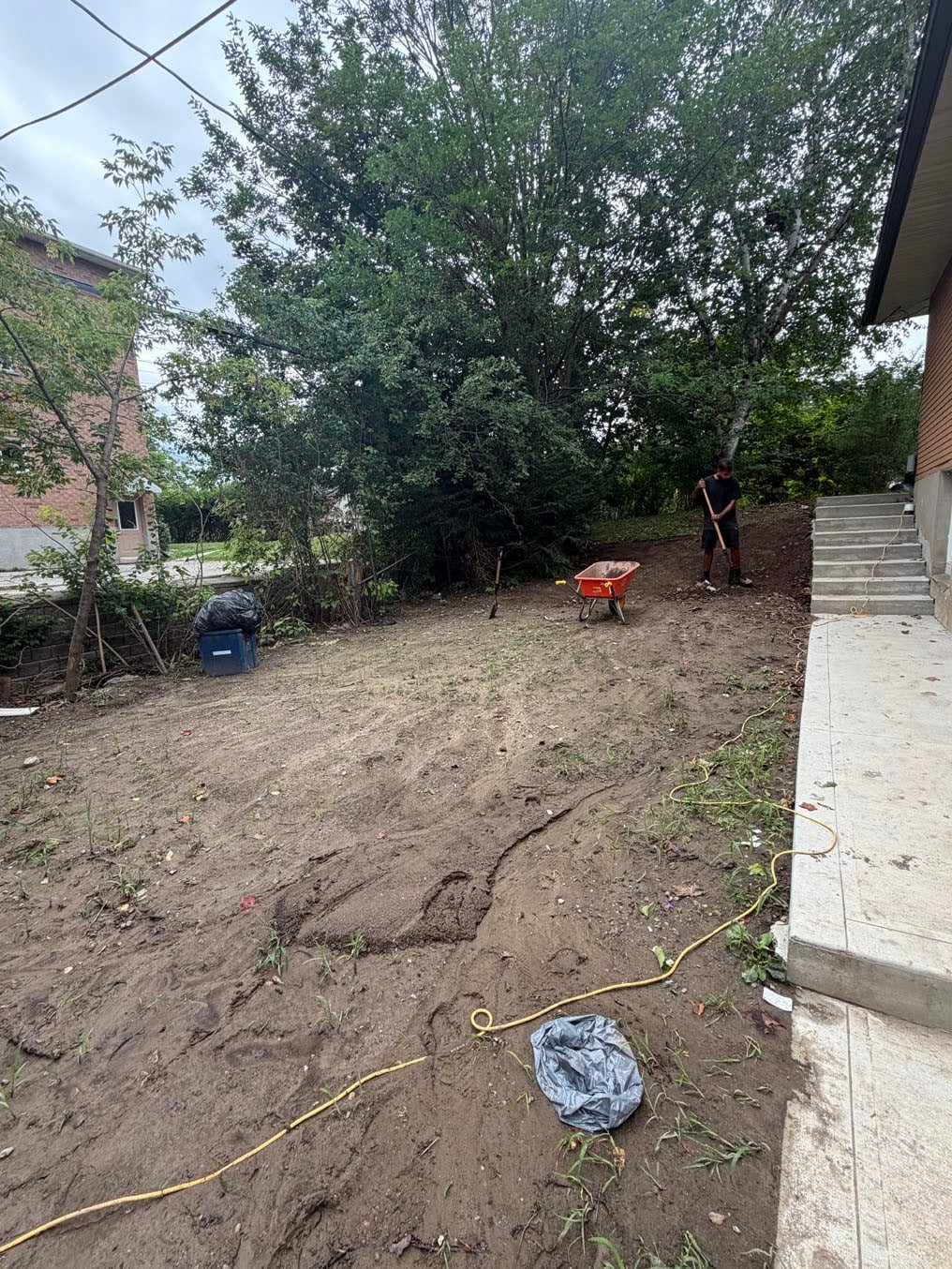
The final grade should slope away from the foundation. The exact slope and drainage design depend on the lot, but the principle is simple: water should leave the house, not circle back to it. Pay attention to patios, walkways, driveways, and neighboring grades too. A yard is one drainage system, even when different contractors worked on different pieces of it.
In Kitchener, Waterloo, and Cambridge, freeze-thaw cycles and heavy seasonal rain can expose grading shortcuts quickly. Soil that looks level and tidy on installation day may settle, especially after construction. Building the drainage plan before laying premium sod saves the headache of cutting up a beautiful new lawn later.
Do not use drainage as a bandage for bad grading
A French drain is sometimes sold as the answer to every wet lawn. It is not. If the whole yard slopes toward the house, or if the low spot is wide and shallow, regrading is usually the first move. Buried pipe cannot replace the basic job of shaping the land to shed water.
The same goes for a swale built with no outlet. Water needs a destination. If the plan ends at “somewhere over there,” it is not a plan yet.
A good drainage assessment starts with the source of the water, the available grade, soil conditions, and a realistic route for discharge. That approach keeps the solution focused, whether the job needs a simple grading correction, a swale, a French drain, or a combination.
If your lawn stays soft long after the rain stops, address the water before investing in sod. A properly graded yard gives new turf the firm, well-drained soil it needs to root fast and look right from day one. That is the kind of groundwork that turns a quick lawn upgrade into a lawn that holds up.