
Most bumpy lawns can be levelled without starting over. Shallow dips get thin layers of soil that matches the soil you already have, spread so the grass still shows through. Deeper dips mean lifting the sod, filling underneath and laying it back down. And if the whole yard slopes toward the house, that is not a levelling job at all. It is a grading problem, and more soil on top will not fix it.
Here is how to tell which one you have, what to use, and when to do it.
Why is my lawn bumpy?
Before adding any soil, work out where the bumps came from. If you skip this step, you will often be levelling the same spots again next spring.
University of Wisconsin Extension lists the usual causes as frost-heaving in the spring, moles, ant mounds, ruts from equipment, and rocks that were never removed before the lawn went in. Iowa State University adds two more. Repeated freezing and thawing lifts the soil, and older lawns turn rough as the grass gradually thins. Earthworm castings add some roughness too, but worms are good for a lawn, and Iowa State is clear that getting rid of them is neither desirable nor feasible.
Thin grass makes most of these worse. Wisconsin Extension notes that soil with a thin turf cover heaves more than soil under a dense lawn. So a thicker lawn is part of the cure, not just a nicer result.
Shallow dips: topdress in thin layers
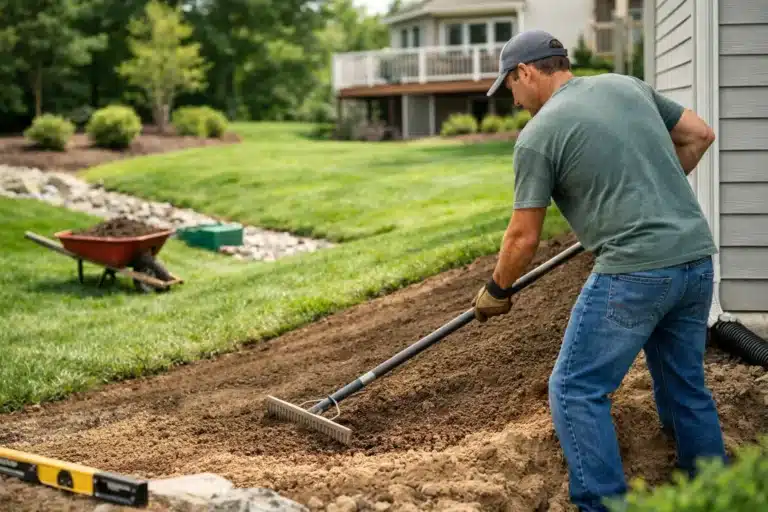
Topdressing means spreading a thin layer of soil over the lawn to smooth the surface. It suits the shallow dips you can feel underfoot or see when you mow, the kind a few thin layers can bring up.
The rule that matters most is how thick each layer is. University of Maryland Extension puts it at about ¼ to ¾ of an inch of material per application. Wisconsin Extension gives a simpler check: at least half of each grass blade should still be showing, or the grass underneath can die from lack of light.
- Use soil that is fairly dry. Wet soil clumps and will not spread evenly.
- Shovel it into the low spots, then work it in with the back of a rake or a push broom until the grass blades stand up through it.
- Water it in lightly.
- Once the grass has grown up through it, look again. Add another thin layer if the dip is still there.
A Kentucky bluegrass lawn is well suited to this. It spreads by underground stems called rhizomes, which Purdue University’s turfgrass program says gives it more power to recover than bunch-type grasses, so it grows up through a thin layer of soil rather than being smothered by it.
Is it better to level a lawn with sand or topsoil?
For most yards around Kitchener, Waterloo and Cambridge, topsoil. The reason is layering.
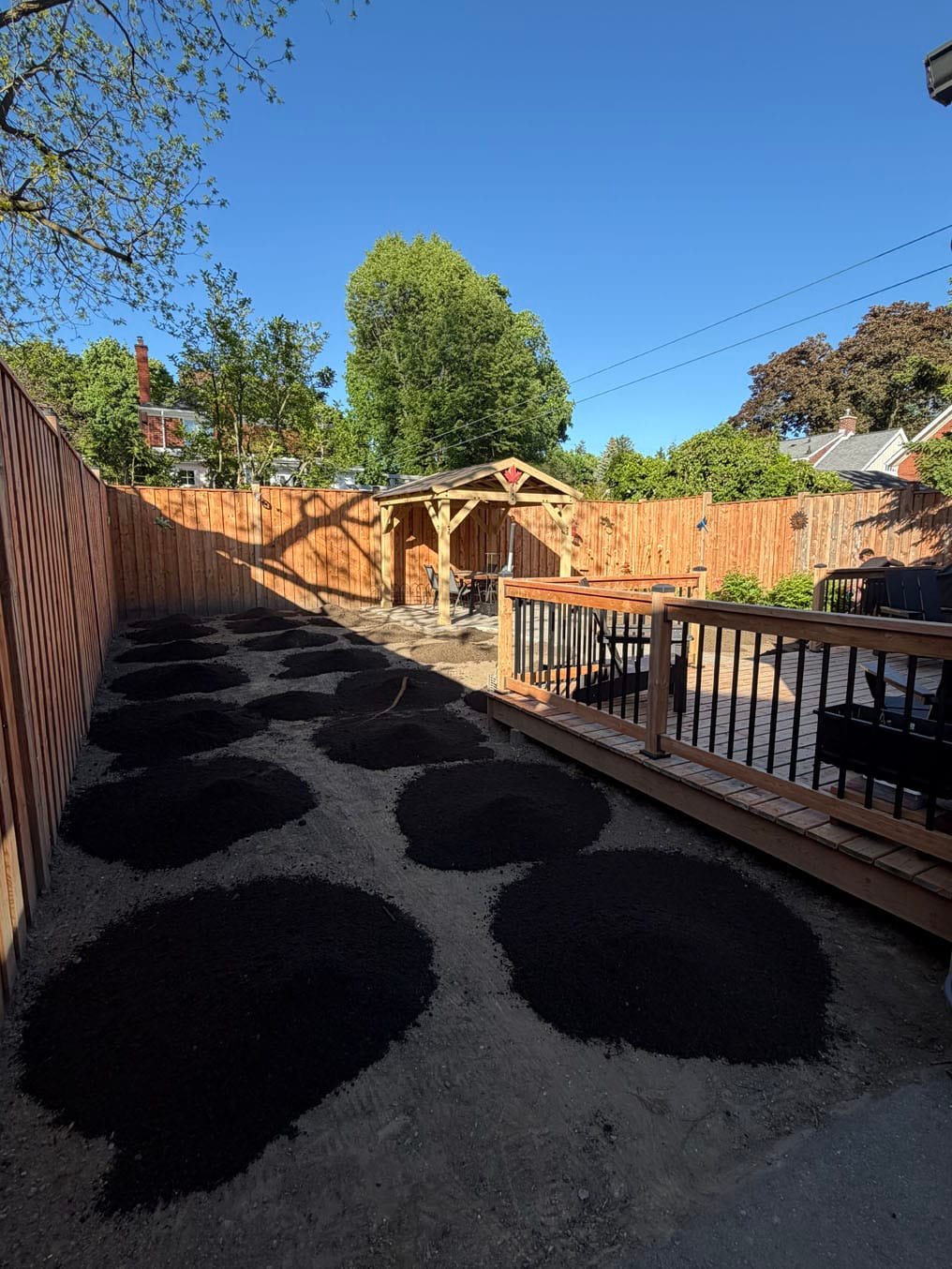
Wisconsin Extension’s advice is to use a topdressing soil that matches the soil underneath, to prevent layering, and to choose one that will not interfere with drainage into the existing soil. Many lawns in this region sit on dense clay. Pouring pure sand over clay creates exactly the mismatch that guidance warns against.
A few more cautions from the same Wisconsin guide:
- Avoid soil from farmland. It can carry agricultural chemicals that kill grass.
- Use compost cautiously, if at all. Its content varies widely, and some composts can seal off the soil, keeping air and water out.
- Do not spread an unmixed layer of black dirt.
If you have already put down a lot of a different soil, all is not lost. Wisconsin Extension suggests core aerating the area two or three times to help mix the two soils.
Can you level a lawn with just topsoil?
Yes. Screened topsoil that matches your soil is all most home lawns need. Use it in thin layers for shallow dips, as above. For larger dips and swales, Wisconsin Extension notes you can add soil by the shovelful. Keep each pass thin enough that the grass can grow through it, and build the low spot up over several rounds rather than burying it in one go.
Deeper dips: lift the sod, fill and re-lay
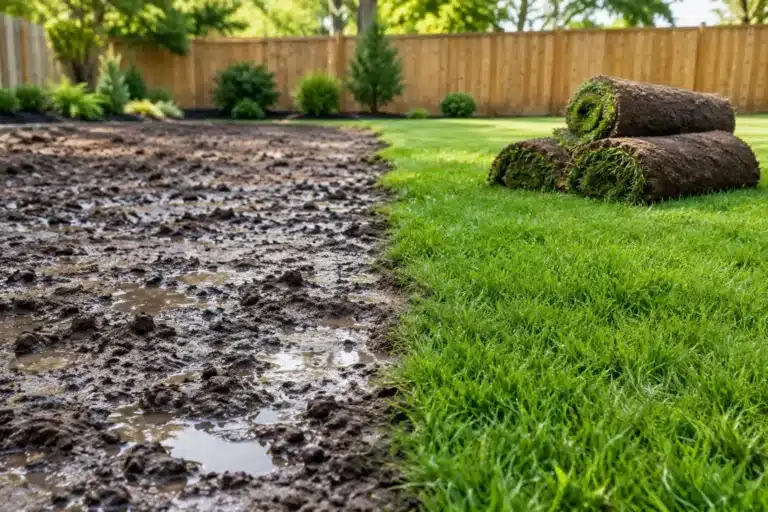
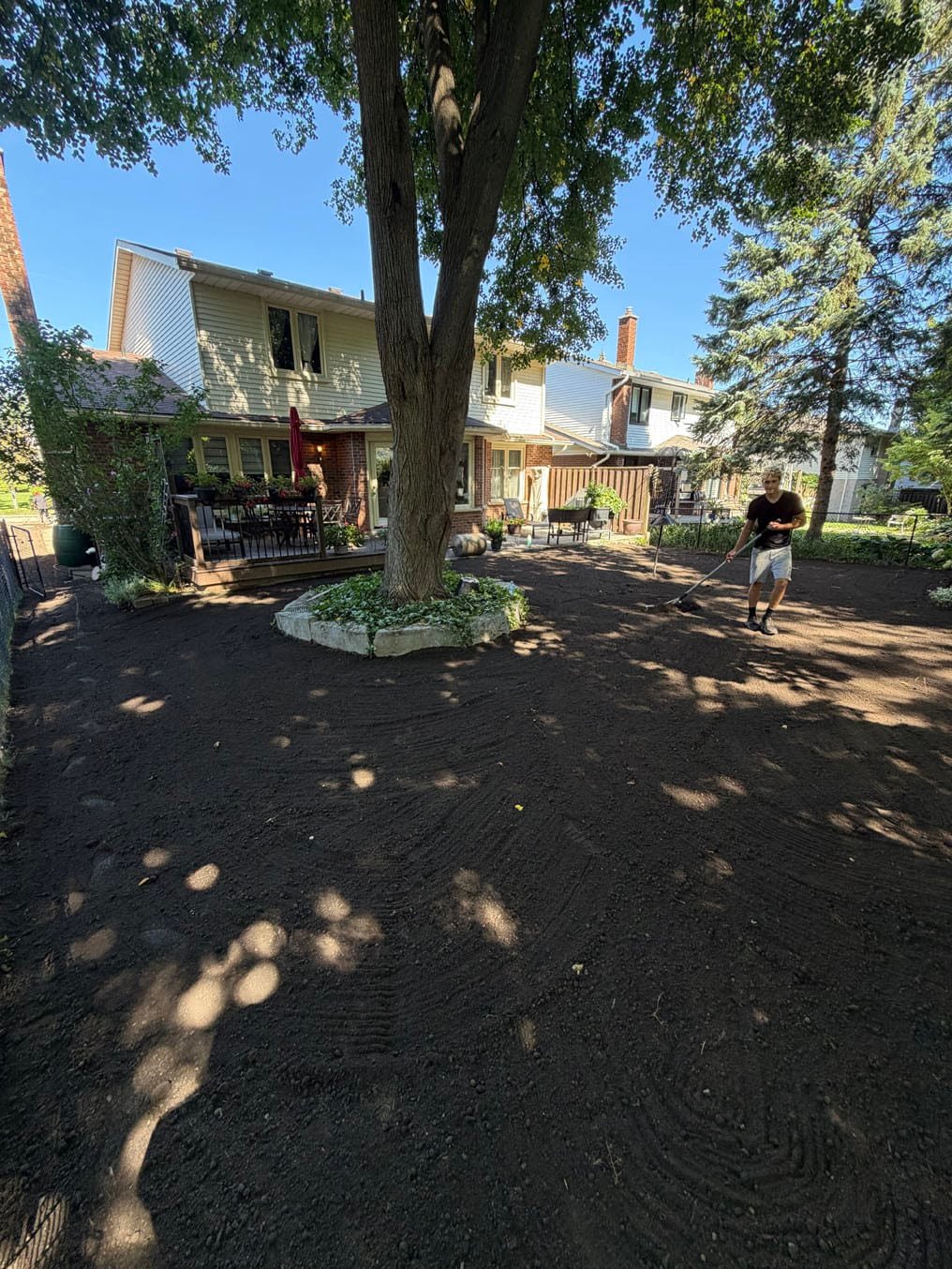
Some low spots are too deep to topdress without burying the grass: a sunken trench over an old pipe, a rut from a vehicle, or a hollow that holds water. University of Maryland Extension’s advice for low areas like these is to remove the sod, amend the soil to regrade it and reduce compaction, and replant.
On a small area, that looks like this:
- Cut around the low spot with a flat spade or a half-moon edger and roll the sod back in pieces.
- Loosen the soil underneath and add screened topsoil to bring the base up to the level of the ground around it.
- Water it so the soil settles, then top it up where it sank. Purdue Extension’s test for a bed ready for sod is that it is firm enough to walk on; footprints deeper than about half an inch mean it needs more watering or firming.
- Lay the sod back down level with the lawn around it, press the seams together, and water it in well.
Treat the replaced pieces like new sod for the next couple of weeks: keep the soil beneath them moist and keep traffic off them.
What is the cheapest way to level a lawn?
The cheapest fix uses the soil you already have. Wisconsin Extension’s method for a bumpy lawn is to core aerate while the grass is growing, let the cores dry, then drag them across the lawn with a drag mat. As the cores break down, the soil falls into the lowest spots. A piece of chain-link fence with a little weight on it works as a drag mat.
After that, add soil only where you still need it. For small amounts, bags usually cost less than a bulk delivery:
- Topdressing 100 square feet of dips half an inch deep takes about 4.6 cubic feet of soil, allowing a little for settling. That is about six 25-litre bags, roughly $18 to $20 before tax, based on Home Depot and Canadian Tire posted prices in October 2026.
- Bulk screened topsoil from Waterloo Region suppliers ran about $29 to $45 a cubic yard as posted in September and October 2026, with delivery extra, about $80 to $105 a load. That only pays off on a bigger job.
Prices change, so check with the seller. Our free Topsoil Calculator has a levelling mode that works out the soil and the bags for your own area.
Wisconsin Extension also points out that regular, lawn-wide topdressing is rarely needed on a home lawn. Small additions to the spots that need them are usually enough.
When should you level a lawn?
Level while the grass is actively growing, so it can grow up through the new soil. For a lawn like ours that means early fall, or spring once the grass is growing. Wisconsin Extension names early autumn, through September, as the best time to aerate, with May to mid-June as the second choice, and notes that spring aeration can also help weed seeds that are germinating at the same time.
Avoid hot, dry spells and avoid levelling dormant grass. A lawn that is not growing cannot push up through a new layer of soil.
Should you roll a bumpy lawn?
Not with a heavy roller. Iowa State University is direct about it: rough, bumpy lawns should not be rolled with a heavy roller, because rolling compacts the soil and damages the grass. Wisconsin Extension allows a light roll on moist soil but makes the same warning about compaction. Clay compacts easily and drains slowly, so on clay a heavy roller trades a bumpy lawn for a hard one. Topdressing and filling move the low spots up. A roller only presses the high ones down.
How do you fill holes in a lawn?
Find out what made the holes before you fill them. Small holes that appear overnight in late summer or fall are usually skunks or raccoons digging for grubs. Iowa State University Extension notes that skunks push their noses into the lawn and dig with their front paws, while raccoons lift and flip pieces of sod, and that as few as five grubs per square foot can draw them in. If that is what you see, check for grubs before you repair anything: our guide on how to identify lawn grubs walks through it. Then put any flipped pieces of sod back first.
The best thing to fill a hole with is screened topsoil that matches the soil around it. University of Wisconsin Extension advises a soil that matches the one underneath, so the two do not form layers, and one that will not get in the way of drainage. That also answers sand or dirt. On the clay common in Kitchener, Waterloo and Cambridge, a plug of pure sand is a different soil from everything around it, so use topsoil, as for levelling.
Fill dirt or topsoil? In a deep hole, fill dirt can make up the bottom, but finish the top few inches with screened topsoil, because that is the layer the grass roots into. The City of Kitchener calls for topsoil under every new sod or seed area for the same reason. Add the soil in layers, firm each one with your foot, and water it in. Purdue Extension notes that watering or rain helps the soil settle, so a hole that sinks after the first rain just needs a top-up.
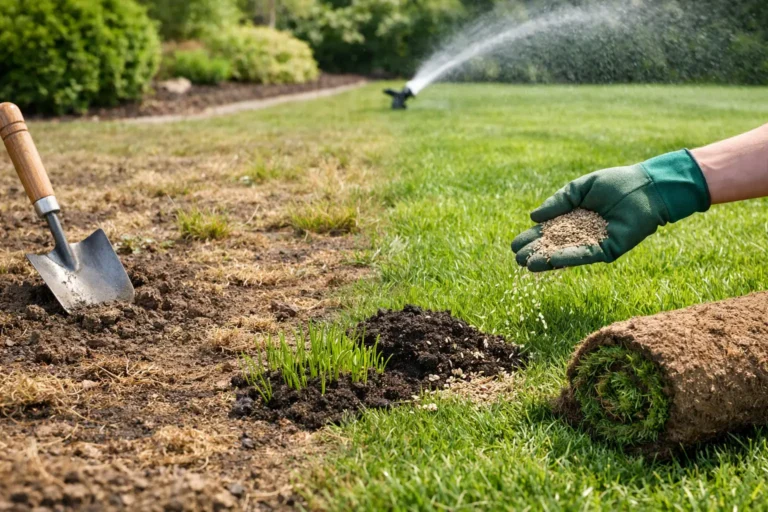
Once the soil sits level with the lawn around it, seed it or lay a piece of sod cut to fit. University of Maryland Extension advises reseeding or re-sodding areas damaged by animal digging, and raking away dead grass first so the seed or sod sits right on the soil.
When levelling is not enough
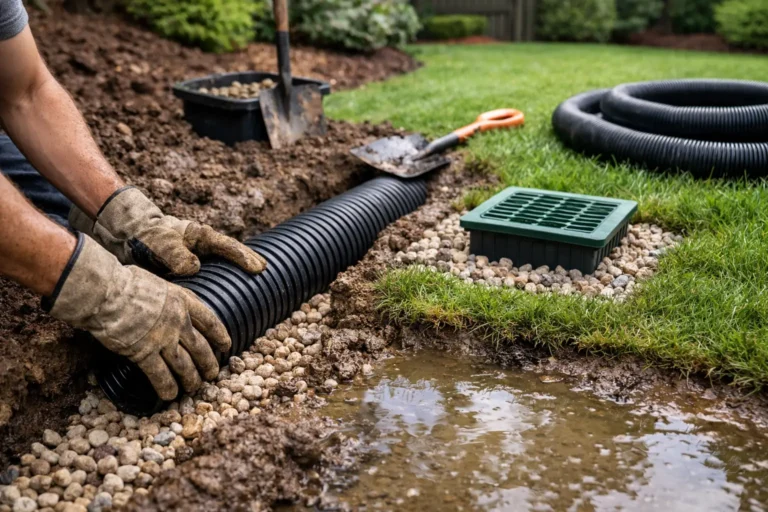
Topdressing smooths the surface. It does not change which way the yard drains. These signs point to a grading problem instead:
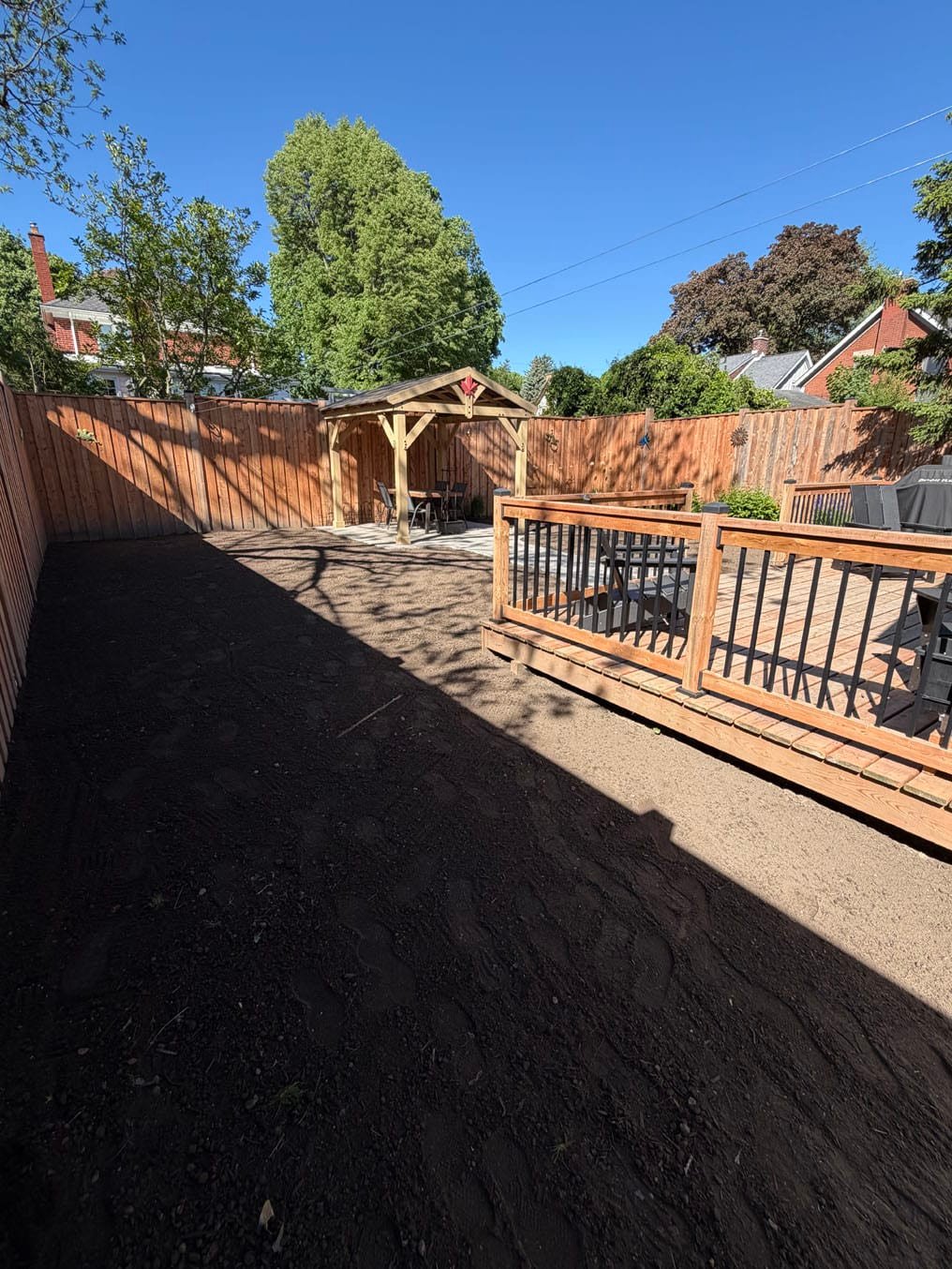
- The yard slopes toward the house, or water stands near the foundation.
- Water still sits in the same low area about a day after a normal rain.
- The same dips come back every season, however often you fill them.
Our free Yard Grading & Drainage Check walks you through measuring your slope with a string line, and tells you whether topdressing will do or whether the yard needs regrading. A common target is a drop of about 6 inches over the first 10 feet from the house. How to grade a lawn for drainage explains the rest.
Right On Sod does not topdress existing lawns, and we do not deliver soil on its own. When a lawn needs more than a top-up, we regrade it and lay new sod. Grading and up to three inches of screened topsoil are included in our price, which goes by lawn size: $1,750 flat under 500 square feet, then $3.61 down to $2.15 per square foot. See what sod installation costs, or, if you are already planning new sod, how to level a backyard for new sod.
Frequently Asked Questions
What is topdressing a lawn?
Topdressing is spreading a thin layer of soil over a lawn to smooth the surface. For levelling, it goes into the low spots in layers of about ¼ to ¾ of an inch, thin enough that at least half of each grass blade still shows, and the grass grows up through it.
Can I put topsoil over existing grass?
Yes, in thin layers. Use screened topsoil that matches the soil underneath, keep at least half of each grass blade visible, and add more only after the grass has grown through the first layer. Burying the grass under a thick layer kills it.
How do I fix a bumpy lawn?
Find the cause first, then match the fix to the depth. Core aerate and drag the cores for general roughness, topdress shallow dips in thin layers, and lift and re-lay the sod over deeper ones. If the yard slopes toward the house or water stands after rain, it needs regrading instead.