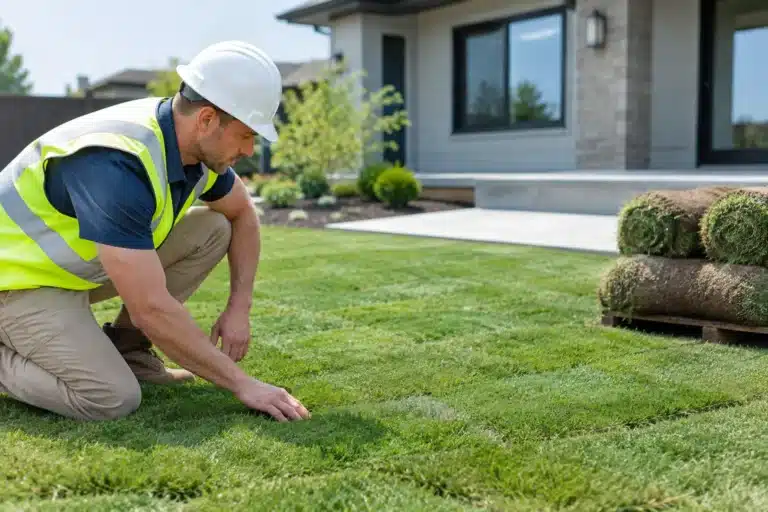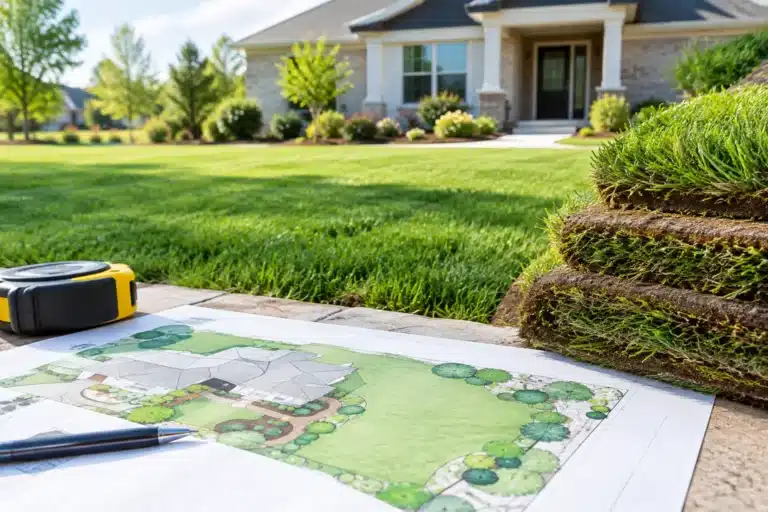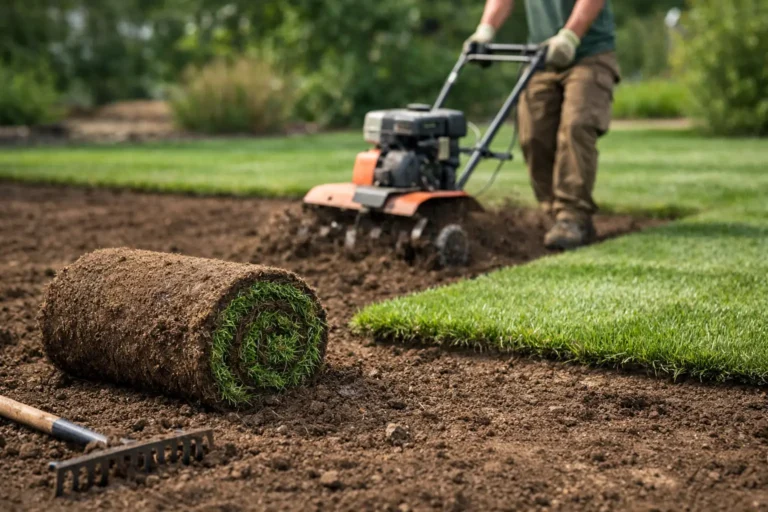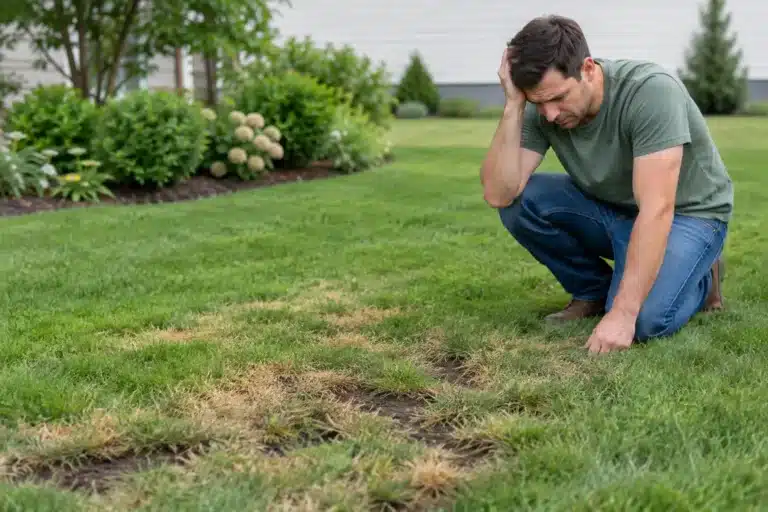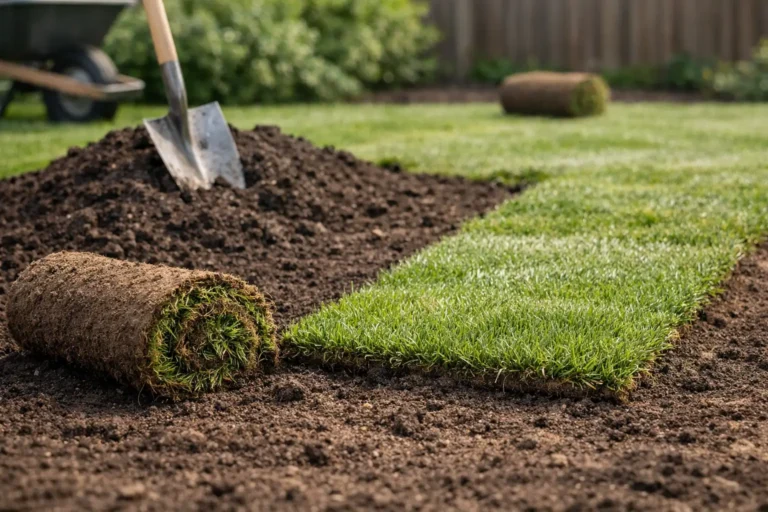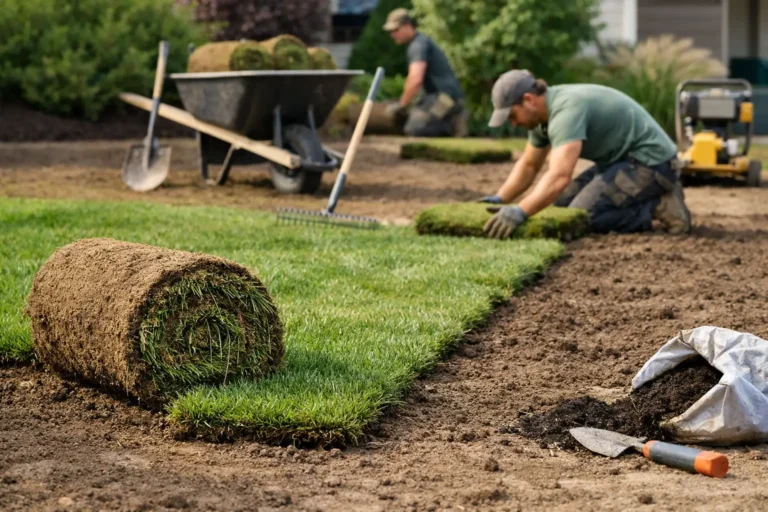

A lawn can look like one simple green rectangle until it is time to order sod. Then the curved garden bed, patio bump-out, side-yard gate, and sloped section suddenly matter. Knowing how to measure sod area before you order keeps your project on budget, prevents last-minute shortages, and helps your installer plan the right amount of soil, grading, and labor.
Why an Accurate Sod Measurement Matters
Sod is typically priced and ordered by the square foot, so a rough guess can get expensive fast. Order too little and you may be stuck with an unfinished lawn while you wait for another delivery. Order far too much and you have paid for living grass that needs to be installed that day.
A good measurement also reveals what the job actually involves. A 1,000-square-foot lawn with a few clean, open sections is very different from 1,000 square feet broken up by trees, beds, walkways, and tight access. The sod quantity may be similar, but the installation time and preparation needs are not.
For homeowners in Kitchener, Waterloo, and Cambridge, measurement is also the right time to look beyond the grass. If water pools near the foundation or a new build has compacted construction soil, the final grade needs attention before fresh sod goes down. Pretty sod over a drainage problem is still a drainage problem.
How to Measure Sod Area With a Tape Measure
You do not need fancy equipment for most residential yards. A 100-foot tape measure, notepad, calculator, and a quick sketch of the property will do the job. A measuring wheel can make larger or more open areas faster, but check it against a tape measure if the ground is uneven.
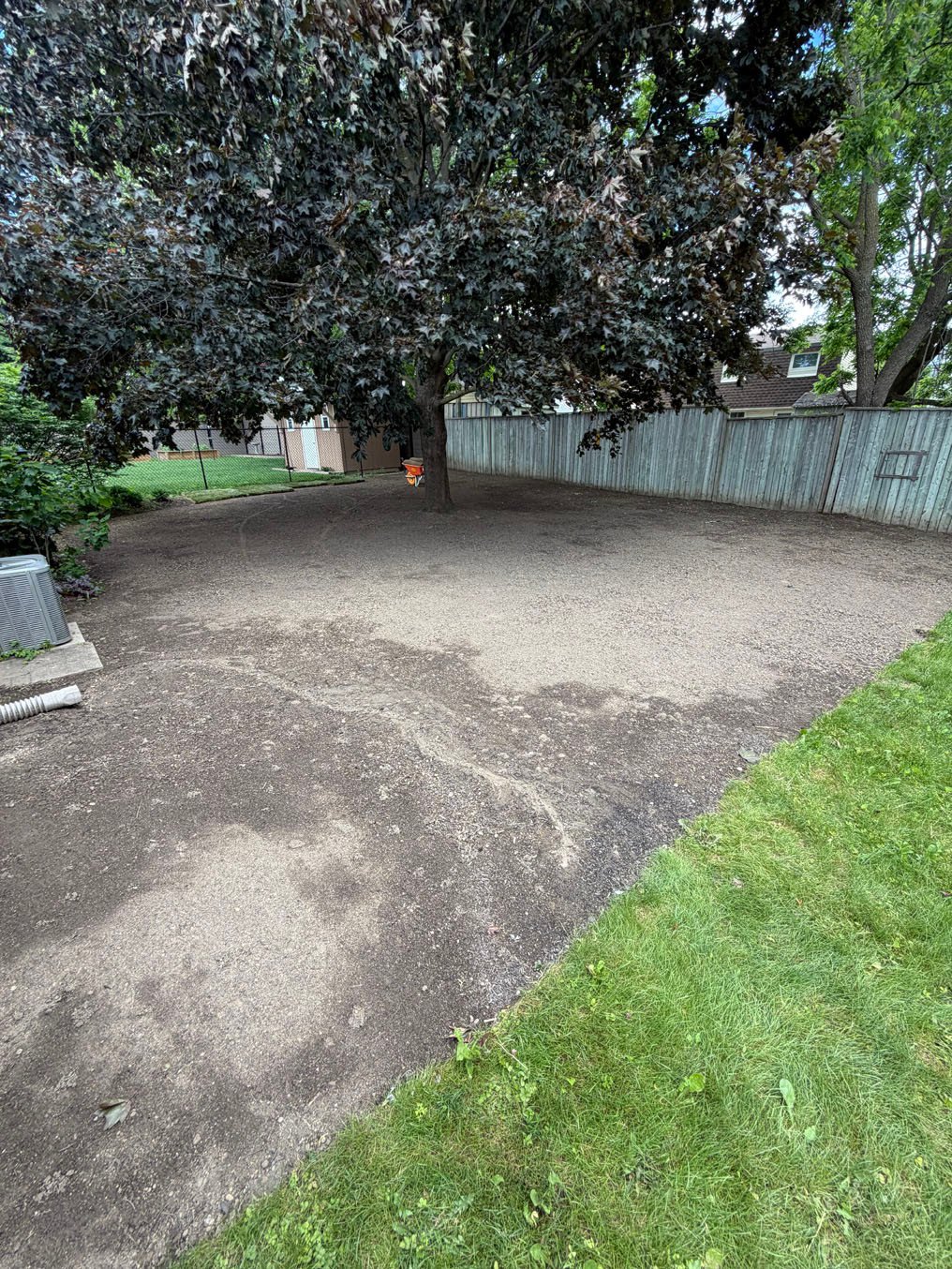
Start by drawing the lawn from above. It does not need to be a work of art. Mark the house, driveway, patios, sheds, garden beds, trees, and any other spaces that will not receive sod. Then break the remaining lawn into basic shapes you can measure accurately.
Measure Rectangles and Squares
For a rectangle or square, measure the length and width in feet. Multiply the two numbers:
Length x width = square feet
For example, a front lawn measuring 30 feet wide by 20 feet deep is 600 square feet. A side yard measuring 8 feet by 45 feet is 360 square feet. Add those sections together only after you have measured each one separately.
Do not measure from the edge of your property if a fence, garden, walkway, or retaining wall takes up part of the space. Measure only the ground that will actually receive sod. It sounds obvious, but this is where many overages begin.
Measure Triangles, Circles, and Curves
Triangle-shaped sections are common beside driveways, along angled fences, and around patios. Measure the base and the height, then use this formula:
Base x height ÷ 2 = square feet
If a triangular corner is 12 feet across at the base and 10 feet at its tallest point, it equals 60 square feet.
For a circular area, such as a round planting bed you are removing, measure straight across the center to find the diameter. Divide that number by two to get the radius. Then calculate:
3.14 x radius x radius = square feet
Most lawns do not contain perfect circles, of course. For a curved edge, the practical approach is to divide it into a few manageable rectangles and triangles. Slightly overestimating a wavy border is smarter than pretending it is a perfect shape and coming up short.
Subtract Areas That Will Not Get Sod
Once you have calculated the full lawn sections, subtract permanent features that take up real space. That includes patios, decks, driveways, sheds, mulch beds, pools, and large areas of stone. Measure each feature using the same shape formulas, then subtract its square footage from the total.
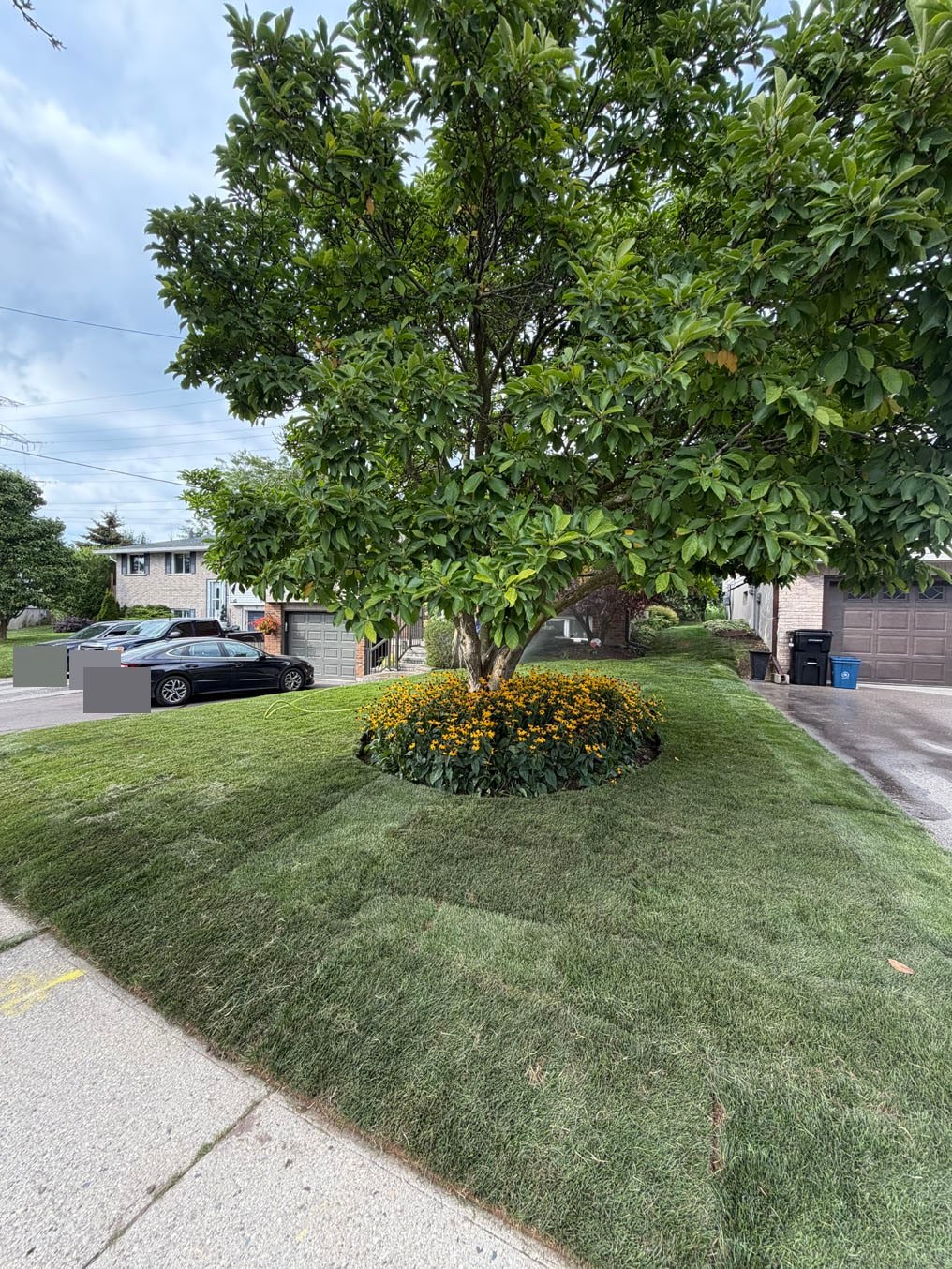
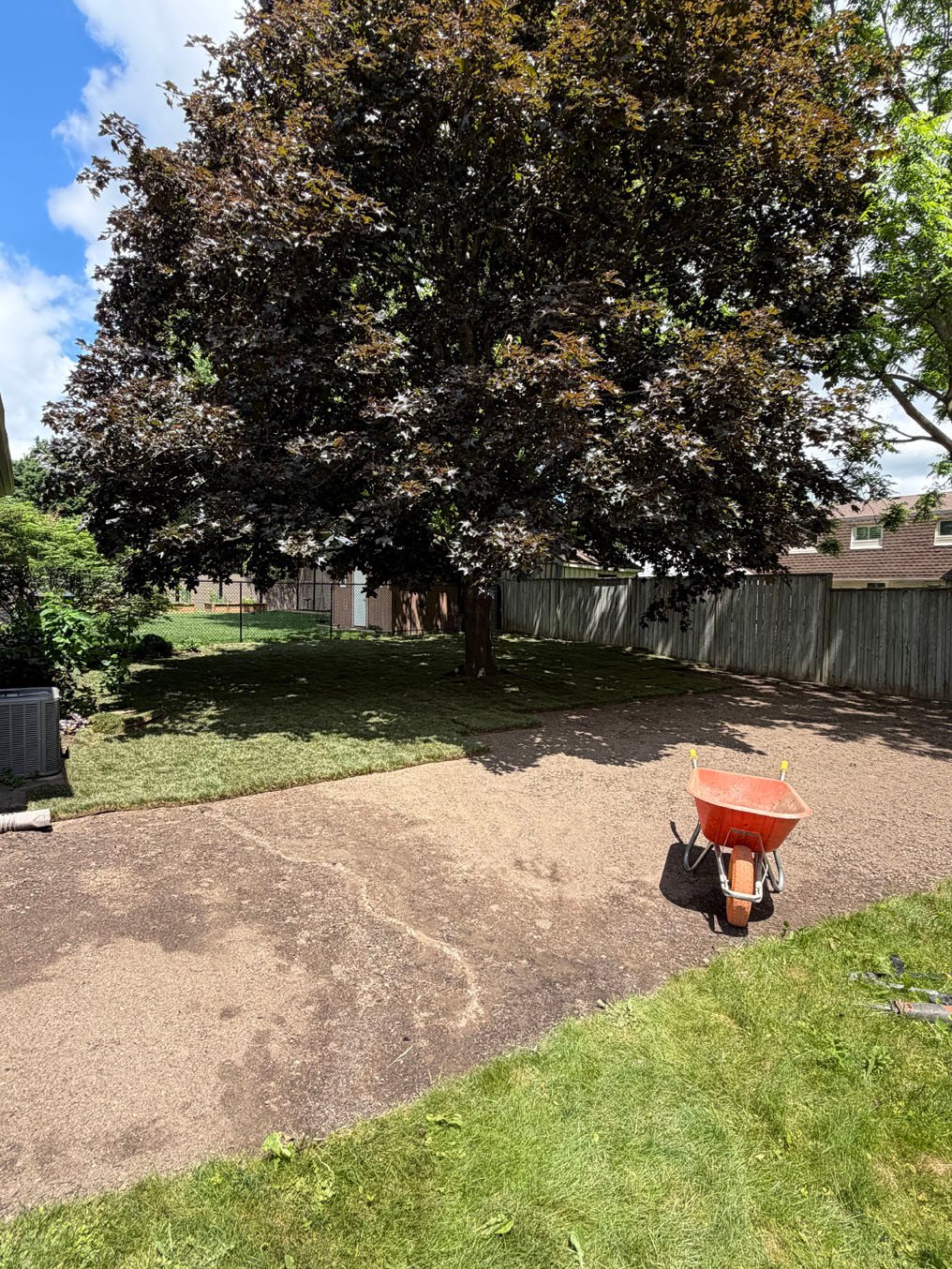
Trees need judgment. You generally do not install sod right against a mature tree trunk, especially if surface roots are exposed or the canopy creates deep shade. Instead, measure the mulched ring or planned no-sod area around the tree and subtract it. This gives the roots breathing room and makes mowing less of a wrestling match.
Small items do not always need to be deducted. A narrow downspout splash block or one tiny utility cover will not materially change a 1,500-square-foot order. Spend your time getting the major sections right rather than chasing every square inch.
Account for Slopes and Odd-Shaped Yards
Flat measurements are the starting point, not always the final answer. A noticeable slope has more surface area than the same section measured across the ground horizontally. For gentle slopes, most homeowners can use the flat measurement and include a reasonable waste allowance. For steep banks, terraced yards, or grades that need correction, an on-site measurement is the safer move.
Odd-shaped lawns should be divided into more pieces, not estimated from one big outer boundary. Measure the back yard as one rectangle, the side strip as another, and the curved front section as a set of smaller shapes. Add them together on paper. It takes a few extra minutes and avoids the classic “close enough” order that is not close enough when the last rolls are going down.
If you are replacing an existing lawn, do not assume the old sod line is the correct new sod line. A proper lawn replacement may include widening a bed, correcting an edge, improving the slope away from the house, or removing a worn path. Measure the finished layout you want, not just the tired lawn you have.
Add a Sensible Sod Waste Allowance
After you have your net square footage, add a small allowance for trimming and fitting. For open rectangular lawns, 5 percent is often enough. For lawns with curves, multiple beds, tree rings, and tight corners, 8 to 10 percent is more realistic.
Here is a simple example. If your measured sod area is 1,200 square feet and the yard has several curved beds, add 10 percent:
1,200 x 1.10 = 1,320 square feet of sod to order
That extra material is not a mistake. Sod arrives in rolls or slabs, not custom-cut puzzle pieces. Every curve and obstacle creates offcuts, and having a little room to work protects the finished result.
Avoid pushing the allowance too high. Ordering 20 percent extra for a straightforward lawn is usually unnecessary and can leave you with sod that will not stay fresh while you figure out where to put it. The right allowance depends on the shape of the project, not nerves.
Check the Supplier’s Sod Units Before Ordering
Some sod is quoted by the square foot, while other suppliers sell by the roll, slab, or pallet. Ask how much coverage each unit provides and confirm whether the stated coverage is exact or approximate. Pallet quantities can vary, and a large project may need to be rounded up to the nearest full pallet.
Write down your final number in square feet first. That gives you a clean baseline when comparing estimates or deciding whether delivery makes sense. Then convert it to the supplier’s units. If the math gets awkward, ask for help before delivery day. A professional sod company should be able to review your measurements and explain what quantity they would order.
Also confirm what is included in the estimate. Sod area is only one part of a successful installation. Tear-out, disposal, topsoil, grading, soil preparation, delivery, installation, and first watering can all affect the final scope. The cheapest sod number is not a bargain if the lawn is installed on hard, uneven ground that cannot root properly.
When a Professional Measurement Is Worth It
DIY measuring works well for a small, level, mostly open yard. Bring in a sod specialist when the property has major slopes, poor drainage, new-construction compaction, extensive damage from grubs, or unclear property lines. The same goes for commercial sites, multi-unit properties, and builder projects where a small measuring error becomes a large material problem.
At Right On Sod, accurate measuring is tied to the full installation plan, not just the number of rolls on a truck. That means looking at access, grade, soil condition, and where water will go after a heavy rain. Those details are what help fresh sod root quickly and stay healthy after the first impressive green reveal.
Measure carefully, add a practical allowance, and order for the lawn you want to finish. If the ground needs more than sod, solve that part first. Your new lawn deserves a level, prepared surface and a clean start – not a rushed patch job with one roll missing.