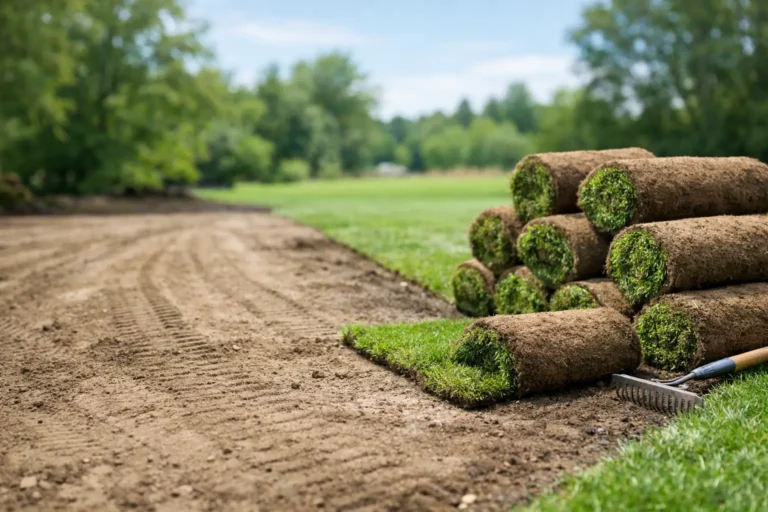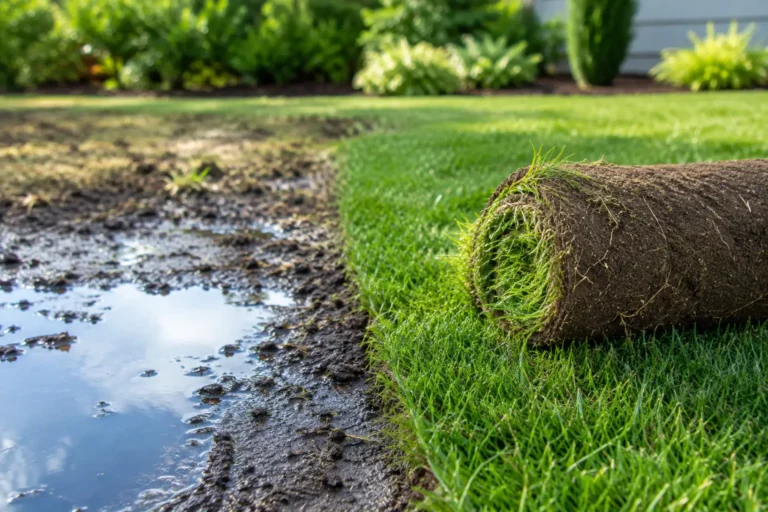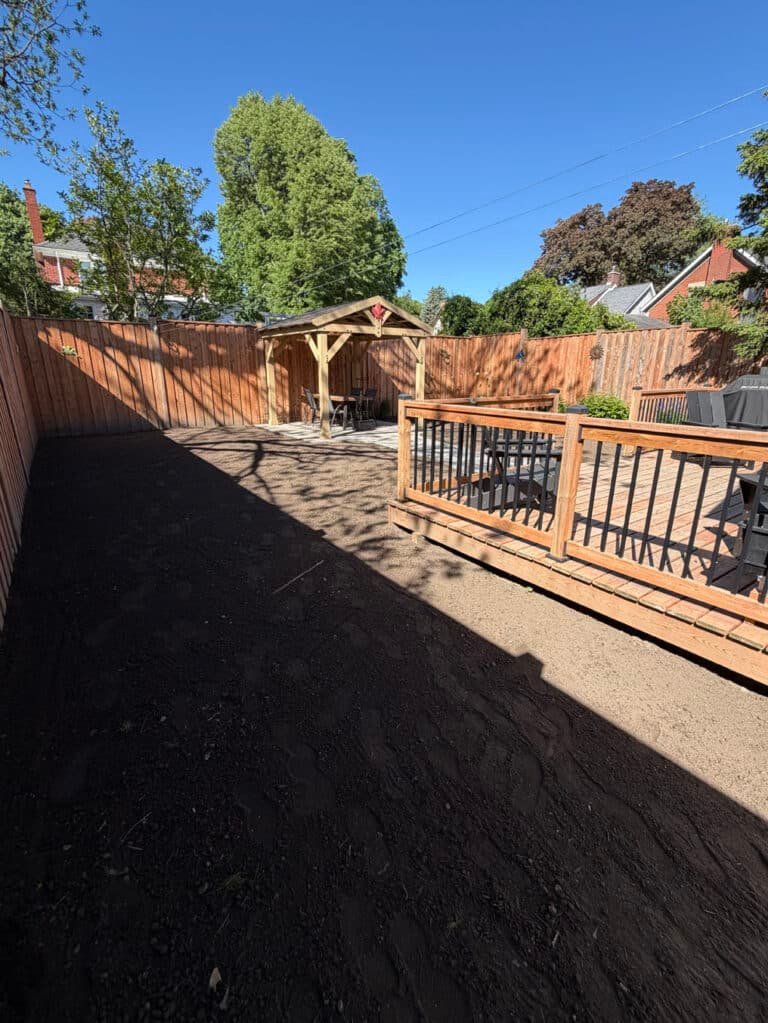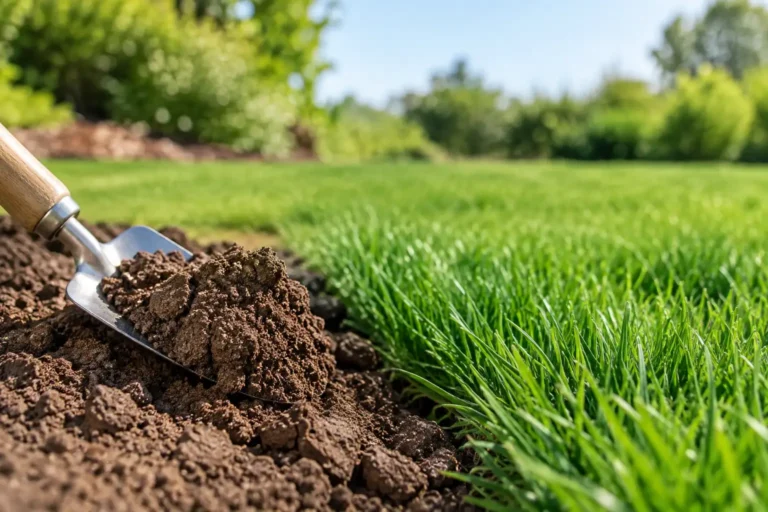

A muddy yard is more than a cosmetic problem. It gets tracked through the house, comes in on the dog, and leaves you avoiding parts of your own property. So, does sod help with muddy yard conditions? Yes, but only when the ground is prepared correctly and the source of the moisture is addressed first.
Fresh sod can stabilize loose soil, reduce surface mud, and turn a torn-up, muddy lawn into usable grass fast. What it cannot do is drain standing water through compacted clay or fix a grading problem caused by water flowing toward your home. Good sod is part of the solution. Proper site prep is what makes it stick.
How Sod Can Help a Muddy Yard
Sod gives exposed soil an immediate layer of grass, roots, and soil-holding structure. On a bare or thin lawn, rain hits the dirt directly, loosens the surface, and creates puddles and ruts. A properly installed sod lawn cushions rainfall and slows runoff before it carries soil away.
The root system also helps bind the top layer of soil together. As the sod roots establish, the lawn becomes more resistant to foot traffic, pets, and the repeated wet-dry cycle that turns a soft yard into a mess. This is especially helpful after construction, lawn tear-outs, grub damage, or a season of failed seeding.
Sod also creates a finished surface right away. Seed can be an excellent option for the right project, but it takes time to establish. During that wait, a wet yard can remain bare, uneven, and muddy. Sod gives you coverage now, which is why it is often the practical choice for homeowners who need their yard back quickly.
When Sod Will Not Fix the Mud
If a muddy lawn stays soggy days after a normal rainfall, sod alone is not the answer. Installing grass over poor drainage is like putting clean flooring over a leaking pipe. It may look better briefly, but the cause underneath has not changed.
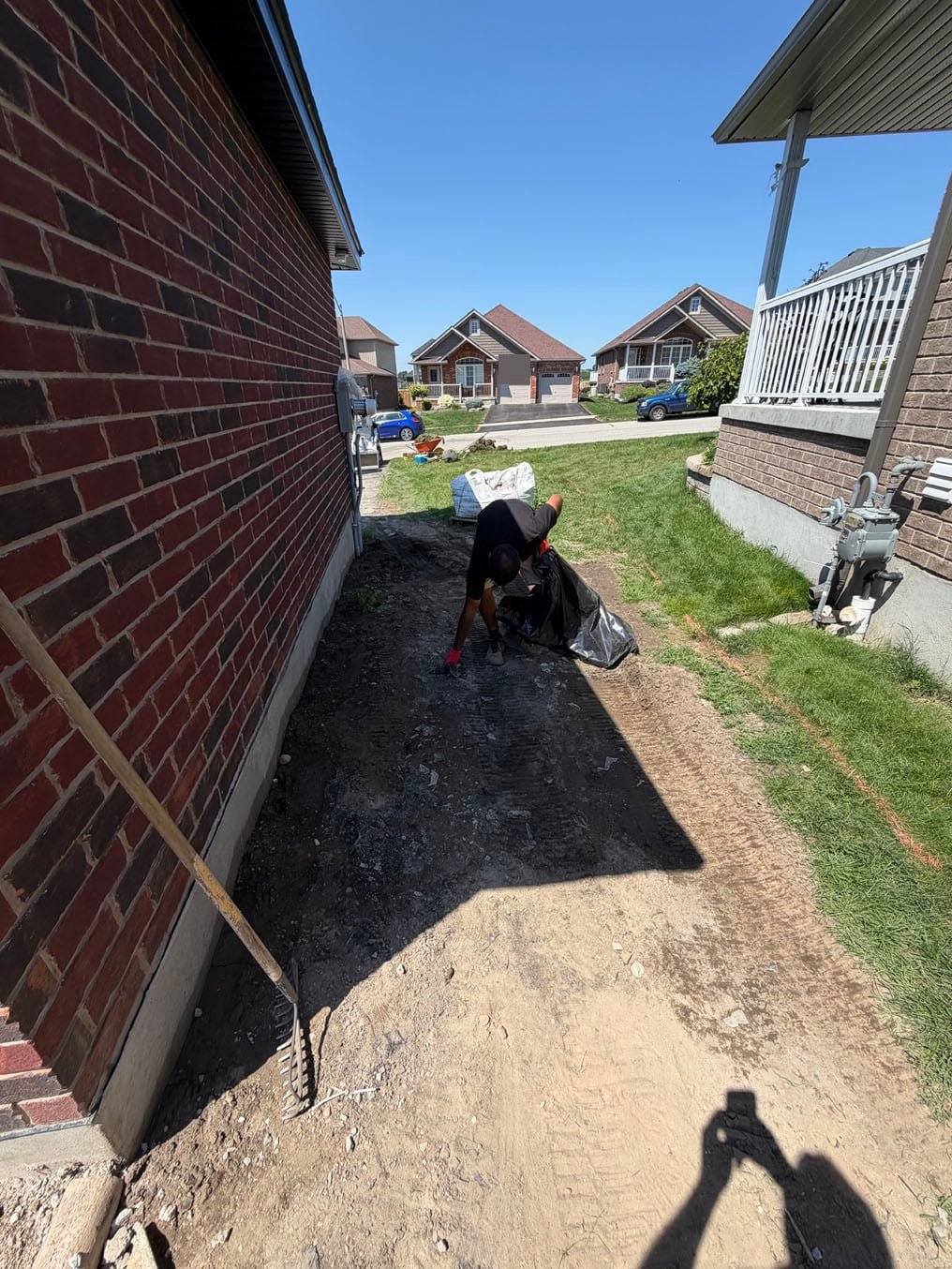
The most common causes of persistent mud are poor grading, compacted soil, low spots, downspout discharge, heavy clay, and excess shade. In some yards, several of these issues show up together. A low area may collect roof runoff, while compacted subsoil prevents that water from moving down through the profile.
Watch for standing water, moss, tire-like ruts, soft footprints, or grass that thins out in the same places every year. Those are signs that the installation needs more than fresh turf. The ground needs to be reshaped, loosened, amended, or drained before sod goes down. Our guide on how to fix a muddy backyard walks through finding the cause, from downspouts to the grade.
Grading comes first
A yard should generally slope away from the house so water moves toward an appropriate drainage area rather than collecting beside the foundation or in the middle of the lawn. Even a subtle low spot can hold enough water to keep sod roots stressed and soil muddy.
Correct grading may involve adding and shaping topsoil, removing excess material, or leveling dips left behind by settling and construction. The goal is not to create a dramatic slope. It is to create a smooth, intentional surface where water has somewhere useful to go.
Compacted soil needs attention
Compaction is common in new-build yards and areas where equipment has traveled repeatedly. The soil may look flat and tidy, but it can be packed so tightly that water sits near the surface instead of soaking in. Sod installed over hard, compacted ground struggles to root deeply, which makes the lawn more vulnerable to heat, traffic, and future wet spots.
Loosening the soil and working in quality topsoil creates a better rooting zone. This step is not glamorous, but neither is replacing a failed lawn twice. A solid soil base gives the sod air, moisture, and room to establish properly.
The Right Preparation Before Installing Sod
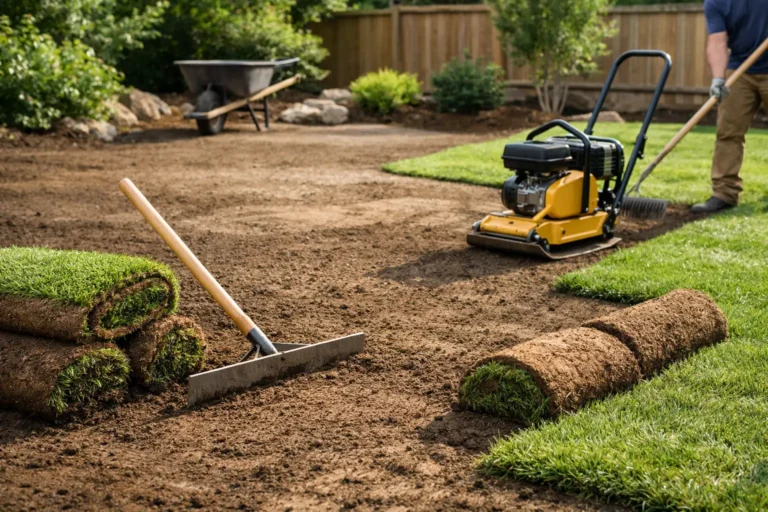
A healthy lawn starts below the green surface. Before installation, damaged turf and weeds should be removed where necessary, the grade should be evaluated, and the soil should be prepared for rooting. Laying sod over an existing muddy mess skips the step that decides whether it roots.
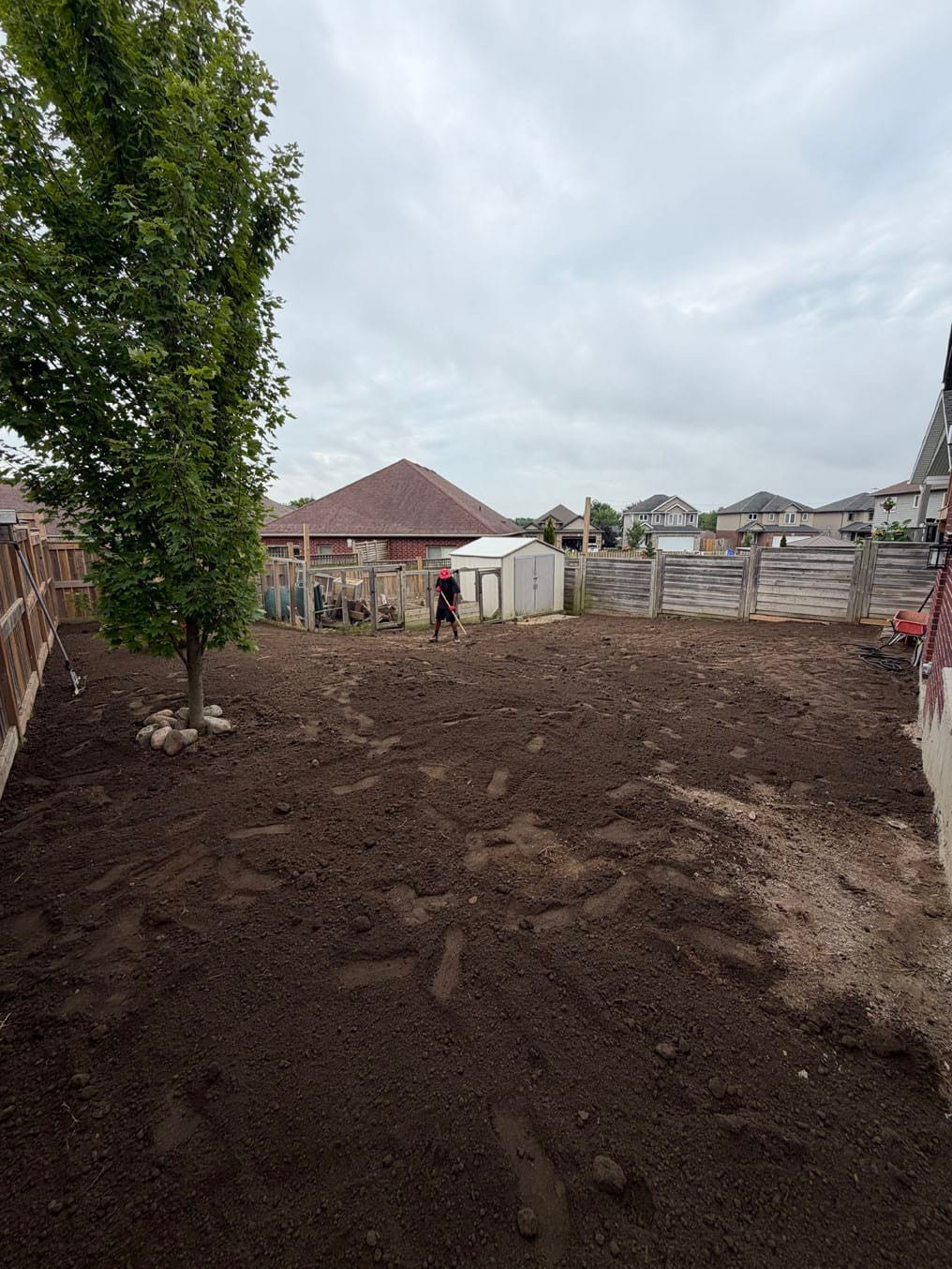
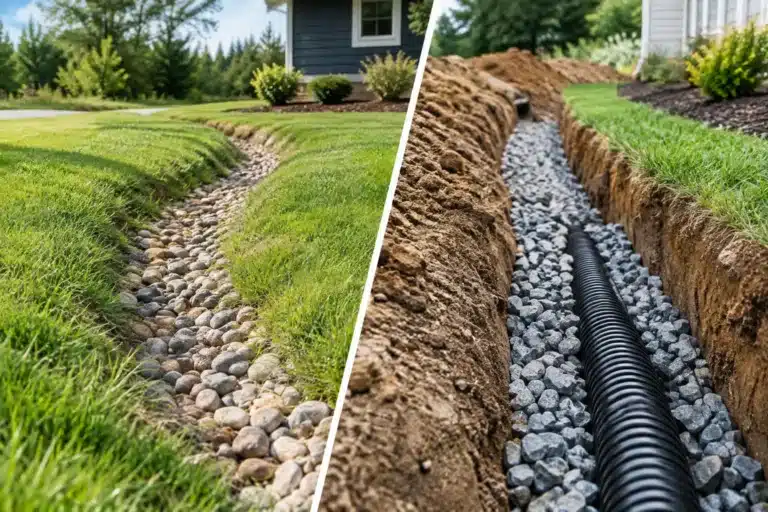
For a yard with minor surface mud, preparation may be fairly straightforward: smooth the area, add and blend suitable topsoil, and establish a clean grade. For a lawn with repeated pooling, the project may need drainage work, such as a French drain, or a more substantial regrading plan before new sod is installed.
The right approach depends on where the water is coming from and how long it stays. Water that appears only during a major storm is different from a backyard that remains soft for a week. A professional assessment should look at slopes, downspouts, neighboring grades, soil condition, shade, and how the space is used.
In Kitchener, Waterloo, and Cambridge, heavy soils and seasonal freeze-thaw can make small grading flaws show up in a big way. A lawn that seems acceptable in midsummer may become muddy during spring melt or after a string of heavy rains. Planning for those conditions is worth more than a quick cosmetic fix.
Choosing Sod for Wet-Prone Areas
Most premium residential sod is selected for an attractive, durable lawn rather than for standing-water conditions. That is fine when drainage is corrected first. Healthy sod can handle normal rainfall and regular irrigation during establishment, but no standard turf grass wants its roots sitting in water for long periods.
The best choice is usually quality, farm-fresh sod installed over properly prepared soil. Fresh-cut sod has a better chance to establish quickly because it arrives in good condition and can begin rooting into the prepared base right away. Old, dried-out rolls are not a bargain if they fail to take hold.
Timing matters, too. Sod can be installed through much of the growing season when watering and weather are managed properly. However, installation should not happen on saturated ground. Working wet soil can cause more compaction and leave an uneven base. If the site is too soft to prep correctly, waiting for workable conditions is the smarter call.
Watering New Sod Without Creating More Mud
New sod needs consistent moisture during its first weeks, but “keep it wet” does not mean “make a swamp.” The goal is moist soil beneath the sod so roots can knit into the prepared ground.
Water deeply enough to wet the sod and the soil below it, then adjust based on heat, rain, shade, and soil type. If water is puddling or running off, the schedule needs attention. Several shorter cycles may work better than one heavy blast on a sloped or dense-soil lawn.
Avoid walking on newly installed sod more than necessary while it is rooting. Foot traffic can press soft soil down, create low spots, and leave muddy depressions before the lawn has had a chance to establish. Keeping off it while it roots gives you a firmer surface later.
A Better Fix Than Covering Up the Problem
If mud is limited to bare patches and worn areas, sod may be exactly what your yard needs. With sound grading and prepared soil, it delivers fast coverage, cleaner footing, better curb appeal, and a lawn you can actually use.
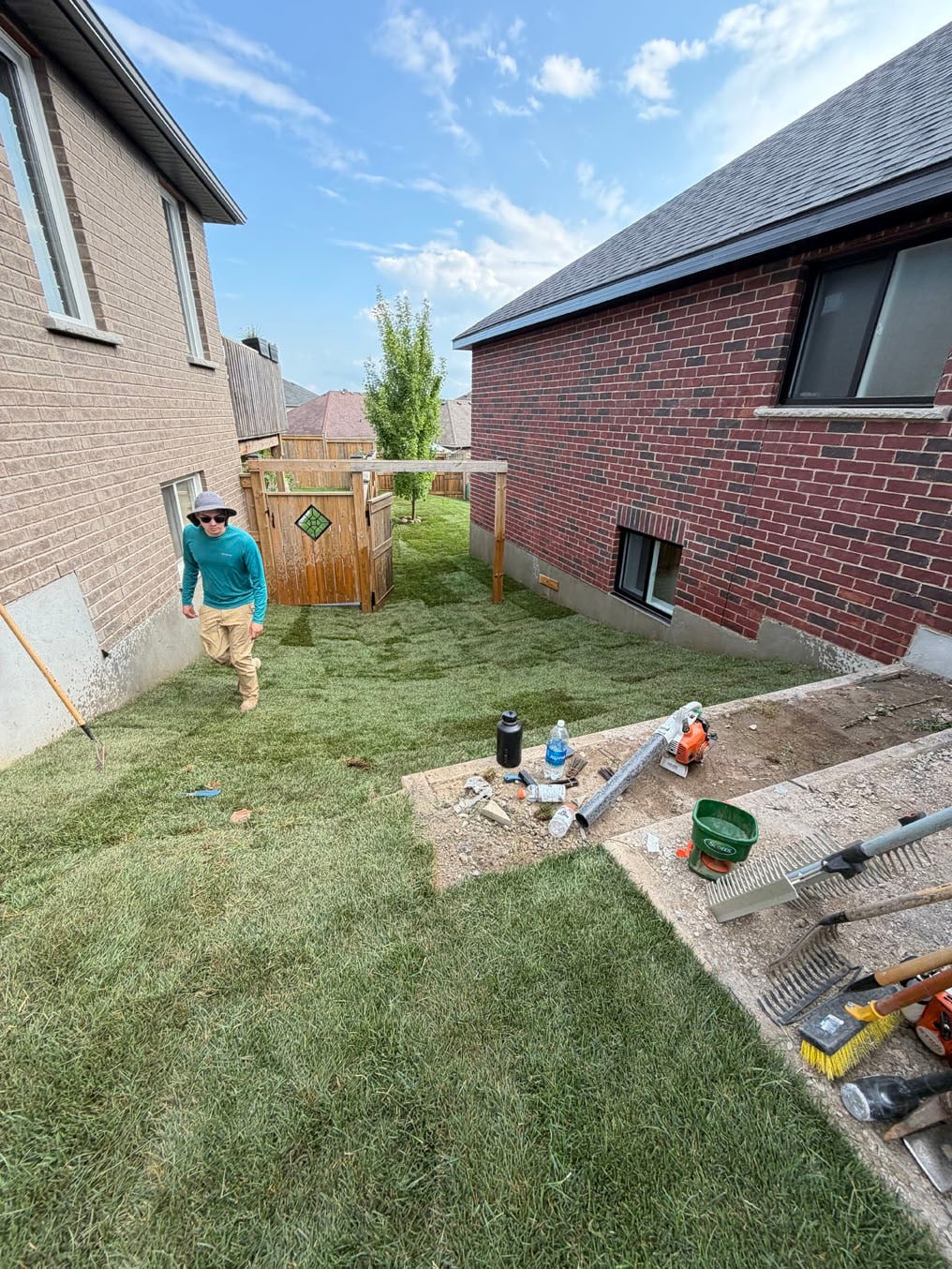
If water pools, drains toward the house, or returns to the same spot after every rain, start with the cause. Fix the grade, improve the soil, manage runoff, and then install sod over a base built to support it. That is how you get a lawn that looks good after installation and stays firm underfoot after heavy rain and spring melt.
A muddy yard does not need another temporary cover-up. It needs a level, well-prepared base and sod installed with the care that lets the roots take hold.